
Dubai land mortgages: what a AED 418M deal tells investors
A single plot in Dubai was recently mortgaged for AED 418 million. Here is what that transaction reveals about land financing rules and market confidence.
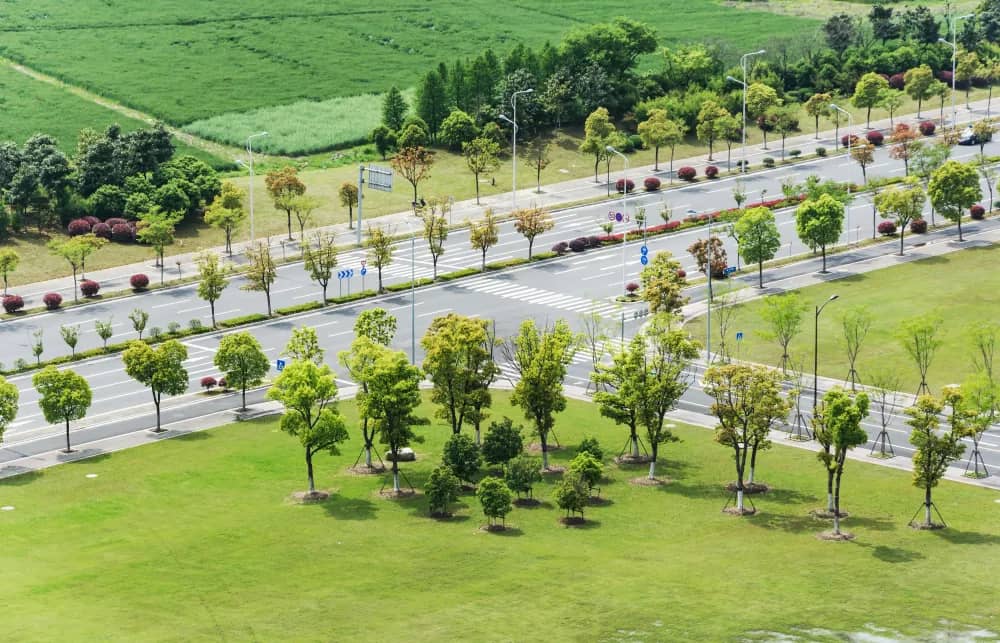
Why a AED 418M mortgage on land matters
A single plot of land in Dubai being mortgaged for AED 418 million is not a routine DLD transaction. It signals that institutional or high-net-worth capital is being deployed at scale against raw land, which is widely regarded as one of the higher-risk asset classes within the dubai real estate spectrum. Banks and lenders do not extend nine-figure financing against undeveloped land without significant confidence in both the borrower and the underlying asset value.
This type of transaction sits at the wholesale end of the dubai property market. Most retail buyers never interact with plot mortgages directly, but the activity at this level filters down. When land financing is accessible at scale, developers can move faster on projects, which affects supply timelines, pricing, and eventually the off-plan and ready inventory that end buyers see. Understanding the mechanics behind deals like this gives investors a clearer picture of where the market is heading.
Who can mortgage a plot of land in Dubai
Land mortgages in Dubai are governed by the same UAE Central Bank mortgage framework that covers residential and commercial property, but with notably different eligibility and terms. UAE nationals, GCC nationals, and certain corporate entities registered in the UAE are the most common borrowers for large plot transactions. Foreign individuals can hold freehold land in designated zones, and in principle they can mortgage those plots, but in practice major banks apply much stricter credit and documentation requirements for non-resident land borrowers.
For a transaction at the AED 418 million level, the borrower is almost certainly a developer or a corporate vehicle rather than an individual. Developers routinely use land as collateral to raise construction finance, essentially converting a plot holding into working capital before a single unit is sold. This is standard practice for names like Emaar Properties, DAMAC Properties, and Nakheel, though the specific parties behind this particular deal have not been publicly disclosed.
LTV ratios and lending terms on Dubai plots
The UAE Central Bank caps mortgage lending for completed residential property at 80 percent LTV for UAE nationals and 75 percent for expatriates on a first home. For land, the rules tighten considerably. Most banks will not lend against vacant plots at all through standard retail mortgage products. Where land finance does exist, LTV ratios typically sit between 50 and 65 percent, and the tenure is shorter, often five to ten years rather than the twenty-five-year horizon available on residential mortgages.
A AED 418 million mortgage against a plot implies a land value of at least AED 640 million to AED 836 million if a lender applied a 50 to 65 percent LTV ratio. That is a significant valuation for a single site. It points toward a large-footprint plot in a high-demand corridor, potentially in areas such as Downtown Dubai, Dubai Creek Harbour, or Meydan, where land values per square foot have risen sharply over the past three years.
Commercial and Islamic finance structures are also common in large land deals. A murabaha or ijara arrangement allows the financier to purchase the land and lease or resell it to the developer, avoiding conventional interest mechanics. These structures are broadly equivalent in economic terms but require slightly different DLD registration procedures and fee calculations.
What this signals about institutional confidence
Banks price risk. When a lender extends AED 418 million against a plot, it has assessed projected land appreciation, the borrower's development track record, and its own ability to recover value if the loan defaults. The willingness to commit that figure tells you the institution believes Dubai land values are either stable or trending upward over the loan tenure.
This aligns with broader data from the dubai property market. Total real estate transaction values in Dubai reached record levels in 2023 and maintained strong momentum through 2024, driven by a combination of population growth, limited freehold land supply in core zones, and sustained foreign investment inflows. When institutional lenders are comfortable financing land at these levels, it reinforces the case for individual investors who are evaluating whether to buy in established communities or take a longer-dated position through Dubai off-plan projects.
Practical implications for individual buyers and investors
If you are an individual investor looking at plot purchases in Dubai, the AED 418 million deal is relevant context but not directly applicable to your transaction. Retail plot buyers typically need to finance through savings or, where a bank will lend, accept the tighter LTV and shorter tenure outlined above. Before approaching a lender, you need to confirm that the plot sits within a freehold zone if you are not a UAE national, and that the title deed is clear of any existing encumbrances through a DLD title search.
For those weighing a plot purchase against a ready unit or an off-plan apartment, the comparison is not straightforward. A plot generates no rental income while you hold it, and carrying costs including annual municipality fees and any applicable service charges can erode returns if the development timeline stretches. Communities like Dubai Hills Estate and Arabian Ranches have seen strong villa plot appreciation, but past performance in those specific areas does not guarantee the same trajectory for other locations.
If you are newer to the process of acquiring property here, the guide to buying property in Dubai covers the full acquisition chain from reservation to title transfer, including the DLD fees and mortgage registration costs that apply to plot transactions as well as units. A AED 418 million deal also serves as a useful reminder that financing costs are a real line item: the DLD mortgage registration fee alone on a loan of that size would be AED 1.67 million at the standard 0.25 percent rate, plus a AED 290 admin fee.
Reading large transactions as a market indicator
Sophisticated investors track DLD mortgage registrations the same way equity investors watch institutional block trades. A nine-figure land mortgage does not tell you which neighbourhood to buy in, but it tells you that smart, regulated, risk-averse capital is still entering the dubai real estate asset class at its most illiquid end. That is a meaningful data point.
The more useful habit is to read a series of such transactions over time rather than drawing conclusions from a single deal. If large land mortgages are clustering in a specific area, it often precedes a wave of new supply in that zone two to four years later. Investors who track this pattern can position ahead of the supply curve, either by acquiring in adjacent communities before prices adjust or by identifying which off-plan launches are likely to follow from the land acquisitions being financed today.
Frequently asked questions
Can a foreigner mortgage a plot of land in Dubai?
Foreign nationals can own freehold land in designated zones and can in principle mortgage it. In practice, most UAE banks apply very strict eligibility criteria for non-resident plot borrowers, and product availability is limited compared to residential mortgages. Corporate structures or developer-grade borrowers have more options than individual retail buyers.
What LTV ratio applies to land mortgages in Dubai?
Banks that do offer plot finance typically lend between 50 and 65 percent of the assessed land value, compared to up to 80 percent for a UAE national buying a first residential property. The tenure is also shorter, often five to ten years, and eligibility requirements are stricter.
What is the DLD fee for registering a land mortgage in Dubai?
The Dubai Land Department charges 0.25 percent of the loan amount as a mortgage registration fee, plus a AED 290 administration fee. On a AED 418 million mortgage, that registration fee alone comes to AED 1.045 million before the admin charge.
Does buying a plot in Dubai qualify for the UAE Golden Visa?
Property-based Golden Visa eligibility requires a minimum investment of AED 2 million in real estate, including mortgaged property where the equity portion meets the threshold. A freehold plot can qualify, but you should verify the specific terms with an authorised immigration adviser. More context is available in the guide to the UAE Golden Visa through Dubai property.
What does a large land mortgage signal about Dubai property values?
When a regulated lender extends nine-figure financing against a vacant plot, it reflects an institutional assessment that land values are stable or appreciating over the loan term. It is one indicator among many, but significant land financing activity generally signals that developers and lenders expect continued demand in the dubai property market.
More Investment posts
 Investment
What listed real estate stocks can't give Dubai property investors
REITs and listed real estate shares offer liquidity, but direct Dubai property ownership unlocks Golden Visa rights, leverage on off-plan plans, and rental yield control.
By Roy El Baba Investment
The AED 2M Golden Visa property threshold explained
The AED 2M Golden Visa rule sounds simple. In practice, investors get it wrong constantly. Here is exactly what qualifies and what does not.
By Roy El Baba Investment
Golden Visa property rule changes: what investors need to know
The UAE has updated its Golden Visa property eligibility rules. Here is exactly what changed, which properties qualify, and how it affects your investment case.
By Roy El Baba Investment
Which Dubai properties resell fastest and at the best price
Not every Dubai property resells equally. Data from the secondary market points to specific communities and unit types that consistently outperform.
By Roy El Baba