
UAE supertalls: the investor case for off-plan units in mega-towers
A new generation of ultra-tall mixed-use towers is reshaping the UAE skyline. Here is why early off-plan entry could be the smarter play before these landmarks revalue their districts.
What counts as a supertall and why it matters
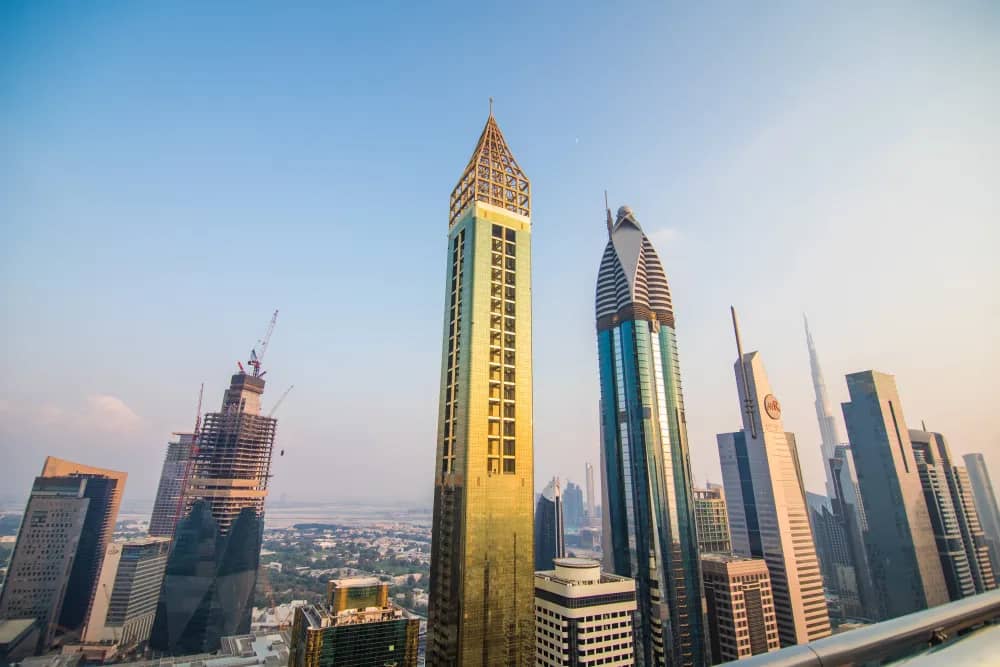
In architectural terms, a supertall building clears 300 metres. A megatall clears 600 metres. The UAE currently has more buildings in both categories under active construction than any other country outside China. That statistic is not a point of civic pride; it is a signal about capital flows, developer confidence, and the long-term trajectory of the dubai property market.
Mixed-use supertalls are structurally different from conventional residential towers. They combine hotel keys, branded residences, retail podiums, and entertainment floors into a single address. That stacking of asset classes under one title deed changes the investment equation: the building generates its own footfall, its own media profile, and, critically, its own micro-market for resale and rental.
Azizi's mega-tower and the broader construction wave
Azizi Developments is currently building one of the tallest towers on the planet. The project, located along Sheikh Zayed Road in Dubai, is projected to exceed 700 metres, which would place it among a handful of megatalls globally. It integrates residential, hotel, retail, and entertainment components across more than 130 floors. At that scale, the tower is not simply a building; it becomes a district-defining landmark in the same way the Burj Khalifa reshaped Downtown Dubai after its 2010 completion.
Azizi is not alone. Several other developers are advancing ultra-tall projects across the emirate. DAMAC Properties has its own tower pipeline in Business Bay and adjacent corridors. Emaar Properties continues to develop at scale around Dubai Creek Harbour, where Creek Tower remains one of the most-watched height records in the world. The common thread across all these projects is ambition paired with mixed-use programming, a combination that typically generates stronger long-term demand than a mono-use residential slab.
How landmark towers historically affect surrounding values
The data around the Burj Khalifa provides the clearest local precedent. Off-plan units sold in the tower and in the immediate Downtown cluster during 2006 to 2008 appreciated substantially once the building opened and the neighbourhood consolidated its identity. Buyers who held through the 2009 correction and into the 2012 to 2014 recovery cycle captured outsized gains relative to mid-rise product elsewhere in the city.
A similar dynamic played out around the Palm Jumeirah and, more recently, around Dubai Creek Harbour, where land values and off-plan prices have shifted materially as infrastructure has been delivered. The pattern is consistent: a landmark project attracts retail, hospitality, and public realm investment around it, and that investment reprices the adjacent residential stock within three to five years of handover.
Investors watching the current wave of UAE supertalls are essentially observing the early innings of that same cycle. The question is not whether these towers will reshape their neighbourhoods; the question is whether a buyer's entry point comes before or after the repricing happens.
Off-plan entry mechanics: what investors should understand
Buying off plan in Dubai inside a supertall project carries a specific risk profile. Construction timelines on towers above 400 metres typically run six to ten years from groundbreaking to handover. That duration requires capital discipline, confidence in the developer's track record, and a clear view of the payment plan structure. Most major developers offer post-handover payment plans that reduce the financing burden, but buyers should stress-test these against their own liquidity needs.
Service charges on supertall mixed-use buildings are a non-trivial consideration. The operational complexity of maintaining a 100-plus-floor structure with hotel, retail, and residential functions creates a cost base that is structurally higher than a standard residential tower. Buyers should model service charge scenarios carefully before committing. Our service charge calculator can help frame those numbers against expected rental yields.
The regulatory side is straightforward. Dubai's Real Estate Regulatory Agency requires developers to register all off-plan projects with an escrow account before launching sales. Buyers should verify project registration on the RERA Oqood system before transferring any funds. A full walkthrough of the acquisition process is covered in our guide to buying property in Dubai.
Which investor profiles suit mega-tower off-plan purchases
Supertall off-plan units are not the right vehicle for every buyer. The extended timeline, higher price per square foot, and elevated service charges make them best suited to investors with a five-plus-year horizon who are prioritising capital appreciation over near-term yield. That said, hotel-branded residences within these towers often carry short-term rental licences by default, which can support yield generation once the building opens.
For investors primarily focused on yield from day one, established communities such as Dubai Marina or Jumeirah Village Circle offer lower entry points and immediate rental demand. Supertalls sit in a different segment of the portfolio: they are a long-horizon, appreciation-led bet on Dubai's continued ascent as a global city.
One additional angle worth noting: qualifying purchases inside these towers frequently meet the AED 2 million threshold for the UAE Golden Visa through Dubai property, giving long-term residency as a parallel benefit to the investment.
Due diligence checklist before committing to a supertall unit
Start with the developer's delivery record. Has this developer handed over supertall or large-scale mixed-use projects before? Delays on complex high-rise builds are common globally; the question is how a developer has managed them historically. Check RERA's developer rating and review completed project timelines publicly available through the DLD portal.
Second, clarify the strata structure. In mixed-use towers, the residential, hotel, and retail components are often governed by separate owners' associations. Understanding which association manages your floor's common areas, and what that implies for service charges and governance, is essential before signing an SPA. If you are new to this process, speaking with a RERA-licensed broker who has handled supertall transactions is a practical first step. You can explore current Dubai properties for sale across all project types to benchmark what is available at different price points.
Frequently asked questions
Are off-plan units in UAE supertalls a good investment?
They can be, but the case depends on your investment horizon and risk tolerance. Buyers with a five-plus-year timeline and a focus on capital appreciation have historically done well in landmark mixed-use towers. Short-term yield investors are better served by established mid-rise communities with immediate rental demand.
What is the typical construction timeline for a supertall tower in Dubai?
Towers above 400 metres typically take six to ten years from groundbreaking to handover. Buyers should factor this into their payment plan planning and liquidity requirements, particularly if they are relying on post-handover rental income.
How do service charges work in mixed-use supertall buildings?
Mixed-use supertalls carry higher service charges than standard residential towers because of the operational complexity involved in maintaining hotel, retail, and residential floors simultaneously. Buyers should request a projected service charge per square foot from the developer and stress-test this against expected rental yields before committing.
Does buying a unit in a supertall qualify me for the UAE Golden Visa?
If the purchase price meets or exceeds AED 2 million, it qualifies for the UAE Golden Visa through property ownership. Many units in supertall branded residences exceed this threshold, making visa eligibility a secondary benefit of the investment.
Which Dubai developers are currently building the largest towers?
Azizi Developments is constructing one of the tallest buildings in the world on Sheikh Zayed Road, incorporating residential, hotel, retail, and entertainment uses. DAMAC Properties and Emaar Properties are also advancing major high-rise projects, with Emaar's Creek Tower remaining one of the most-watched projects in the region.
More Off-Plan posts
 Off-Plan
Dubai's supertall towers: what they mean for off-plan buyers
Dubai's skyline is reshaping faster than most investors track. Here's what the wave of supertall construction actually means for buyers and capital values.
By Roy El Baba Off-Plan
Why lifestyle-led mixed-use projects sell out in Dubai
Imtiaz sold out RAW District 2 on launch day for AED 1.5 billion. Here is what that tells you about where Dubai buyer demand is heading.
By Roy El Baba Off-Plan
Why off-plan luxury in Dubai beats the secondary market
Off-plan luxury in Dubai isn't just cheaper at entry. The payment structures, developer credibility signals, and capital appreciation mechanics give it a structural edge over secondary market buying.
By Roy El Baba Off-Plan
5 developer metrics every off-plan buyer must check in 2025
Before signing an off-plan SPA in Dubai, savvy buyers are scrutinising five specific developer metrics. Here is exactly what to check and where to find it.
By Roy El Baba