Sharjah Sustainable City
Sharjah community · 0 off-plan projects
About Sharjah Sustainable City
Sharjah Sustainable City is one of the UAE's most deliberate attempts to build a genuinely low-carbon residential community from the ground up. Developed under the Shurooq umbrella, it sits in Sharjah's growth corridor and targets buyers who want something more considered than the average off-plan tower. This isn't a greenwashed marketing label — the master-plan is built around solar energy, waste management, and car-reduced living in a way that few communities in the wider emirate can match. Our honest take: it's early-stage, the surrounding infrastructure is still catching up, but the direction of travel is right and the pricing reflects where it is today, not where it's heading.
Market overview
Our catalogue currently lists one active project here — Sharjah Sustainable City 2 by Shurooq, status Coming Soon — which tells you something useful about the supply picture: this is a community in its second phase of delivery, not a saturated market with twenty competing launches fighting for the same buyer pool.
Sharjah as an emirate has historically priced at a meaningful discount to Dubai. Villas and townhouses in Sharjah's planned communities typically trade in the AED 400–700 per sqft range depending on finish, plot size, and proximity to key roads. Sharjah Sustainable City sits at the upper end of that band for the emirate — buyers are paying a modest premium for the eco-credentials and the master-plan quality, and in our experience that premium is justified when you compare the build specification against generic Sharjah suburban product.
The 'Coming Soon' status of Phase 2 is actually a signal worth reading carefully. Shurooq wouldn't be launching a second phase unless Phase 1 absorption was tracking well. Developers in this market don't commit to follow-on phases out of optimism alone. That's a data point our investors take seriously.
Price bands for off-plan units in this community tend to attract end-users and long-horizon investors rather than short-flip traders. The ticket sizes are accessible — Sharjah's lower land costs mean you can get a townhouse with a garden at a price point that would buy you a mid-floor apartment in Dubai's mid-market zones. That affordability gap is the single biggest commercial argument for this area.
In our experience, buyers who come to Sharjah Sustainable City have usually already ruled out Dubai on budget grounds, then discovered that the product here is genuinely competitive on quality. The conversion rate from first viewing to offer is higher than you'd expect for a community this early in its lifecycle.
Living in Sharjah Sustainable City
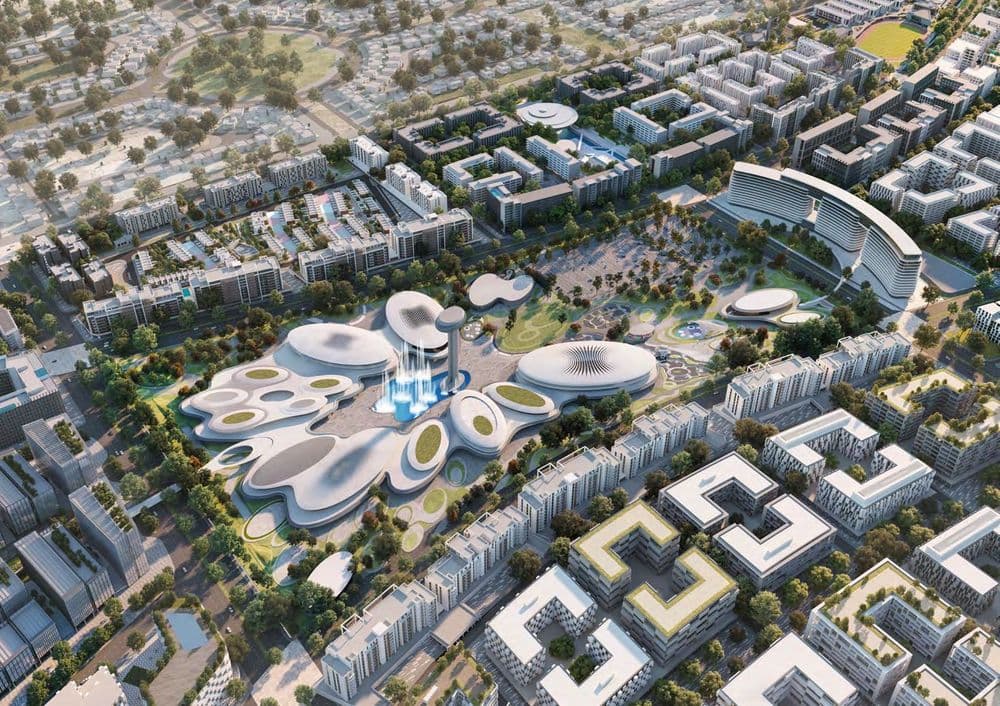
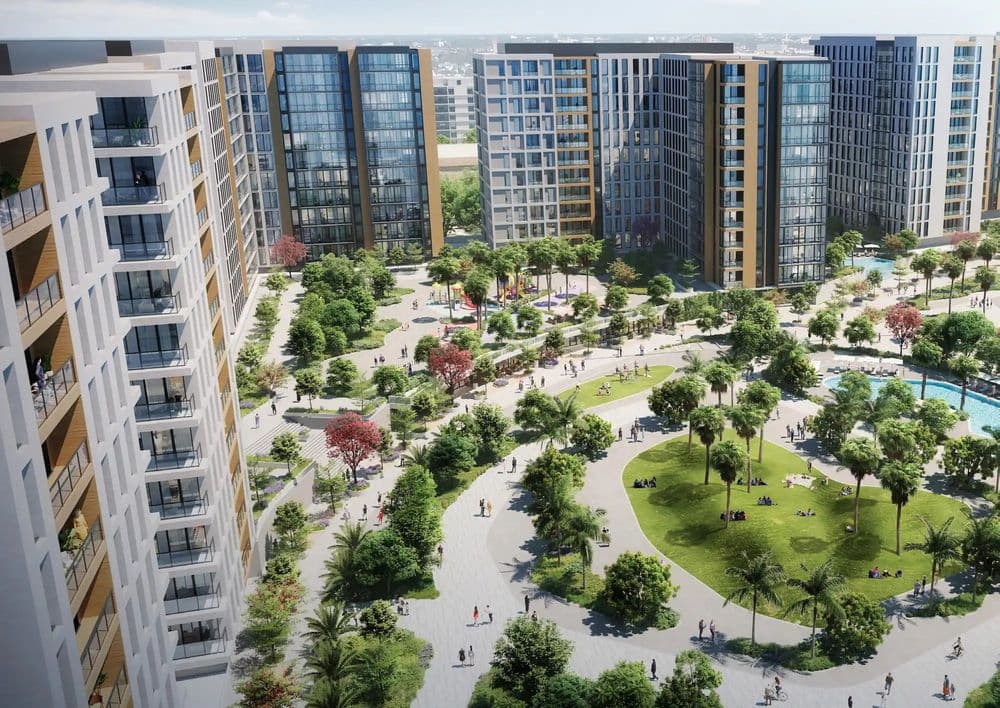
This is unambiguously a family-oriented community. The master-plan prioritises pedestrian paths, cycling tracks, and communal green space over density — the kind of layout that makes sense if you have children or simply want to walk to a neighbour's house without crossing a six-lane road.
The demographic our buyers tend to fit here is the cost-conscious family: dual-income households priced out of Dubai's villa communities, Sharjah-based professionals who want to own rather than rent, and a smaller cohort of sustainability-minded buyers for whom the solar and waste-management infrastructure is a genuine draw rather than a marketing afterthought.
Dining and retail within the community itself is limited at this stage — that's the honest answer. The surrounding area is developing, and you'll be driving to Sharjah City Centre or the Al Zahia corridor for most of your shopping and restaurant needs in the near term. That changes as the community matures, but buyers should go in clear-eyed about the current amenity gap.
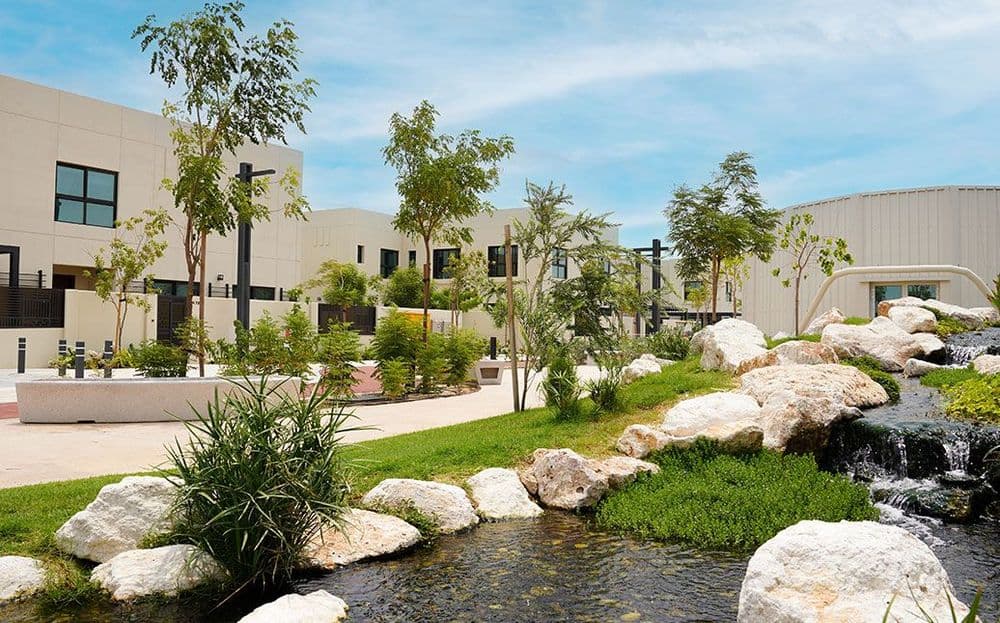
What the community does deliver well right now is space and quiet. Plots are generous by UAE standards, the streetscape is low-rise, and the absence of high-density towers means it doesn't feel like a construction site even while it's growing. That's rarer than it sounds.
Walkability within the community is good. Walkability to external destinations is not — you need a car. For families with school-age children, the school-run dynamic is a real consideration, and we'd encourage buyers to map out their nearest school options before committing.
Schools, healthcare & retail
Schools within reach:
- GEMS schools operate several campuses across Sharjah reachable within 15–20 minutes
- Sharjah's University City corridor, home to American University of Sharjah and University of Sharjah, is accessible for older students
- Several Indian curriculum schools serve the wider Sharjah suburban belt
- British curriculum options exist in central Sharjah, though the drive adds time to the morning run
Healthcare:
- Sharjah's public hospital network covers the area; University Hospital Sharjah is among the better-regarded facilities in the emirate
- Private clinics and polyclinics are present in the surrounding suburban zones, with more comprehensive private hospital options in central Sharjah
Retail & daily needs:
- Al Zahia City Centre (Sharjah) is the nearest major retail anchor, approximately 15–20 minutes away
- Sharjah City Centre provides a broader retail and dining offer within a similar drive time
- Community-level retail within Sharjah Sustainable City itself is planned as part of the master-plan but remains limited in the current phase
- Hypermarket access (Carrefour, Lulu) is available in the surrounding Sharjah suburbs
The amenity picture is honest: sufficient for day-to-day needs, not yet the self-contained community it will eventually become.
Getting around
Sharjah Sustainable City sits in the Sharjah interior, which means connectivity to Dubai is real but not instant. The drive to Dubai's DIFC runs approximately 35–45 minutes in normal traffic via Emirates Road (E611) or Al Dhaid Road — add 15–20 minutes during peak hours, and that's not a small addition. Burj Khalifa and Downtown Dubai are in a similar range. Dubai Marina is further, typically 50–60 minutes.
Dubai International Airport (DXB) is roughly 30–35 minutes depending on the entry point, which is actually one of the stronger connectivity arguments for Sharjah's eastern growth corridor. Al Maktoum International (DWC) is a longer drive — allow 60–70 minutes.
There is no metro connection. This is a car-dependent location, and we won't dress that up. The RTA bus network serves parts of Sharjah but doesn't make the community genuinely transit-accessible by Dubai standards.
For buyers who work in Sharjah itself — the industrial areas, University City, or the central business district — the commute picture is considerably better. Sharjah's internal road network, while congested at peak times, keeps most intra-emirate journeys under 20 minutes from this location.
Our honest summary: connectivity is adequate for Sharjah-based workers and manageable for Dubai commuters who travel off-peak. If you're doing a daily 8am drive to DIFC, factor the commute cost into your decision.
Investment outlook
Sharjah's rental market has held up well over the past several years, driven by a tenant base that is largely priced out of Dubai and unwilling to extend further into the northern emirates. That structural demand underpins yields in a way that feels durable rather than cyclical.
For villa and townhouse product in Sharjah's planned communities, gross rental yields typically sit in the 6–8% range — above what you'd achieve on comparable Dubai villa stock, which tends to compress toward 4–6% in established areas. The trade-off is lower absolute capital values and, historically, slower price appreciation than Dubai's prime and mid-market zones.
Sharjah Sustainable City adds a layer to that calculation. The eco-positioning attracts a tenant profile — families, professionals with environmental preferences, expats from markets where sustainable living is a baseline expectation — who tend to stay longer and maintain properties better. Longer tenancies mean lower void periods, which matters more to net yield than the headline gross figure.
The 'Coming Soon' status of Phase 2 means early movers are buying into a community that hasn't yet reached its full amenity and population density. That's a risk, but it's also where the pricing opportunity sits. Communities like this typically see their sharpest capital appreciation between the off-plan launch and the point at which the community feels 'complete' — usually three to five years post-handover of the final phase.
Resale liquidity in Sharjah is thinner than Dubai. That's a fact, not a criticism. Exit timelines are longer, and the buyer pool for resales is narrower. Investors should treat this as a medium-to-long hold.
Our editorial line: cautiously bullish. The fundamentals — affordable entry, genuine master-plan quality, structural rental demand, and a second phase signalling developer confidence — point in the right direction. Just don't expect a quick flip.
Frequently asked questions about Sharjah Sustainable City
Is Sharjah Sustainable City a good investment in 2025–2026?
We think it's one of the more interesting plays in the Northern Emirates right now. Eco-focused communities are attracting a growing pool of end-users and tenants who actively seek lower utility bills and greener living — and that demand is only strengthening. Entry prices are still well below comparable Dubai projects, which gives buyers meaningful upside. We're seeing early-phase units in Sharjah Sustainable City 2 move quickly, so locking in now before handover pricing adjusts makes sense.
What is the typical price per sqft in Sharjah Sustainable City?
Based on current listings in our catalogue, prices for villas and townhouses in Sharjah Sustainable City sit roughly between AED 450–600 per sqft, depending on unit size, phase, and finish level. Sharjah Sustainable City 2 by Shurooq is priced competitively within that range. For context, comparable eco-community product in Dubai can run 2–3× higher, which is a big part of why our buyers from Dubai are taking a serious look here.
Who are the main developers active in Sharjah Sustainable City?
The master developer behind the entire community is Shurooq (Sharjah Investment and Development Authority), working in partnership with Diamond Developers — the same team behind the original Sustainable City in Dubai. In our catalogue we currently carry Sharjah Sustainable City 2 by Shurooq. Having a government-backed developer at the helm gives our buyers added confidence around delivery timelines and long-term community management.
What rental yields can I expect in Sharjah Sustainable City?
Gross rental yields in this community are tracking around 6–7% annually based on comparable eco-villa communities in Sharjah. The built-in sustainability features — solar panels, reduced DEWA-equivalent bills, and organic farms — are genuine selling points that help landlords command a premium and keep vacancy low. In our experience, tenants who choose this community tend to stay longer, which reduces turnover costs and keeps your net yield healthy.
What is the commute from Sharjah Sustainable City to Dubai like?
The community sits in the Al Rahmaniya area of Sharjah, roughly 30–40 minutes to DIFC or Business Bay outside peak hours via Emirates Road (E611). During morning rush hour, budget 50–60 minutes. It's not a DIFC-doorstep location, but many of our buyers are remote workers or business owners who commute 2–3 times a week — for them, the price-to-space ratio more than compensates for the drive.
What schools and amenities are near Sharjah Sustainable City?
Within a 10–15 minute drive you'll find several well-regarded schools including GEMS schools in Muwaileh and a number of Sharjah-based curriculum options (British, American, Indian). The community itself includes cycling tracks, organic farms, and a retail strip. For larger retail, Al Zahia City Centre and Sharjah City Centre are both under 20 minutes away. We always advise buyers with school-age children to confirm specific school catchment zones before committing.
What makes Sharjah Sustainable City different from a standard villa community?
The difference is structural, not just marketing. Homes here are built with solar energy systems, grey-water recycling, and insulated facades that can cut utility costs by up to 50% compared to a standard villa. The community is car-lite by design, with pedestrian spines and cycling paths connecting homes to amenities. For our buyers who've done the numbers, the long-term saving on bills meaningfully offsets the purchase price — it's a practical financial argument as much as a lifestyle one.
Get the Sharjah Sustainable City market brief
Live listings, off-plan launches, recent transactions and rental yields — direct from our advisors. No inflated commissions, no spam. One business-day reply.