
Abu Dhabi's 17.8% price surge makes Dubai look cheap
Abu Dhabi residential prices jumped 17.8% year-on-year in Q2 2026. Here is why that number makes Dubai the smarter entry point for UAE capital appreciation.
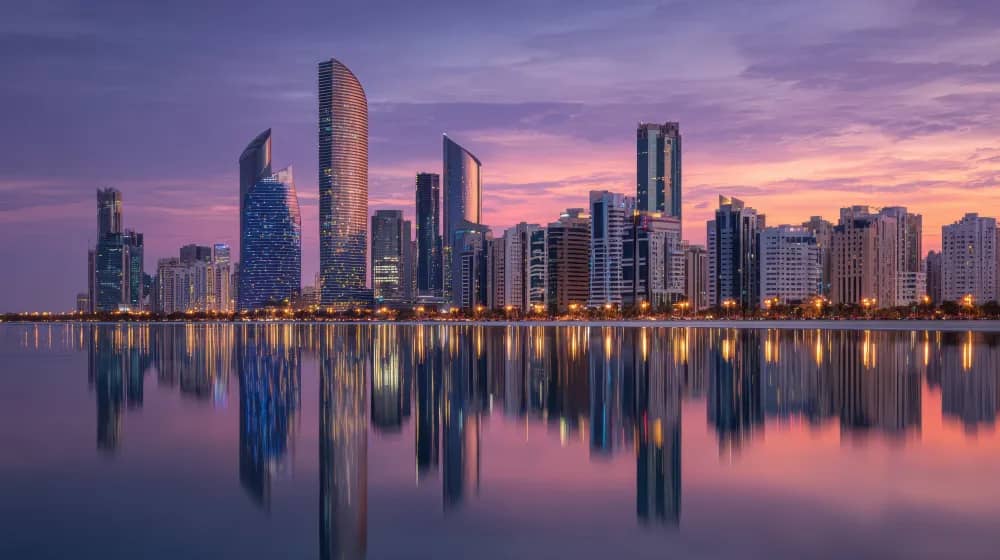
Abu Dhabi's Q2 2026 numbers in context
Abu Dhabi residential property prices rose 17.8% year-on-year in Q2 2026, while office rents in the capital climbed 27.3% over the same period. Those are headline figures that would stop any serious investor. Apartment demand is outpacing villa demand, a structural shift that mirrors what Dubai experienced roughly two years earlier. The acceleration confirms that UAE real estate as a whole is in a sustained growth cycle, not a single-market story.
For investors already tracking the dubai property market, the Abu Dhabi data matters for one specific reason: it resets the regional benchmark. When a neighbouring market records nearly 18% annual price growth, it forces a hard look at what comparable assets are trading for across the emirate border. On a per-square-foot basis, that comparison consistently favours Dubai, particularly in the mid-tier and emerging communities that still price below their long-run potential.
Where Dubai sits on price per square foot today
Dubai's weighted average apartment transaction price in Q1 2026 was approximately AED 1,450 per square foot across all segments, according to DLD data. Established waterfront districts trade materially higher: Dubai Marina and Jumeirah Beach Residence (JBR) typically clear AED 2,000 to 2,400 per square foot for completed stock. But that is still below equivalent waterfront product in Abu Dhabi's Yas Island and Saadiyat Island corridors, where prices have been pushed up sharply by the recent run.
Mid-market communities widen the gap further. Jumeirah Village Circle consistently transacts between AED 900 and 1,150 per square foot. Dubai Creek Harbour sits roughly in the AED 1,600 to 1,900 range for newer handovers. Dubai Hills Estate, a master-planned community with Emaar's school and hospital infrastructure built in, trades between AED 1,400 and 1,700 for apartments. None of these communities have experienced the kind of compressed supply that is now driving Abu Dhabi's double-digit growth, which means the upside case in Dubai is still intact rather than already priced in.
Supply pipeline is the key variable investors miss
The Abu Dhabi surge is partly a supply story. The capital's residential pipeline has been constrained relative to demand, particularly in the apartment segment. Dubai's pipeline is larger in absolute terms, but population growth and inbound migration have kept absorption rates healthy. The city added an estimated 100,000 new residents in 2025 alone, based on GDRFA statistics, and off-plan launch volumes, while elevated, have not yet produced the oversupply conditions that dragged the market in 2015 to 2019.
Investors evaluating Dubai off-plan projects should read the Abu Dhabi trajectory as a leading indicator. When a market with tighter supply records 17.8% annual growth, it illustrates what happens to prices once the supply-demand balance tips. Several Dubai communities are approaching that inflection point. Business Bay and Downtown Dubai have seen secondary market volumes compress over the past 18 months precisely because available inventory is thinning. That dynamic, not headline sentiment, is what drives durable price appreciation.
The Golden Visa equation strengthens Dubai's case
One structural advantage Dubai holds over Abu Dhabi for international investors is the clarity and track record of its residency-by-investment pathway. A completed or off-plan property purchase of AED 2 million or more qualifies the buyer for a 10-year UAE Golden Visa through Dubai property. That threshold is achievable in multiple Dubai communities without requiring a waterfront premium, and the visa attaches to the individual rather than requiring continuous stay.
Abu Dhabi offers its own residency programmes, but Dubai's golden visa pipeline is more mature, with a larger base of professional advisors, faster processing through DLD, and broader secondary market liquidity if the investor eventually exits. For buyers weighing golden visa dubai benefits as part of their investment thesis, Dubai currently offers the more predictable outcome. The residency premium is effectively embedded in the asset price without being fully capitalised yet.
How to position a Dubai portfolio against this backdrop
The clearest takeaway from Abu Dhabi's Q2 2026 data is that UAE real estate is not a single-speed market. Different segments and cities are moving through different phases of the same growth cycle. Dubai investors who bought in 2020 to 2022 have already captured significant appreciation. The question for 2025 to 2027 entrants is where the next leg of growth is most structurally supported.
Communities with strong infrastructure commitments and developer credibility sit at the top of that list. Aldar Properties has expanded its footprint into Dubai, which itself signals where institutional capital sees relative value. Developers like Emaar Properties, Sobha Realty, and Nakheel continue to launch in areas with genuine demand depth rather than speculative fringe locations. For buyers learning how to buy property in Dubai, the research framework should start with supply data, not marketing brochures.
A practical starting point is mapping transaction volume trends in target communities over the past four quarters. Rising volume with rising prices confirms genuine demand. Rising prices with falling volume often signals a liquidity thin-out, which increases short-term risk. Run both filters before committing, and use the Abu Dhabi 17.8% figure not as a target for Dubai but as evidence that the regional cycle still has room to run.
Bottom line for investors entering now
Abu Dhabi's double-digit price surge is a regional signal, not a Dubai story. It confirms that UAE real estate fundamentals are sound and that demand is structurally underpinned by population growth, visa policy, and limited institutional-grade supply. Dubai, despite its own strong run since 2021, still trades at a discount to Abu Dhabi on a per-square-foot basis in several comparable community types.
That relative value gap does not stay open indefinitely. Markets that offer lower entry points with comparable or superior liquidity, infrastructure, and residency benefits tend to close the discount over time. Investors who treat dubai real estate as a long-term capital allocation rather than a short-term trade are better positioned to benefit from that convergence. The window is not unlimited, but it is still open.
Frequently asked questions
Why did Abu Dhabi property prices rise 17.8% in Q2 2026?
The increase reflects a combination of constrained residential supply, particularly in the apartment segment, and strong demand driven by Abu Dhabi's economic expansion and population inflows. Office rent growth of 27.3% over the same period indicates broad economic activity supporting housing demand.
Is Dubai property still cheaper than Abu Dhabi per square foot?
Yes, on a like-for-like basis across several community types. Dubai's mid-market communities such as Jumeirah Village Circle and Dubai Hills Estate trade at per-square-foot prices that remain below comparable Abu Dhabi waterfront and master-planned inventory, which has been pushed higher by recent price appreciation.
Does the Abu Dhabi price surge affect the Dubai off-plan market?
Indirectly, yes. Strong regional price performance increases investor confidence in UAE real estate broadly, which supports off-plan demand in Dubai. It also draws attention to communities where supply is still available at pre-appreciation pricing, making well-timed off-plan purchases more attractive.
How does the UAE Golden Visa factor into a Dubai property investment?
A purchase of AED 2 million or more in completed or qualifying off-plan property in Dubai makes the buyer eligible for a 10-year UAE Golden Visa. This adds a residency dimension to the financial return, effectively increasing the total value of the investment beyond rental yield and capital gains alone.
Which Dubai communities offer the best relative value for capital appreciation?
Communities with tightening supply, strong developer credentials, and growing infrastructure commitments tend to show the most durable appreciation. Dubai Creek Harbour, Dubai Hills Estate, and Business Bay have each demonstrated rising transaction volumes alongside price growth, which signals genuine demand rather than speculative activity.
More Market Insights posts
 Market Insights
Why Dubai's gated golf villas are being re-priced at record levels
A Dh110m villa sale in Jumeirah Golf Estates nearly doubled the community record. Here is what is actually driving ultra-luxury villa pricing in Dubai.
By Roy El Baba Market Insights
What a $45 million apartment sale tells us about Dubai's ultra-prime market
Dubai's property market hit $15.3bn in July, up 17%. A single $45m apartment sale reveals who the ultra-prime buyer is and what mid-market investors should watch.
By Roy El Baba Market Insights
Dubai property market jumps 17%: what buyers should do now
Dubai recorded $15.3bn in property transactions in July, a 17% monthly rise. Here is what that number means if you are considering buying, renting, or investing now.
By Roy El Baba Market Insights
Dubai policy tracker: what recent regulatory shifts mean for buyers
Visa threshold updates, DLD rule changes, and fuel price adjustments all affect your cost of ownership. Here is what each shift means in practice.
By Roy El Baba