

Dubai commercial property sales break H1 records in 2025
Dubai's commercial real estate sector has already surpassed its full-year 2024 transaction total by mid-2025. Here's what that means for investors.
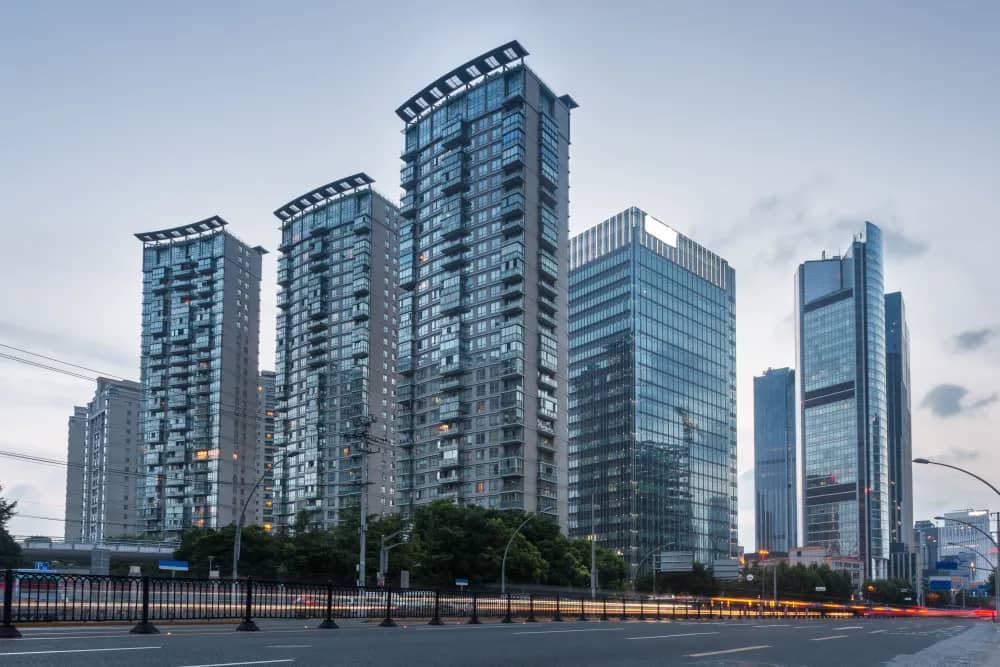
H1 2025 commercial transactions surpass a full year
Dubai's commercial real estate sector has crossed a threshold that few analysts predicted this early in the cycle. Transaction volumes recorded in the first half of 2025 have already exceeded the entirety of 2024's commercial sales figures, making H1 2025 the strongest opening period the segment has ever posted. This is not a seasonal uptick. It reflects a structural shift in how institutional buyers, SMEs, and high-net-worth individuals are allocating capital across the Dubai property market.
The milestone matters because commercial real estate has historically been treated as a secondary consideration in Dubai, overshadowed by the residential narrative. That narrative is being rewritten. Demand is broad-based, spanning fitted offices, shell-and-core units, retail podiums, and mixed-use strata assets. Buyers are not concentrating in one pocket of the city; they are active across several established business districts simultaneously.
Where commercial demand is concentrating
Business Bay remains the highest-volume commercial submarket in Dubai. Its density of Grade A office towers, walkable retail streets, and proximity to Downtown makes it the default choice for regional headquarters and financial services firms. Strata office prices in Business Bay have firmed considerably over the past 18 months as supply of ready, fitted units has tightened against consistent occupier demand.
Jumeirah Lake Towers (JLT) is the second major commercial cluster absorbing significant buyer interest. JLT appeals to a different buyer profile: SMEs, consulting firms, and DMCC-licensed entities that want DMCC freezone status alongside cost-effective floor plates. Office yields in JLT have historically tracked above the citywide average, partly because entry prices remain lower than Business Bay on a per-square-foot basis while occupancy rates stay relatively firm.
Dubai Silicon Oasis is also drawing attention from tech-sector buyers who need both office and light-industrial accommodation within a single integrated zone. Mixed-use commercial assets in DSO benefit from specific free zone incentives and have attracted a growing number of regional tech companies establishing their UAE base.
What is driving investor appetite in commercial assets
Several converging factors explain the acceleration. First, Dubai's corporate population has expanded sharply since 2022 as international firms, family offices, and financial institutions have relocated or established regional bases here. That expansion creates direct occupier demand, which in turn creates buy-to-let demand from investors purchasing offices and retail units to lease to incoming businesses.
Second, commercial assets in freehold zones allow full foreign ownership, and a qualifying commercial investment can, under certain structures, contribute toward residency pathways. Buyers researching UAE Golden Visa through Dubai property are increasingly looking at commercial assets alongside residential ones, particularly where the commercial unit meets the minimum investment threshold.
Third, the interest rate environment, while still elevated by historical standards, has begun to shift investor calculations. Commercial yields in core Dubai locations currently range from approximately 6 to 9 percent gross depending on asset type, submarket, and tenant covenant. That spread over financing costs remains attractive for cash buyers and is increasingly viable for leveraged buyers as rates edge lower.
Office versus retail versus mixed-use: risk profiles differ
Not all commercial assets carry the same risk-return profile, and the record H1 figures should not be read as a green light across the board. Grade A fitted offices in core locations like Business Bay command premium pricing but benefit from stronger tenant covenants and lower vacancy risk. Shell-and-core units require the buyer to fund fit-out, which adds holding cost and time before the asset becomes income-generating.
Retail assets are more exposed to foot traffic cycles and require careful due diligence on the surrounding residential catchment. Ground-floor retail in a high-density residential cluster, such as Jumeirah Village Circle, can generate solid returns when the surrounding population density supports daily-needs occupiers. Destination retail in lower-footfall locations carries meaningfully higher vacancy risk.
Mixed-use strata assets, where an investor owns a commercial unit within a larger development that combines residential, hospitality, and retail, offer diversification at the asset level. Dubai Creek Harbour is one example of a master development where mixed-use commercial units are now transacting as the wider district matures. Due diligence on service charges is essential for any commercial strata purchase; the service charge calculator is a useful starting point for estimating annual running costs before committing.
How to approach commercial property due diligence in Dubai
The process for purchasing a commercial unit in Dubai follows the same broad framework as residential, but several steps carry additional weight. Confirming the zoning classification, understanding whether the unit sits within a free zone or on mainland DLD-registered land, and verifying that the intended business activity is permitted within that zone are all prerequisites before any offer is made. Our guide on how to buy property in Dubai covers the transactional steps in detail.
For investors considering Dubai properties for sale in the commercial segment specifically, working with a RERA-licensed broker who understands commercial lease structures, fit-out obligations, and service charge regimes will reduce the risk of post-purchase surprises. Commercial transactions in Dubai also attract DLD transfer fees of 4 percent of the purchase price, and buyers should factor this into their total acquisition cost alongside agent fees, which are typically 2 percent on commercial deals.
Reading the record: what H1 data signals for H2 and beyond
Record first-half transaction volumes do not automatically mean prices will continue rising in a straight line. What the H1 data does confirm is that liquidity in Dubai's commercial segment is deeper than it has been at any point in the market's history. More buyers, more transactions, and more price discovery create a more efficient market, which is ultimately a healthier environment for both purchasers and sellers.
The pipeline of new commercial supply, particularly in Business Bay and the wider Downtown corridor, will influence whether yields compress further or stabilize. Investors entering now are buying into a market with strong momentum and genuine occupier demand, but they should underwrite conservatively: model yields at current market rates, stress-test for a 10 to 15 percent vacancy period, and ensure the asset makes sense at those numbers before relying on further capital appreciation to make the deal work.
Frequently asked questions
Can foreign nationals buy commercial property in Dubai?
Yes. Foreign nationals can purchase commercial property in designated freehold zones across Dubai, including Business Bay and JLT. The process is governed by the Dubai Land Department and a RERA-licensed broker should guide you through the specific zoning requirements for your intended use.
What yields can investors expect from Dubai commercial property?
Gross yields on commercial assets in core Dubai locations currently range from approximately 6 to 9 percent depending on asset type, submarket, and tenant quality. Grade A offices with long-term leases at the lower end, and smaller strata retail units with shorter lease terms at the higher end.
Does buying commercial property in Dubai qualify for a Golden Visa?
A commercial property investment can contribute toward Golden Visa eligibility if the investment meets the minimum threshold currently set at AED 2 million. The visa pathway and qualifying asset types should be confirmed with a RERA-licensed broker and a UAE immigration specialist before purchase.
What is the DLD transfer fee on commercial property in Dubai?
The Dubai Land Department charges a 4 percent transfer fee on the purchase price of commercial properties, the same rate as residential. Buyers should also budget for agent fees, which are typically 2 percent, and any applicable registration trustee fees.
Which Dubai districts are most active for commercial property investment in 2025?
Business Bay and JLT are the two highest-volume commercial submarkets based on current transaction data. Dubai Silicon Oasis is seeing growing interest from tech-sector buyers, and mixed-use commercial assets in newer master developments like Dubai Creek Harbour are also transacting as those districts mature.
More Market Insights posts
 Market Insights
Dubai supply wave 2026: what buyers need to know now
Tens of thousands of new units are due for delivery across Dubai and the UAE by end of 2026. Here is how smart buyers should position themselves before the wave lands.
By Roy El Baba Market Insights
What a Dh260 million Palm Jumeirah sale tells buyers
A single villa transaction on Palm Jumeirah just hit Dh260 million. Here is what that figure reveals about micro-location pricing across the entire island.
By Roy El Baba Market Insights
Dubai hits AED 523bn in 8-month transactions: what it means for Q4
Dubai recorded AED 523.44bn in property transactions across the first eight months of the year. Here is what the deal-type breakdown tells investors about Q4 entry timing.
By Roy El Baba Market Insights
Dubai's $12.6bn August: what the numbers actually tell you
Dubai recorded $12.6bn in total transactions in August, with a single Palm Jumeirah villa selling for $21.5m. Here is what the segment data means for buyers and investors.
By Roy El Baba