

Dubai commercial real estate breaks records in H1 2026
Dubai's commercial property sector hit $5.31 billion in H1 2026, already beating the full 2025 total. Here's where smart investors are looking next.
H1 2026 sets a new benchmark for commercial sales
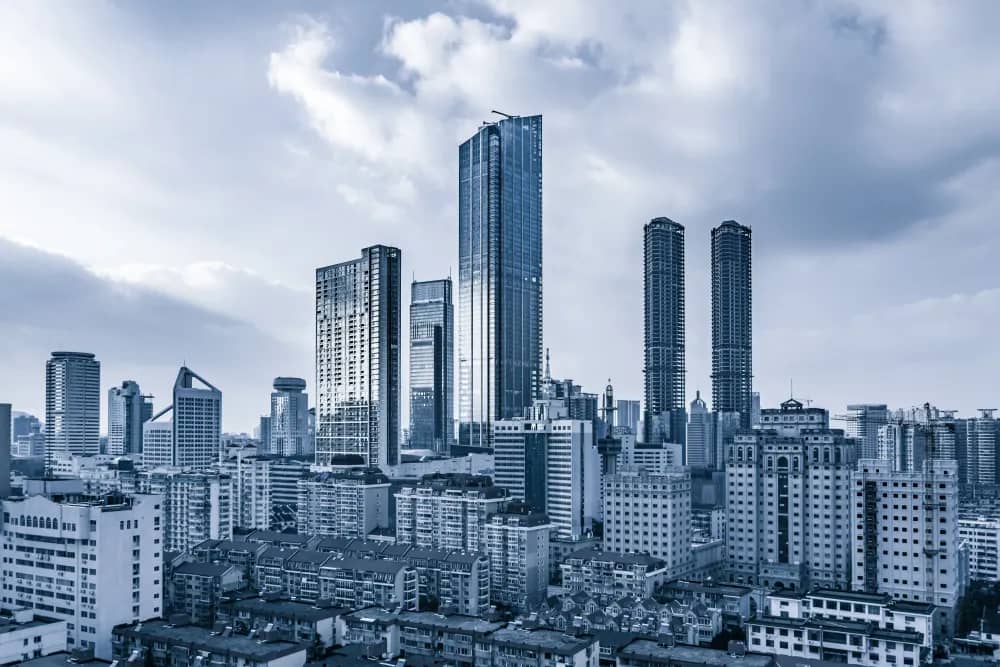
Dubai's commercial real estate sector recorded $5.31 billion in transaction value during the first half of 2026. That single figure already surpasses the full-year 2025 total, and there are still six months left in the calendar. For context, this is not incremental growth. It represents a structural shift in how capital is being deployed across the Dubai property market.
The acceleration reflects a convergence of factors: a maturing regulatory environment, sustained business formation driven by foreign company relocations, and a growing recognition that commercial assets in Dubai can generate yields that residential stock increasingly struggles to match. Buyers who were once focused exclusively on apartments and villas are now running comparative numbers on offices, retail units, and mixed-use floors.
Why investors are rotating from residential to commercial
Residential prices in core communities have risen sharply over the past three years. That appreciation has compressed entry-level yields in established submarkets, pushing investors to look elsewhere. Commercial assets, particularly mid-sized office floors and retail units with long-term tenants, now offer gross yields in the 7 to 9 percent range in several districts. That spread over comparable residential yields is difficult to ignore.
There is also a structural demand argument. Dubai added tens of thousands of new business licences in 2024 and 2025, and a significant proportion of those businesses eventually need physical premises. The pipeline of new commercial stock has not kept pace with this demand in premium locations, which supports both occupancy and rent growth. Investors who understand the supply-demand dynamics are positioning early.
If you are new to the mechanics of transacting in the emirate, the How to buy property in Dubai guide covers the full acquisition process, including DLD fees, NOC requirements, and title deed registration steps that apply equally to commercial and residential transactions.
Business Bay and Downtown: core commercial corridors
Business Bay remains the most liquid commercial market in Dubai. Office floors here trade frequently, and the tenant mix ranges from financial services firms to technology companies and regional headquarters. Average office rents have climbed in consecutive quarters, and vacancy rates in Grade A stock are tight. For investors seeking a balance of capital liquidity and recurring income, Business Bay is the default starting point.
Downtown Dubai sits adjacent to Business Bay and targets a slightly different buyer profile. Commercial units here benefit from the Burj Khalifa address premium, which matters for certain categories of tenants willing to pay above-market rents. Retail space in and around the Dubai Mall precinct commands some of the highest footfall in the region. Available commercial units are scarce, which means when they come to market, competition among buyers is intense.
Pricing in both corridors reflects their status. Investors looking for higher yields at lower entry points need to look further afield, but the liquidity and tenant quality in these two districts are hard to replicate elsewhere.
JLT: volume, variety, and yield
Jumeirah Lake Towers (JLT) is one of the most actively traded commercial districts in the emirate, and a key reason the broader JLT Dubai market consistently attracts investor attention. The cluster comprises over 80 towers spread across multiple plots, giving buyers a wide range of floor sizes, specifications, and price points. Entry-level office units start at a fraction of what comparable space costs in Business Bay, making JLT accessible to investors working with smaller capital allocations.
Yields in JLT have historically run ahead of the city average for commercial stock. The free zone status of DMCC, which governs a large portion of JLT, is a significant draw for tenants, given the 100 percent foreign ownership allowances and the tax treatment it offers businesses. That tenant demand underpins occupancy, which in turn underpins income stability for landlords. JLT also benefits from two metro stations, direct Sheikh Zayed Road access, and proximity to Dubai Marina, making it attractive to a broad cross-section of businesses.
Emerging commercial nodes worth tracking
Dubai Creek Harbour is developing a commercial component alongside its residential towers. As the district matures and population density increases, demand for office and retail space within the community will grow. Early investors in commercial units here are effectively buying into a market before the tenant base fully arrives, which carries risk but also the potential for meaningful appreciation.
Dubai Silicon Oasis targets a technology and light-industrial tenant profile. Rents are lower than in central Dubai, but so are acquisition prices. For investors comfortable with a different tenant category, the district offers yields that can exceed 9 percent in some unit types. It is not the right fit for every portfolio, but it illustrates the range of commercial opportunities available across the emirate.
Investors evaluating Dubai properties for sale in the commercial segment should also factor in service charges, which vary considerably by building and district. The service charge calculator can help model net yield figures before committing to a purchase.
What this record pace means for the second half of 2026
A $5.31 billion H1 result does not automatically guarantee a record full year. Transaction volumes can moderate if interest rate expectations shift, if global risk appetite contracts, or if a pipeline of new supply changes the supply-demand equation. That said, the structural drivers behind Dubai's commercial growth, business migration, infrastructure expansion, and a stable regulatory framework, are not short-term phenomena.
For investors sitting on the fence, the relevant question is not whether Dubai commercial real estate will continue to perform. It is whether the specific asset, district, and price point under consideration represents a rational entry relative to current yields and realistic exit assumptions. That analysis requires current market data, a clear view of comparable transactions, and an honest assessment of tenant demand in the target submarket. Investors holding UAE Golden Visas through qualifying property purchases may also find commercial assets a viable pathway. The UAE Golden Visa through Dubai property guide outlines the current thresholds and conditions.
Frequently asked questions
What types of commercial property can foreign investors buy in Dubai?
Foreign nationals can purchase commercial property in designated freehold and leasehold zones. This includes office units, retail space, warehouses, and mixed-use floors. The specific zones and building types available depend on the area. Business Bay, JLT, and Downtown Dubai are among the most commonly transacted freehold commercial markets.
What gross yields can commercial property in Dubai generate?
Gross yields vary by district, asset type, and tenant quality. In 2025 and 2026, well-located office units in JLT and Business Bay have been generating gross yields in the 7 to 9 percent range. Retail units in high-footfall areas can reach similar or slightly higher levels, though service charges and vacancy periods will affect net returns.
Are commercial properties in Dubai included in the Golden Visa threshold?
The UAE Golden Visa requires a minimum property investment of AED 2 million. Commercial properties can qualify if the purchase meets the threshold and is registered in the buyer's name with the Dubai Land Department. It is advisable to confirm current eligibility rules with a RERA-licensed broker before proceeding.
How does buying commercial property in Dubai differ from buying residential?
The core transaction process is similar: you pay a 4 percent DLD transfer fee, obtain an NOC from the developer, and register the title deed. However, mortgage financing for commercial assets operates under different conditions, with typically lower loan-to-value ratios than residential. VAT at 5 percent also applies to commercial property transactions in Dubai, which does not apply to residential sales.
Which Dubai districts are seeing the strongest commercial demand in 2026?
Based on transaction activity and occupancy trends, Business Bay, JLT, and Downtown Dubai remain the most active markets. Dubai Creek Harbour and Dubai Silicon Oasis are attracting attention as emerging nodes with different risk and yield profiles. District selection should ultimately align with the investor's target tenant type, yield requirement, and liquidity expectations.
More Market Insights posts
 Market Insights
What $2.7 billion in weekly Dubai deals really signals
Dubai recorded $2.7bn across 3,098 sales in a single week. Here is what that volume, and a standout Business Bay office deal, tells investors right now.
By Roy El Baba Market Insights
Dubai off-plan villas, Business Bay, and the August 2026 buyer decision framework
Off-plan villa transactions surged in August 2026 while Business Bay gained ground as an investment district. Here is how to match your buyer profile to the right opportunity.
By Roy El Baba Market Insights
DLD's AI registration platform: what it means for buyers
Dubai Land Department's new AI-powered registration system could cut title deed processing from days to hours. Here's what buyers need to know.
By Roy El Baba Market Insights
Dubai supply wave 2026: what buyers need to know now
Tens of thousands of new units are due for delivery across Dubai and the UAE by end of 2026. Here is how smart buyers should position themselves before the wave lands.
By Roy El Baba