

Dubai off-plan villas, Business Bay, and the August 2026 buyer decision framework
Off-plan villa transactions surged in August 2026 while Business Bay gained ground as an investment district. Here is how to match your buyer profile to the right opportunity.

What August 2026 data actually signals
Three clear themes defined Dubai's residential property market in August 2026: a measurable acceleration in off-plan villa transactions, a rotation within the luxury segment away from established trophy addresses toward emerging premium communities, and Business Bay consolidating its position as a mainstream investment district rather than simply an overflow corridor from Downtown Dubai.
Reading these trends in isolation misses the point. The useful exercise is to overlay them onto a buyer decision framework: are you an end-user who needs a home, a yield-seeker optimising for gross rental return, or a capital-growth investor willing to hold three to five years for appreciation? Each profile maps onto a different slice of the August 2026 opportunity set, and confusing them is where most purchasing mistakes begin.
Off-plan villa surge: who benefits and why
The rise in off-plan villa transactions reflects two converging forces. First, developers have been releasing large-scale gated communities at price points that remain accessible compared to secondary market villas, which have appreciated sharply since 2021. Second, phased payment plans tied to construction milestones allow buyers to commit capital gradually, reducing the financing burden relative to a completed purchase.
For the capital-growth investor, off-plan villas in communities such as The Oasis by Emaar, DAMAC Islands, or Tilal Al Ghaf carry meaningful upside if demand fundamentals hold through the delivery window. The risk is completion and absorption risk: if a large community delivers in a soft cycle, early buyers absorb downward price pressure. Investors should review the developer's track record on schedule adherence before committing.
For the end-user, the logic is simpler. Buying off-plan in a villa community under construction locks in today's price for a product that will be delivered in two to three years. Communities like Arabian Ranches 3 have demonstrated that completed, well-managed villa precincts command a premium over their launch prices. The end-user is essentially pre-paying for a lifestyle and hedging against further secondary-market appreciation. The caveat: confirm your buying property in Dubai due diligence covers the Sales Purchase Agreement payment schedule and the DLD registration process.
Luxury rotation: what it means for buyer strategy
Luxury rotation in property markets describes a shift in where high-net-worth buyers concentrate their activity, not a reduction in overall luxury demand. In August 2026, the rotation appears to favour communities that still offer density and critical mass of amenity over isolated island or branded-residence plays that delivered strong returns in 2023 and 2024 but are now priced for perfection.
Areas such as Mohammed Bin Rashid City and Dubai Hills Estate sit in an interesting middle ground: established enough to have functioning retail, school, and healthcare infrastructure, yet still offering new product from developers at prices below Palm Jumeirah or Jumeira Bay Island. For the yield-seeker, this rotation matters because gross rental yields in ultra-prime segments have compressed as prices have run; communities in that mid-luxury band can still deliver 5 to 6 percent gross yields on villa product.
The capital-growth investor should pay attention to where the rotation is heading rather than where it has already arrived. Tracking where institutional-grade developers are acquiring land and launching gives a six to twelve month lead signal on where end-user and tenant demand will follow.
Business Bay's emergence as an investment district
Business Bay has long been dismissed by investors who prioritised waterfront or villa product. That view is increasingly expensive to hold. The district has matured into a dense, walkable, mixed-use environment with direct metro access, the Dubai Water Canal as an amenity spine, and a growing concentration of corporate tenants that drives consistent apartment demand.
For the yield-seeker, Business Bay offers one of the more reliable gross rental return profiles in Dubai. Studio and one-bedroom apartments in well-managed towers are leasing at rates that translate into gross yields of 6 to 7 percent in some buildings, supported by high occupancy driven by professional tenants working in the DIFC and Downtown Dubai corridor. The pool of tenants is large, the lease renewal rate is high, and the ticket size for entry remains materially lower than comparable Downtown Dubai assets.
Capital-growth investors should note that Business Bay is in the middle phase of its maturation cycle, not the early phase. The asymmetric upside is smaller than it was in 2019 or 2022. That said, developers including Binghatti and DAMAC Properties continue to launch projects in the district, and launch pricing for new inventory often resets the comparable base for the secondary market. Buyers entering on the secondary market should model conservatively: assume 3 to 4 percent annual capital appreciation rather than the double-digit figures some sub-markets posted in earlier cycles.
Matching your profile to the right product right now
End-users who need villa space should be looking at off-plan communities with a delivery window of 24 to 36 months, developer payment plans that align with their income schedule, and a community masterplan that includes schools and retail rather than just residential blocks. Communities such as The Valley or Mudon serve this profile well: they have existing infrastructure and a track record of delivery.
Yield-seekers should prioritise Business Bay apartments and, secondarily, mid-luxury apartments in established communities with strong corporate tenant bases. Before committing, run the numbers through a service charge calculator because service charges in some Business Bay towers run between AED 15 and AED 20 per square foot annually, which materially affects net yield. A gross yield of 6.5 percent can compress to 4.5 percent net once service charges, agent fees, and void periods are factored in.
Capital-growth investors should focus on the communities where the luxury rotation is heading, not where it has been. That means researching developer land acquisition activity in Meydan, the outer MBR City sub-districts, and selected villa precincts on Palm Jebel Ali, where product is still in early delivery phases and the comparable sales base is thin enough that early buyers can benefit from price discovery. Use the Dubai off-plan projects pipeline to track what is coming to market and at what launch price per square foot.
Key risks buyers should price into every decision
The August 2026 data paints a constructive picture, but three risks deserve explicit attention. First, off-plan supply has grown rapidly and some sub-markets may face absorption challenges at delivery. Buyers should check total planned units in a community against current rental and sales transaction volumes in comparable completed projects nearby.
Second, the UAE Golden Visa threshold of AED 2 million has driven a cohort of buyers whose primary motivation is residency, not investment return. If visa policy changes, demand from this cohort could soften quickly in the AED 2 to 3 million price band where it is most concentrated. Review the current requirements through the UAE Golden Visa through Dubai property guide before factoring visa eligibility into your investment thesis.
Third, interest rate movements affect buyers using mortgage financing. Although a significant proportion of Dubai transactions are cash, the marginal buyer in many communities is finance-dependent. A sustained rise in the EIBOR-linked rate environment would pressure transaction volumes and resale pricing. Buyers using Dubai properties for sale listings to compare options should model their maximum comfortable loan-to-value at current rates, then stress-test at 150 basis points higher before committing.
Frequently asked questions
Why did off-plan villa transactions surge in August 2026?
Developers released a significant volume of new villa inventory at prices below the secondary market, paired with phased payment plans. This combination attracted both end-users hedging against further price rises and capital-growth investors seeking development-stage upside.
Is Business Bay a good investment for rental yield in 2026?
Business Bay apartments can deliver gross yields of 6 to 7 percent in well-managed towers, supported by strong corporate tenant demand from the nearby DIFC and Downtown Dubai employment clusters. Net yields are lower once service charges and void periods are accounted for, so always calculate both figures before deciding.
What does 'luxury rotation' mean in the Dubai property context?
It means high-net-worth buyer activity is shifting between luxury sub-markets, not exiting the segment. In August 2026, demand appears to be rotating from ultra-prime trophy addresses toward established mid-luxury communities that still offer new product and functioning amenity infrastructure.
Which buyer profile benefits most from the current market conditions?
Yield-seekers are well positioned in Business Bay, where fundamentals are solid and entry prices remain accessible. Capital-growth investors have interesting options in off-plan villa communities if they select carefully on developer track record and community absorption capacity. End-users benefit from the wide off-plan choice available at pre-completion prices.
How should I factor service charges into a Business Bay investment decision?
Service charges in Business Bay typically range from AED 15 to AED 20 per square foot per year. On a 700-square-foot apartment, that is AED 10,500 to AED 14,000 annually, which can reduce a gross yield of 6.5 percent to a net yield closer to 4.5 to 5 percent. Always calculate the net figure before comparing with other asset classes.
More Market Insights posts
 Market Insights
What $2.7 billion in weekly Dubai deals really signals
Dubai recorded $2.7bn across 3,098 sales in a single week. Here is what that volume, and a standout Business Bay office deal, tells investors right now.
By Roy El Baba Market Insights
DLD's AI registration platform: what it means for buyers
Dubai Land Department's new AI-powered registration system could cut title deed processing from days to hours. Here's what buyers need to know.
By Roy El Baba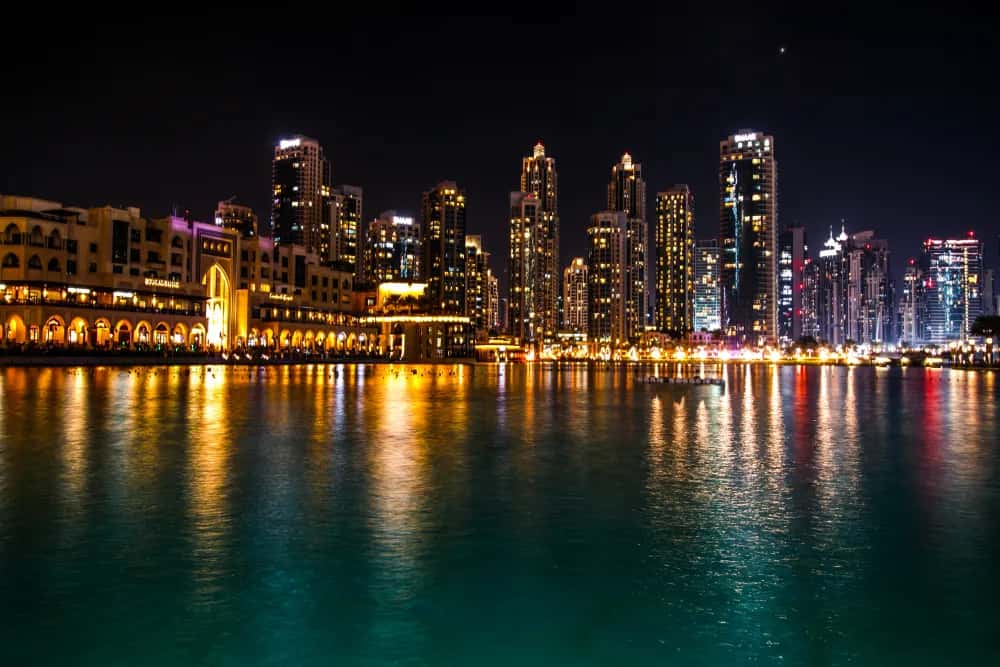 Market Insights
Dubai supply wave 2026: what buyers need to know now
Tens of thousands of new units are due for delivery across Dubai and the UAE by end of 2026. Here is how smart buyers should position themselves before the wave lands.
By Roy El Baba Market Insights
What a Dh260 million Palm Jumeirah sale tells buyers
A single villa transaction on Palm Jumeirah just hit Dh260 million. Here is what that figure reveals about micro-location pricing across the entire island.
By Roy El Baba