Palm Jebel Ali
Dubai community · 0 off-plan projects
About Palm Jebel Ali
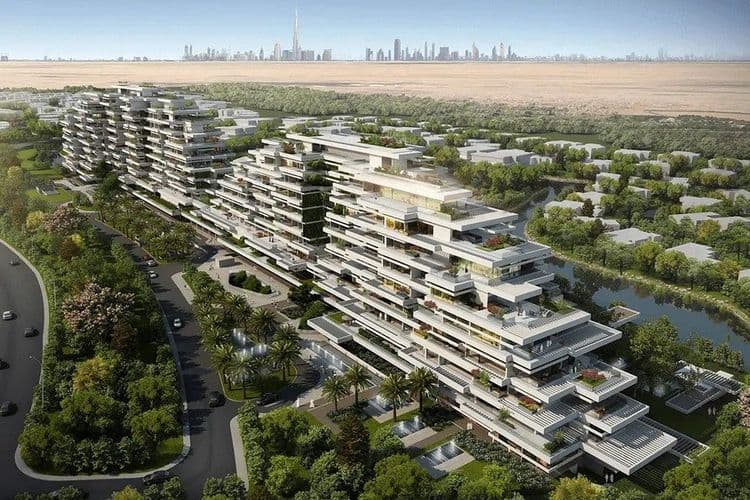
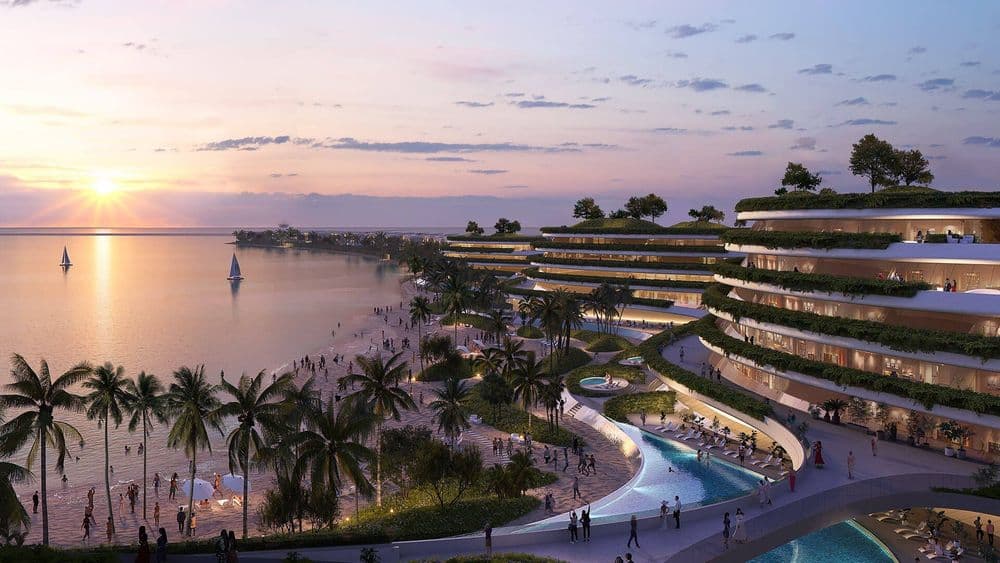
Palm Jebel Ali is Dubai's next great land reclamation project — larger than Palm Jumeirah, quieter than anything currently on the market, and still early enough that buyers can get in before the crowd arrives. Developed by Nakheel, this palm-shaped island sits off the Jebel Ali coastline and is shaping up as a low-density, high-specification residential address aimed squarely at end-users who want space, privacy, and a genuine waterfront lifestyle. Our view: this is one of the most compelling early-mover plays in Dubai right now, and the window won't stay open indefinitely.
Market overview
Our catalogue currently lists 10 active projects on Palm Jebel Ali, every single one developed by Nakheel — which tells you something important about the supply structure here. This isn't a fragmented market with a dozen competing developers undercutting each other. Nakheel controls the master-plan, the release cadence, and the product mix, which means pricing has been managed deliberately rather than left to market chaos.
The project pipeline breaks down into two clear tiers. The first is signature villas — Porcelain Roses, Red Aurora, Red Wood, Villa Crystal Springs, and Villa Cyan Sky — all carrying a Q4 2028 delivery target. The second is the broader frond and collection products: Beach Mansions Frond C, The Beach Collection Villas, The Coral Collection, and the master community itself. Palm Central Private Residences sits slightly later at Q3 2029, suggesting Nakheel is sequencing the apartment product after the villa fronds are established — a deliberate choice that protects villa values.
On pricing, Palm Jebel Ali launched at a meaningful discount to Palm Jumeirah on a per-square-foot basis, which is exactly what you'd expect for a project at this stage of infrastructure build-out. Frond villas have been trading in the off-plan secondary market at premiums above their original launch prices — a pattern we've seen repeat itself on Palm Jumeirah in its early years. Entry-level villa pricing has broadly sat in the AED 1,500–2,200 per sq ft range depending on frond position and beach access, though specific fronds with direct beach frontage command the upper end of that band.
In our experience, the buyers who hesitate on Palm Jebel Ali tend to cite the 2028–2029 delivery timeline as a concern. That's understandable. But the buyers who moved early on Palm Jumeirah said the same thing in 2002. The infrastructure gap between now and handover is real; the price gap between now and post-handover is likely to be real too.
One honest caveat: the surrounding Jebel Ali area is still maturing. Buyers should factor in that amenities outside the island itself will take time to reach the density of, say, Dubai Marina or Downtown. Nakheel's track record on Palm Jumeirah gives us confidence the island itself will be delivered to a high standard — but the off-island ecosystem is a work in progress.
Living in Palm Jebel Ali
This is unambiguously a family and end-user neighbourhood in the making. The product mix — predominantly villas on fronds with private beach access — doesn't lend itself to the transient, short-stay crowd that gravitates toward JBR or Downtown. The buyers we're seeing here are families who want a large home, a garden, and direct sea access without the density of Palm Jumeirah.
The island's design gives most frond villas a dual-water aspect: lagoon on one side, open sea on the other. That's genuinely rare in Dubai at this price point. On Palm Jumeirah, you pay a significant premium for a similar configuration.
The demographic skew is clear: we're talking about families with children, often upgrading from villa communities like Arabian Ranches or Damac Hills, who want to trade inland greenery for a coastal lifestyle. There's also a cohort of high-net-worth buyers treating this as a second home or a long-hold investment — people who bought on Palm Jumeirah a decade ago and understand the appreciation pattern.
Walkability, in the traditional urban sense, isn't the point here. This is a car-dependent, low-density island community. The trade-off is privacy, space, and a beach on your doorstep. The crescent will eventually house retail and hospitality, but buyers should go in with realistic expectations: for the first few years post-handover, the lifestyle will be quiet. Some buyers see that as a feature, not a bug.
Dining and retail on the island itself is still being planned and built. The Jebel Ali area has existing options — Ibn Battuta Mall is roughly 15–20 minutes away — but the island won't have the restaurant density of Palm Jumeirah's boardwalk for some time. That's the honest picture.
Schools, healthcare & retail
Schools within reach:
- The Arbor School (Al Quoz) — eco-focused, well-regarded
- Greenfield International School (Al Barsha)
- Jebel Ali School — one of the closest established options
- GEMS schools in the Al Furjan and Discovery Gardens corridor
Healthcare:
- Mediclinic Ibn Battuta — the nearest established private hospital facility
- Aster Clinics have presence in the Jebel Ali / Discovery Gardens area
- NMC Royal Hospital (Al Quoz) is accessible via SZR
Retail & daily needs:
- Ibn Battuta Mall — 15–20 minutes, large format retail and dining
- Al Furjan Pavilion — community retail strip with supermarket and F&B
- Dragon Mart (for furniture and fit-out) — relevant for buyers taking handover and furnishing new homes
The honest summary: amenity provision near Palm Jebel Ali is functional rather than exceptional right now. Ibn Battuta Mall covers most retail needs, and healthcare access is reasonable. As the island population grows post-2028, on-island retail and F&B will develop — Nakheel's crescent plans include hospitality and leisure — but buyers should set expectations accordingly for the first few years of occupation.
Getting around
Palm Jebel Ali sits at the southern end of Dubai, which means connectivity to the city's main business districts requires some commitment. Drive times are roughly as follows:
- Dubai Marina / JBR: 20–30 minutes depending on traffic on Sheikh Zayed Road
- DIFC / Downtown / Burj Khalifa: 35–50 minutes in normal conditions, longer during peak hours
- Dubai International Airport (DXB): 45–60 minutes
- Al Maktoum International Airport (DWC): 20–30 minutes — a genuine advantage as DWC expands
The proximity to DWC is worth flagging. As Al Maktoum International scales up over the coming decade, being 20-odd minutes from what will be one of the world's largest airports is a connectivity asset that most of Dubai's established communities can't claim.
Sheikh Zayed Road (E11) is the primary artery, and it's honest to say that the SZR corridor can be congested during morning and evening peaks. There is no metro connection to Palm Jebel Ali at present, and none confirmed in the near term. Residents will be car-dependent — that's simply the reality.
For school runs, the nearest established school clusters are in Dubai Marina, Jumeirah Village, and Al Furjan, all reachable in 15–25 minutes outside peak hours. As the community matures, school provision closer to the island is likely, but buyers with school-age children should plan for a commute in the early years.
Investment outlook
Palm Jebel Ali is a long-hold play. Anyone expecting to flip at handover in 2028 for a quick gain needs to understand the risk profile: liquidity in a brand-new, partially occupied island community is thinner than in an established area. That said, the off-plan secondary market has already shown positive momentum, with early buyers sitting on paper gains — which suggests the market has priced in confidence in the project's delivery and long-term appeal.
Rental yields on Palm Jebel Ali are harder to project with precision given that the community isn't yet occupied. The closest comparable is Palm Jumeirah, where villa gross yields have historically run in the 4–6% range — lower than mid-market Dubai because capital values are high and the tenant pool for AED 500,000+ annual rents is narrower. Investors chasing 8–9% yields should look elsewhere; this is a capital appreciation story, not a yield story.
The capital appreciation case rests on a few pillars. First, Nakheel's track record: Palm Jumeirah values have compounded significantly over 15+ years, and the brand carries weight with international buyers. Second, scarcity: beachfront villa land in Dubai is genuinely finite, and Palm Jebel Ali adds a controlled quantum of it. Third, the DWC proximity argument — as Al Maktoum Airport grows, the southern Dubai corridor becomes more attractive to a wider tenant and buyer pool.
The risk factors are real too. Delivery timelines on large-scale reclamation projects can slip. The surrounding infrastructure is immature. And if Dubai's broader property cycle softens before 2028, off-plan secondary liquidity could tighten.
Our editorial line: bullish, with patience required. This is one of the few places in Dubai where you're still buying into a master-plan before the price discovery is complete — and that early-mover advantage is worth something.
Frequently asked questions about Palm Jebel Ali
Is Palm Jebel Ali a good investment in 2025–2026?
In our experience, Palm Jebel Ali is one of the most compelling off-plan plays in Dubai right now. Nakheel is the sole master developer, which keeps the vision consistent and supply controlled. Early frond buyers who entered in 2023 have already seen paper gains of 30–40% on some villa types. With handovers expected to roll through 2026–2028, we believe there's still a meaningful window to buy before secondary-market premiums fully price in the infrastructure completion.
What is the typical price per sqft on Palm Jebel Ali?
Across our current catalogue of 10 active listings, pricing generally sits between AED 3,200 and AED 5,500 per sqft, depending on frond position, plot size, and collection tier. Signature frond-tip villas — think Beach Mansions Frond C or the named villas like Porcelain Roses and Red Aurora — command the upper end. Beach Collection and Coral Collection units offer a more accessible entry point while still delivering direct beach access.
Who are the main developers active on Palm Jebel Ali?
Right now, Nakheel Properties is the only master developer releasing inventory on Palm Jebel Ali — and that's actually a selling point. Every project in our catalogue, from Palm Central Private Residences to Villa Crystal Springs, comes directly from Nakheel. A single developer means unified design standards, one escrow framework, and no patchwork of competing contractors. We haven't seen third-party sub-developers enter the island yet, though that may change post-handover.
What rental yields can I expect on Palm Jebel Ali?
Because the island is still under construction, live rental data is limited — but we benchmark against Palm Jumeirah, where comparable beachfront villas yield 4–5% gross annually. Palm Jebel Ali's larger plot sizes and lower entry prices (relative to Jumeirah) suggest yields could track slightly higher once the community matures. Our buyers targeting rental income are focusing on the Beach Collection and Coral Collection for their broader tenant appeal and more manageable ticket sizes.
What is the commute like from Palm Jebel Ali to DIFC, Dubai Marina, and DXB?
Expect roughly 25–30 minutes to Dubai Marina via Sheikh Zayed Road under normal traffic, and 45–55 minutes to DIFC during peak hours. Dubai International Airport (DXB) is approximately 50–60 minutes away, though Al Maktoum International (DWC) is only about 20 minutes — a major plus as DWC expands. We always advise buyers to factor in the trunk road access point; frond position can add 5–10 minutes to any journey.
Are there schools and everyday amenities on Palm Jebel Ali yet?
Honestly, the island's retail and school infrastructure is still being built out. For now, our buyers rely on nearby Jebel Ali Village, where you'll find a Spinneys, a handful of F&B options, and easy access to Jebel Ali School (rated Good by KHDA). The master plan includes dedicated retail, hospitality, and community facilities within the island itself, but we'd set expectations that day-to-day convenience will improve significantly only once handovers are well underway in 2026–2027.
What's the difference between the Beach Collection, Coral Collection, and the named villas like Porcelain Roses or Red Aurora?
Think of it as three tiers. The Beach Collection and Coral Collection are Nakheel's volume product — well-designed 5–7 bed villas with beach access, priced for broader demand. The named villas (Porcelain Roses, Red Aurora, Red Wood, Crystal Springs, Cyan Sky) are bespoke, architect-designed one-of-a-kind homes on premium frond positions, often with larger plots exceeding 10,000 sqft BUA. Palm Central Private Residences sits in its own category as an apartment product — the only one of its kind on the island currently in our catalogue.
Get the Palm Jebel Ali market brief
Live listings, off-plan launches, recent transactions and rental yields — direct from our advisors. No inflated commissions, no spam. One business-day reply.