

Why Dubai's global liveability rank drives property demand
Dubai's top-tier global rankings for openness and liveability are not just PR wins. They translate into measurable, sustained demand in the Dubai property market.
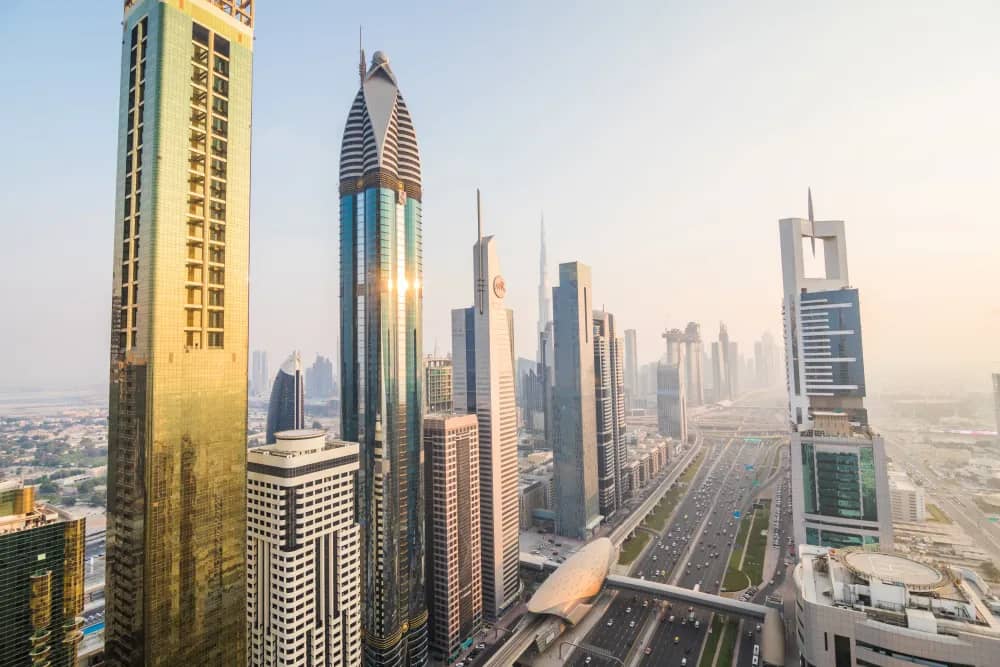
Global rankings as a structural demand signal
Dubai consistently places among the world's most welcoming cities for residents and visitors, and this is not a soft metric. When a city ranks highly for safety, infrastructure, ease of doing business, and international openness across multiple independent indices, it signals to capital that the fundamentals are durable. For the Dubai property market, that translates directly into sustained inbound demand from owner-occupiers, long-term residents, and investors who are making decade-long commitments, not short-term bets.
The distinction matters because speculative cycles tend to follow liquidity rather than liveability. What Dubai has built over the past decade is a reputation that attracts people who actually want to live here. That resident base, whether renting or owning, creates the floor under rental yields and resale values that pure investor markets often lack. Understanding this distinction is important for anyone evaluating Dubai properties for sale right now.
What resident growth actually looks like in numbers
Dubai's population crossed 3.7 million in 2024, up from approximately 3.3 million in 2020, according to Dubai Statistics Centre data. That is roughly 400,000 additional residents in four years, each requiring housing. The majority of new arrivals are professionals relocating for work or business owners restructuring their operations into a zero-income-tax environment. Both groups enter the rental market first and a significant share convert to buyers within two to four years, particularly as the UAE Golden Visa makes long-term residency through property ownership increasingly accessible.
Rental demand has kept vacancy rates in established communities under pressure throughout 2023 and into 2024. In areas such as Dubai Marina and Business Bay, asking rents for one-bedroom apartments rose between 15 and 22 percent year-on-year through mid-2024 according to property portal data. That compression is a direct consequence of population growth outpacing completions in those submarkets, not speculative activity inflating paper values.
The golden visa effect on ownership decisions
One of the more consequential policy decisions in recent years has been expanding the UAE Golden Visa through Dubai property pathway. Purchasing a completed property worth AED 2 million or more now qualifies the buyer, and immediate family members, for a 10-year renewable residency visa. This single change has fundamentally altered the rent-versus-buy calculation for a large cohort of mid-to-high-income expatriates who previously had no residency security beyond their employment contract.
The effect is measurable. Transactions in the AED 2 million to AED 5 million bracket have grown disproportionately compared to lower price bands, with the Dubai Land Department recording strong volumes in this segment throughout 2023 and 2024. Communities such as Dubai Hills Estate and Downtown Dubai sit naturally in this price range for two and three-bedroom units, and both have seen sustained end-user demand rather than the investor-flipping patterns typical of earlier cycles.
Rent versus own: the calculus for today's buyer
For someone already paying AED 120,000 to AED 150,000 per year in rent for a two-bedroom apartment in a mid-tier community, the financial case for ownership is tighter than it has been in years, but it still holds. Mortgage rates for UAE residents have stabilised in the 4.5 to 5.2 percent range for fixed periods, and loan-to-value ratios of up to 80 percent are available for first-time buyers on completed properties. On a AED 2 million purchase with a 20 percent deposit, monthly repayments on a 25-year term would run broadly in line with market rents for the same unit type, with the added equity accumulation and visa security on top.
The key variable is how long the buyer intends to stay. For a three-to-five year horizon, the transaction costs, approximately 4 percent DLD transfer fee, 2 percent agency fees, and registration charges, make renting cheaper on a pure cost basis. For anyone committing to six-plus years, ownership arithmetic tends to favour buying, particularly in undersupplied submarkets. Our guide on how to buy property in Dubai covers the full acquisition cost structure in detail for those running their own numbers.
Off-plan remains a separate consideration. Payment plans from developers including Emaar Properties and Danube Properties have allowed buyers to lock in today's prices with staggered payments across two to four years. For buyers without the full deposit ready, this is a viable entry point, though it carries delivery and market timing risk that completed property does not. You can review current Dubai off-plan projects to compare active payment plans across developers.
Which communities are absorbing inbound demand
Not every submarket benefits equally from population-driven demand. The strongest absorption is concentrated in communities with good transport links, established retail, and relatively liquid resale markets. Jumeirah Village Circle continues to attract price-sensitive first-time buyers and young professionals, with one-bedroom apartments trading between AED 700,000 and AED 1.1 million. At the other end, Palm Jumeirah has seen villa and signature apartment demand remain firm, supported by the international buyer profile that Dubai's global reputation draws directly.
Mid-market communities like Dubai Creek Harbour and Al Furjan are worth watching for buyers prioritising yield over capital growth, where gross rental yields of 6 to 7 percent are still achievable on smaller unit sizes. Service charge levels vary significantly across these communities and can materially affect net yield; the service charge calculator is a useful tool for running community-level comparisons before committing.
What long-term investors should take from this
The argument for Dubai real estate has never rested solely on yield or price appreciation in isolation. The more durable case is that a city actively building the infrastructure, governance, and international openness to attract and retain a high-income global population will sustain property demand regardless of short-term interest rate cycles. Every major index ranking Dubai as a preferred destination for relocation reinforces that thesis with external, independent validation.
For investors, the practical implication is to focus on fundamentals that align with what inbound residents actually need: well-managed buildings, proximity to employment clusters, accessible price points for the target tenant, and communities with room to grow rather than those already fully priced. Dubai's liveability standing earns the city the inbound flow. It is the submarket selection that determines whether an individual investment captures that flow effectively.
Frequently asked questions
Does Dubai's liveability ranking actually affect property prices?
Indirectly, yes. High liveability rankings attract more residents and long-term expatriates, which sustains rental demand and, in turn, supports values in the residential market. It is a population-driven dynamic rather than a direct index-to-price mechanism.
What is the minimum property value to qualify for the UAE Golden Visa?
You need to purchase a completed property with a minimum value of AED 2 million. The property must be fully paid, not mortgaged beyond that threshold, and registered with the Dubai Land Department. The visa covers the buyer and immediate family for 10 years, renewable.
Is it better to rent or buy in Dubai right now?
For stays of fewer than five years, renting is generally more cost-effective once you factor in transaction costs. For six-plus year commitments, ownership tends to make financial sense, particularly where the Golden Visa and equity accumulation are factored in alongside rent savings.
Which Dubai communities offer the best rental yields currently?
Mid-market communities including Jumeirah Village Circle, Al Furjan, and Dubai Silicon Oasis are consistently posting gross yields of 6 to 8 percent on smaller unit types. Yield levels vary by unit size, floor, and building quality, so always calculate net yield after service charges.
How do I compare service charges across Dubai communities?
Service charges are published by the Real Estate Regulatory Authority (RERA) and vary significantly by community and developer. Using a service charge calculator that references RERA-registered rates is the most reliable way to compare net yield impact before purchasing.
More Market Insights posts
 Market Insights
What $2.7 billion in weekly Dubai deals really signals
Dubai recorded $2.7bn across 3,098 sales in a single week. Here is what that volume, and a standout Business Bay office deal, tells investors right now.
By Roy El Baba Market Insights
Dubai off-plan villas, Business Bay, and the August 2026 buyer decision framework
Off-plan villa transactions surged in August 2026 while Business Bay gained ground as an investment district. Here is how to match your buyer profile to the right opportunity.
By Roy El Baba Market Insights
DLD's AI registration platform: what it means for buyers
Dubai Land Department's new AI-powered registration system could cut title deed processing from days to hours. Here's what buyers need to know.
By Roy El Baba Market Insights
Dubai supply wave 2026: what buyers need to know now
Tens of thousands of new units are due for delivery across Dubai and the UAE by end of 2026. Here is how smart buyers should position themselves before the wave lands.
By Roy El Baba