
Dubai luxury sales up 22%: what it means for mid-market buyers
Luxury transactions in Dubai jumped 22% in July 2026. Here is what that divergence signals for buyers priced out of the top tier.
What July 2026 transaction data actually tells us
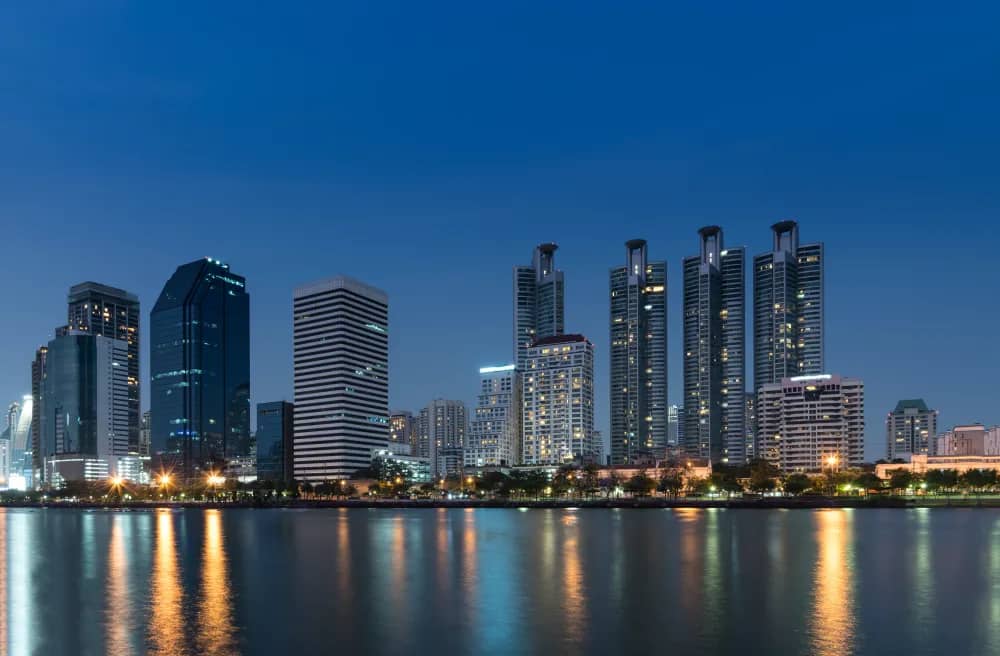
The Dubai real estate market posted a 2% rise in overall sales volume in July 2026, a number that sounds modest until you look at the sub-segment breakdown. Luxury transactions, broadly defined as deals above AED 5 million, surged 22% over the same period a year earlier. Those two figures sitting side by side are the real story: the top of the market is accelerating at roughly eleven times the pace of the broader market.
That divergence is not a one-month anomaly. It reflects a structural shift that has been building since 2022, as high-net-worth relocators from Europe, South Asia, and East Asia compressed their timelines and committed capital that would previously have taken years to deploy. The July data simply makes the gap between affordable and premium Dubai property more visible in the official record.
Why luxury momentum ripples down to mid-market pricing
Real estate pricing in any mature market follows a trickle-down pattern with a lag. When Palm Jumeirah villas and Downtown Dubai penthouses transact at record per-square-foot rates, two things happen in sequence. First, developers reprice comparable new launches upward to protect margin. Second, secondary market sellers in the next tier adjust expectations to match. Buyers who waited for a correction in the luxury segment often find themselves chasing a market that has already re-rated.
The 22% luxury spike makes that lag window shorter than many buyers assume. Communities that were considered value plays 18 months ago, such as Business Bay and Dubai Creek Harbour, have already seen median asking prices move materially. The communities that still offer genuine entry-point value are typically one liquidity event away from the same repricing cycle.
Mid-market communities still offering relative value
Jumeirah Village Circle remains one of the few freehold areas in Dubai where one-bedroom apartments trade below AED 900,000 on the secondary market, with gross rental yields consistently above 7%. The community lacks the waterfront premium of Dubai Marina, but it benefits from the same arterial road access and a growing retail and F&B base that tenants increasingly prioritise.
Al Furjan and DAMAC Hills occupy a slightly different position, offering townhouses and villas at price points that would represent less than half the cost of comparable square footage in Arabian Ranches or Dubai Hills Estate. Both communities are connected to the metro network, which historically functions as a price support mechanism in Dubai submarkets. Dubai Silicon Oasis is worth monitoring for buyers focused on long-term capital growth rather than immediate yield, given its free zone status and the steady demand from the tech and SME workforce anchored there.
For buyers exploring off-plan Dubai options, Jumeirah Lake Towers (JLT) continues to attract launches from mid-tier developers at competitive payment plans. The risk profile is different from a completed unit, but the entry price and phased cash outflow can suit investors who need flexibility.
Is the gap between affordable and luxury widening permanently?
The honest answer is partially. The top 5% of the Dubai property market is now priced by a globally mobile buyer pool that benchmarks Dubai against Monaco, Singapore, and London rather than against JVC or JLT. That cohort is insulated from local interest rate cycles and domestic salary growth, which means the pricing floor for trophy assets in areas like Palm Jumeirah or the Dubai Marina waterfront is structurally higher than it was five years ago.
The mid-market, however, is still connected to domestic fundamentals: resident income growth, population inflows, and rental demand. Those fundamentals are strong. Dubai's population crossed 3.8 million in 2024 and is projected to exceed 5.8 million by 2040 according to the Dubai 2040 Urban Master Plan. That volume of demand does not disappear; it concentrates in the communities where the price-to-rent ratio still makes economic sense for the occupier. The gap may widen in absolute terms, but mid-market communities are not standing still.
How to position before the next repricing cycle
If the July data confirms anything, it is that waiting for a broad market correction while luxury transactions surge 22% is a losing strategy for most buyers. The more productive question is where the next wave of occupier and investor demand will concentrate, and whether a given community offers a defensible entry price today.
Buyers who want a structured overview of the acquisition process, including DLD transfer fees, agency costs, and mortgage eligibility, should start with the How to buy property in Dubai guide before committing to a specific community. Understanding full acquisition cost matters more in a rising market because it affects the actual break-even horizon. A service charge calculator is also worth running on any shortlisted unit, since annual service fees in some towers can erode yield by 1.5 to 2 percentage points.
For buyers who qualify or are close to qualifying on asset value, the UAE Golden Visa through Dubai property route adds a residency dimension that changes the calculus on holding period and tax planning. A AED 2 million qualifying purchase in a mid-market community can achieve the same visa outcome as a AED 10 million luxury unit, which is a meaningful asymmetry that the July data makes more relevant, not less.
The practical takeaway for buyers and investors
July 2026 is not the time to benchmark your ambitions against the luxury segment if your budget does not reach it. It is, however, an instructive moment to understand which communities are in the early phase of the repricing cycle that luxury always triggers downstream. Dubai Hills Estate and Meydan are examples of areas that have already moved from under-the-radar to mainstream; the next tier includes communities like Al Furjan and Dubai Silicon Oasis, where the combination of infrastructure investment and relative affordability creates a credible near-term catalyst.
The Dubai properties for sale inventory today still includes entry points that will look different in 12 to 18 months if the luxury momentum reported in July continues. The window is not closed, but it is narrowing.
Frequently asked questions
What does a 22% rise in luxury Dubai transactions mean for ordinary buyers?
It typically signals an upstream pricing event that eventually trickles down to mid-market communities. When premium areas reprice, developers and secondary market sellers in the next tier adjust upward to match sentiment, which compresses the window for buyers to enter at current rates.
Which Dubai communities offer the best entry-level value right now?
Jumeirah Village Circle, Al Furjan, DAMAC Hills, and Dubai Silicon Oasis currently offer freehold units and townhouses at price points significantly below the city average, with rental yields that support the investment case without requiring luxury-level capital outlay.
Is off-plan property in Dubai a good option in a rising market?
Off-plan can offer an entry price advantage and flexible payment plans, but buyers need to factor in construction timeline risk and the fact that the completed market may have moved by handover. Choosing a reputable developer with a strong delivery track record reduces but does not eliminate that risk.
Can a mid-market Dubai property purchase qualify for the UAE Golden Visa?
Yes. A completed, mortgage-free property valued at AED 2 million or more qualifies the owner for a 10-year UAE Golden Visa. This threshold is achievable in several mid-market communities, making the visa benefit accessible beyond the luxury segment.
How do service charges affect the real yield on a Dubai apartment?
Service charges in Dubai range from around AED 10 to AED 35 per square foot annually depending on the building and community. On a 900-square-foot apartment, that translates to AED 9,000 to AED 31,500 per year, which can reduce gross yield by 1.5 to 2.5 percentage points and must be factored into any return calculation.
More Market Insights posts
 Market Insights
What $2.6bn in weekly Dubai sales tells investors
Dubai recorded $2.6 billion across 2,850 transactions in a single week. Here is what that velocity, and a $22M Palm Jumeirah deal, reveals about buyer intent.
By Roy El Baba Market Insights
How proptech is making Dubai brokers more powerful, not obsolete
Dubai's proptech firms are building tools for brokers, not against them. Here's what that shift means for buyers navigating the Dubai property market.
By Roy El Baba Market Insights
Why Dubai's prime villa owners renovate instead of moving
When inventory in Dubai's top villa communities runs dry, even wealthy owners can't upgrade within them. Here's what that means for buyers.
By Roy El Baba Market Insights
Dubai's property market in H1 2026: what selective demand means for buyers
Dubai's property market shifted into a more discerning phase in H1 2026. Here's how to identify the communities and asset types still outperforming.
By Roy El Baba