
Dubai's property market in H1 2026: what selective demand means for buyers
Dubai's property market shifted into a more discerning phase in H1 2026. Here's how to identify the communities and asset types still outperforming.
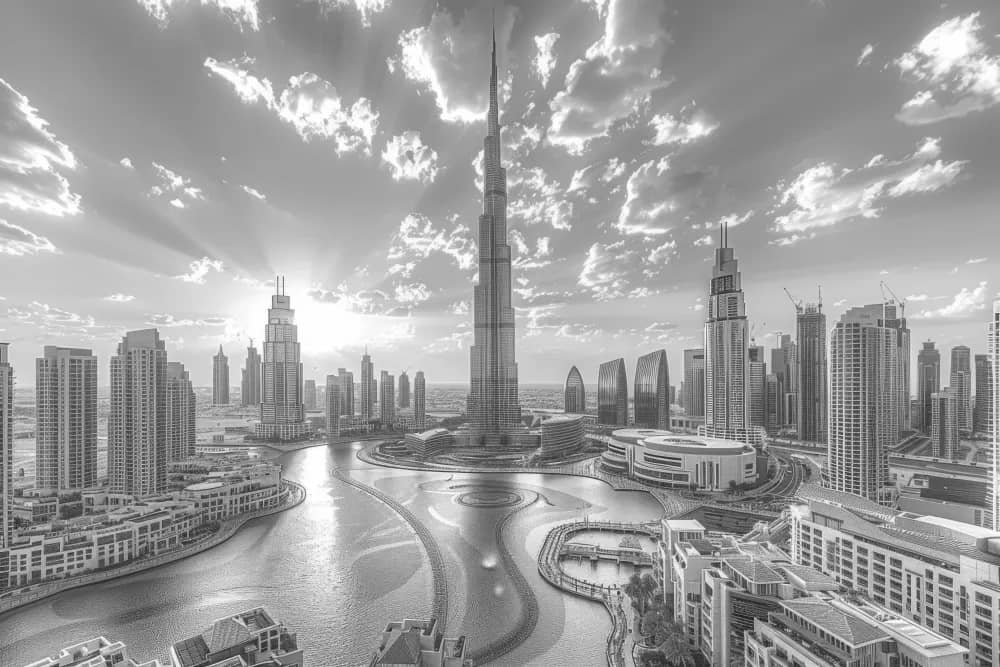
Selective markets are not the same as slow markets
The term 'selective' tends to make headlines sound cautious, but in practice a selective market is one where capital concentrates rather than spreads thin. During the broadly bullish conditions of 2023 and 2024, almost any Dubai asset class attracted buyers. What the first half of 2026 signals is different: buyers are doing more due diligence, comparing payment plans more carefully, and walking away from deals that do not meet a tighter set of criteria. That is a sign of market maturity, not distress.
For investors who are already informed, this is a favourable environment. Competing buyers are fewer, negotiating positions are better, and the developers still launching quality inventory are the ones with genuine track records. Understanding the shift in the dubai property market is the first step to acting on it correctly.
Which asset types are holding buyer attention in 2026
Two broad categories have retained consistent demand through the selective phase: branded residences with strong rental yield histories, and mid-market off-plan units in master-planned communities that carry solid infrastructure already in the ground. The former appeals to high-net-worth buyers who treat Dubai real estate as a store of value. The latter appeals to investors benchmarking yield against payment plan cost-of-carry.
Apartments in the AED 1.2 million to AED 3 million bracket in established corridors such as Business Bay and Dubai Marina have continued to attract consistent inquiry. Larger villa product in Dubai Hills Estate has also held price levels, supported by limited resale supply relative to demand from end-users who intend to occupy.
The segment seeing the most scrutiny is high-volume off-plan dubai launches in areas without demonstrated rental absorption. Buyers in H1 2026 are asking harder questions about post-handover liquidity, and developers who cannot answer those questions are seeing slower sales velocity.
Communities that continue to outperform on fundamentals
Downtown Dubai and Palm Jumeirah remain the benchmarks for capital preservation in the Dubai market. Both have extremely constrained new supply pipelines relative to the global buyer pool targeting them. Price per square foot in both areas held or rose through Q1 and Q2 2026, even as broader transaction volumes moderated.
Dubai Creek Harbour is worth attention for buyers with a three-to-five year horizon. The community's master plan is now sufficiently advanced that infrastructure risk has reduced materially. Jumeirah Village Circle continues to deliver some of the highest gross rental yields available in the city, typically in the 7 to 8 percent range, which makes it attractive to yield-focused investors even when sentiment elsewhere softens.
For buyers comparing communities, running the numbers on service charges matters more than it did during the boom years. Use a service charge calculator before committing; in a selective market, net yield rather than gross yield is what serious investors are quoting.
How to approach off-plan purchases in a discerning market
Off-plan purchasing does not become less viable in a selective market; it requires a more structured approach. The starting point is developer track record. Projects by Emaar Properties and Sobha Realty carry delivery credibility that newer entrants have not yet established. That credibility translates into stronger secondary market pricing at handover, which protects the investor if they need to exit before occupying.
Payment plan structure is the second filter. In H1 2026, several developers extended post-handover payment plans to 40 or 60 percent of the purchase price. While this can reduce cash-flow pressure, it also means you are financing the developer. Calculate the effective cost of capital on that arrangement versus a conventional mortgage before deciding which structure works better for your position.
A complete breakdown of the purchase process, including DLD fees, trustee fees, and agency costs, is available in our guide to buying property in Dubai. Understanding total acquisition cost is essential when evaluating off-plan deals where the headline price looks compelling but the full outlay is higher.
The Golden Visa angle buyers should not overlook
Purchases at or above AED 2 million remain eligible for the UAE Golden Visa, a 10-year residency that has become a meaningful decision factor for international buyers. In a selective market, assets that sit at or just above the AED 2 million threshold carry a dual appeal: they qualify for residency and they occupy a price bracket where resale demand is relatively deep.
If residency eligibility is part of your investment rationale, the relevant rules and property requirements are covered in our UAE Golden Visa guide. The threshold applies to completed properties and some off-plan units, but the specific conditions depend on the nature of the title deed at the time of purchase, so verification through a RERA-licensed broker is advisable before transacting.
What informed buyers should do right now in the Dubai market
A more selective dubai real estate environment rewards preparation. Buyers who have done their community analysis, understand service charge implications, and know their financing options before entering negotiations are in a materially stronger position than those reacting to marketing campaigns.
Browsing current Dubai properties for sale with a specific community and price range in mind will give you a faster read on where value sits today versus three months ago. If off-plan is the preferred route, the current Dubai off-plan projects listings allow direct comparison of developer, location, payment plan, and expected handover date in one view.
The investors who have performed best across Dubai's market cycles are not the ones who timed a single peak; they are the ones who bought quality assets in fundamentally sound locations and held through the noise. H1 2026's selectivity is not a reason to pause indefinitely. It is a reason to be specific about what you buy and why.
Frequently asked questions
Is the Dubai property market slowing down in 2026?
The market has shifted to a more selective phase rather than a broad slowdown. Transaction volumes have moderated, but well-located assets in established communities such as Downtown Dubai and Palm Jumeirah have held price levels. Buyers are exercising more due diligence, which characterises a maturing market rather than a declining one.
Which Dubai communities offer the best rental yields in 2026?
Jumeirah Village Circle has consistently delivered gross rental yields in the 7 to 8 percent range, making it a strong option for yield-focused investors. Business Bay and Dubai Marina also offer solid yields combined with deep tenant demand pools. Always compare net yield after service charges rather than gross figures.
Is off-plan property in Dubai still a good investment in H1 2026?
Off-plan remains viable but requires tighter evaluation. Focus on developers with verified delivery track records, communities with demonstrated rental absorption, and payment plan structures whose effective cost of capital you have calculated. Projects in areas with infrastructure already in place carry lower completion risk.
How much do I need to spend to qualify for the UAE Golden Visa through property?
A minimum purchase value of AED 2 million in a completed property is the general threshold for Golden Visa eligibility. Some off-plan properties may qualify, but the conditions depend on the title deed status. Confirm eligibility with a RERA-licensed broker before transacting.
What are the total costs involved in buying property in Dubai?
Beyond the purchase price, buyers should budget approximately 4 percent for DLD transfer fees, 2 percent agency commission, and trustee and registration fees that typically add another AED 5,000 to AED 10,000. Mortgage buyers face additional valuation and arrangement fees. Our buying guide covers the full cost breakdown.
More Market Insights posts
 Market Insights
Dubai foreign property investment hits AED 148.35 billion
Foreign investment in Dubai real estate reached AED 148.35 billion, with new overseas investors up 14%. Here is who is buying, what they are targeting, and why.
By Roy El Baba Market Insights
Why ultra-prime waterfront villas in Dubai are selling fast
Scarcity of true beachfront plots and a permanent shift in buyer priorities are pushing Dubai's waterfront villa market into rare territory. Here is what is driving it.
By Roy El Baba Market Insights
What Dubai's 1.9% rental rise means for your wallet in 2026
Dubai rents rose 1.9% in 2026, but that average hides wide variation by community. Here's what tenants are actually paying extra at renewal.
By Roy El Baba Market Insights
Why a cooling Dubai market is a buyer's window
When Dubai property softens, history shows early movers win. Here is how to read the cycle and act before the next upturn locks you out.
By Roy El Baba