

Dubai property market stabilises: why this is your entry window
Price declines in Dubai's residential market are easing. History shows that moment rarely lasts long before the next growth cycle begins.

What stabilisation actually means for buyers
The Dubai property market stabilises in phases, and this latest one is worth reading carefully. Easing price declines do not mean prices have bottomed out and are surging again. They mean the rate of decline is slowing, which is a different and arguably more useful signal. For a buyer, that distinction matters enormously. You are no longer catching a falling knife, but you have not yet missed the recovery.
Dubai real estate has moved through recognisable cycles since the early 2000s. Each correction has eventually resolved into a growth phase, and the transition point has consistently rewarded those who acted during the stabilisation window rather than waiting for confirmation that prices had already risen. By the time a recovery is obvious, the best-priced inventory is gone.
Reading the market data without the noise
Stabilisation does not show up uniformly across the dubai property market. Established communities with strong rental demand tend to hold value better through corrections and recover faster. Areas with a high concentration of speculative off-plan launches, by contrast, can take longer to find their floor. That makes sub-market selection as important as timing.
Communities like Dubai Hills Estate and Dubai Creek Harbour have maintained transaction volume through the current period, which is one indicator that genuine end-user and investor demand remains present. High-volume areas rarely signal the same capitulation dynamics as oversupplied mid-market segments.
Transaction data from the Dubai Land Department is the most reliable public indicator to track. Look at volume alongside price: if volumes are steady or rising while prices ease, that points to absorption rather than distress. Distress looks like both volume and price falling simultaneously.
The historical case for buying the stabilisation phase
After the 2015 to 2016 correction in Dubai, buyers who transacted during the slower-moving stabilisation period of 2017 were positioned well ahead of the demand surge that followed Expo 2020 announcements and the post-pandemic period. The pattern is not unique to Dubai. In most liquid real estate markets, the stabilisation phase between correction and recovery is the shortest and least-crowded window.
This does not mean every asset class benefits equally. Villa communities outperformed apartments in the most recent cycle by a meaningful margin, driven partly by remote-work-related demand for space and partly by limited new villa supply in established locations. Understanding which product type is entering its recovery ahead of others is where research pays off. Our buying guide covers the full process for buyers approaching the market at this stage.
Off-plan versus secondary market at this point in the cycle
A stabilising market creates two distinct opportunities. In the secondary market, motivated sellers who have been holding through the correction may accept pricing that would not have been available 18 months ago. In off plan Dubai projects, developers competing for buyer attention are offering payment plans and post-handover terms that effectively transfer some of the pricing risk away from the buyer.
Developers like Emaar Properties and Danube Properties have structured launches through this period with extended payment schedules, sometimes stretching two to three years post-handover. For a buyer without immediate liquidity constraints, that structure allows capital deployment across a longer horizon while locking in today's pricing.
The risk in off-plan during a stabilisation phase is delivery timing. If a project delivers into a market that has not yet recovered, the buyer faces a valuation gap at handover. Choosing established developers with strong completion track records reduces that risk substantially. Checking a developer's history of on-time delivery should be a non-negotiable step before signing any SPA.
Communities worth watching right now
Not all of Dubai's sub-markets are at the same point in the cycle. Business Bay and Dubai Marina continue to see consistent rental absorption, which supports secondary market pricing. Jumeirah Village Circle remains one of the more active markets for entry-level investors given its yield profile relative to purchase price.
For buyers looking at capital appreciation over a five-plus year horizon, areas with committed infrastructure investment tend to outperform. Palm Jumeirah and Downtown Dubai carry premium pricing but also carry brand recognition that tends to limit downside in corrections. The stabilisation window in these communities often closes faster than in emerging areas.
Practical steps for buyers entering this market
The first step is understanding your total acquisition cost, not just the listed price. Dubai property purchases carry a 4% Dubai Land Department transfer fee, a 2% agency fee on the buyer's side in most transactions, and in the case of mortgaged purchases, a 0.25% mortgage registration fee. These costs do not change based on market conditions, so they factor into every scenario.
Buyers who qualify for long-term residency through investment should also review the UAE Golden Visa through Dubai property route. A qualifying purchase of AED 2 million or above grants a ten-year renewable residency visa, which materially changes the hold-period calculus for buyers considering Dubai as a primary or secondary residence rather than a pure investment. If you are ready to review what is currently available, Dubai properties for sale is the starting point.
Frequently asked questions
Does a stabilising Dubai property market mean prices will rise soon?
Stabilisation signals that the rate of price decline is slowing, not that a price rise is imminent or guaranteed. It indicates the market is absorbing supply, which historically precedes recovery, but the timeline varies by community and asset type.
Is it better to buy off-plan or secondary during a market stabilisation?
Both have merit. Secondary market sellers may accept below-peak pricing. Off-plan offers extended payment plans and current launch pricing locked in before any recovery. The right choice depends on your liquidity, timeline, and risk appetite.
What are the upfront costs when buying property in Dubai?
Expect a 4% Dubai Land Department transfer fee, approximately 2% agency commission on the buyer's side, and a 0.25% mortgage registration fee if financing. These apply regardless of where prices are in the cycle.
Which Dubai communities tend to recover fastest after a correction?
Established communities with strong rental demand and limited new supply, such as Palm Jumeirah, Downtown Dubai, and Dubai Marina, historically recover faster. Areas with high new-supply pipeline can take longer to stabilise fully.
Can I get a UAE Golden Visa through a Dubai property purchase?
Yes. A property purchase of AED 2 million or above qualifies for a ten-year UAE Golden Visa. The property can be mortgaged provided the equity portion meets the threshold. Full details are in the official residency visa guidelines and our dedicated guide.
More Market Insights posts
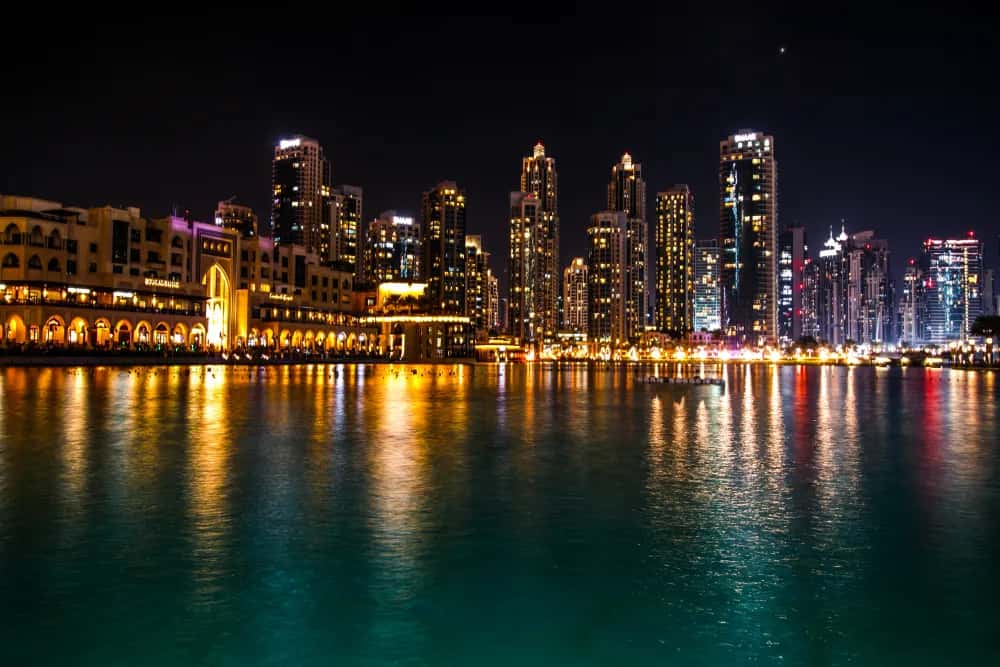 Market Insights
Dubai supply wave 2026: what buyers need to know now
Tens of thousands of new units are due for delivery across Dubai and the UAE by end of 2026. Here is how smart buyers should position themselves before the wave lands.
By Roy El Baba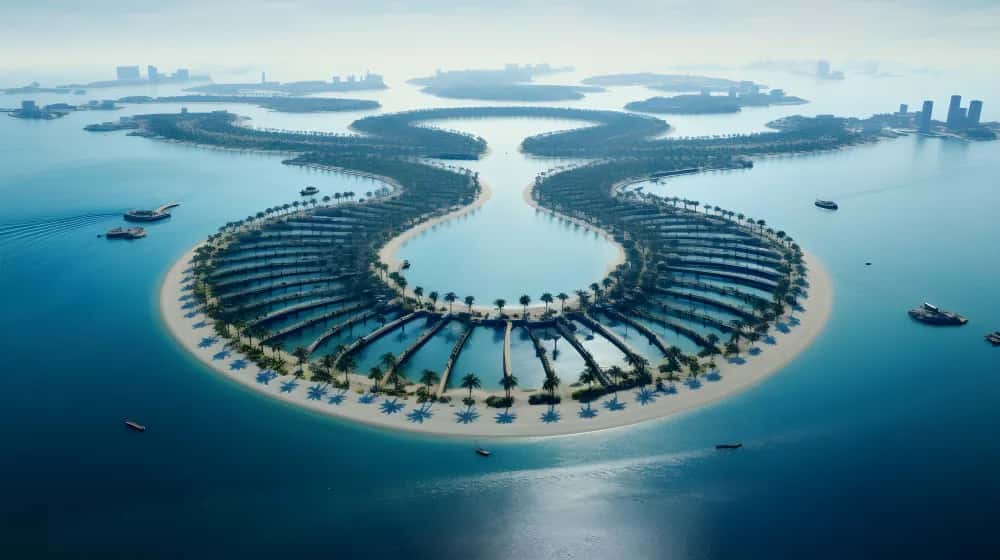 Market Insights
What a Dh260 million Palm Jumeirah sale tells buyers
A single villa transaction on Palm Jumeirah just hit Dh260 million. Here is what that figure reveals about micro-location pricing across the entire island.
By Roy El Baba Market Insights
Dubai hits AED 523bn in 8-month transactions: what it means for Q4
Dubai recorded AED 523.44bn in property transactions across the first eight months of the year. Here is what the deal-type breakdown tells investors about Q4 entry timing.
By Roy El Baba Market Insights
Dubai's $12.6bn August: what the numbers actually tell you
Dubai recorded $12.6bn in total transactions in August, with a single Palm Jumeirah villa selling for $21.5m. Here is what the segment data means for buyers and investors.
By Roy El Baba