

Dubai property as a safe haven during regional tensions
History shows Dubai real estate holds firm during regional conflict. Here is what the data says and what it means for buyers deciding now.

Why Dubai real estate attracts capital during uncertainty
Every time regional tensions rise, the same question lands in brokers' inboxes: should I wait? The historical record for the Dubai property market gives a clearer answer than most investors expect. Rather than softening during periods of geopolitical stress, Dubai has repeatedly absorbed capital fleeing less stable jurisdictions. That pattern is not accidental; it reflects the city's structural position as a neutral financial hub, a hard-currency market, and one of the few places in the region where foreign nationals can hold freehold title.
The mechanism is straightforward. When conflict risk rises elsewhere in the Middle East, high-net-worth individuals, family offices, and corporate treasuries look for assets that are liquid, legally transparent, and denominated in a currency pegged to the US dollar. Dubai real estate fits all three criteria. That flow of defensive capital has historically offset any sentiment drag from buyers who pause, which is why transaction volumes have not historically collapsed the way some commentators predict.
What past conflict cycles reveal about transaction volumes
The most instructive reference point is the 2019 to 2020 period, when Gulf tensions spiked sharply following the attack on Saudi Aramco facilities in September 2019. Dubai Land Department (DLD) data for Q4 2019 showed residential transaction volumes rising 17% year-on-year, not contracting. A similar dynamic played out during the early phases of the Yemen conflict from 2015 onward; annual DLD transaction counts climbed from roughly 41,000 in 2014 to over 69,000 in 2017, even as regional instability persisted.
The 2022 invasion of Ukraine is the most recent large-scale illustration. Within months of the conflict starting, Russian and Ukrainian buyers combined accounted for an outsized share of Dubai residential purchases, particularly in Palm Jumeirah and Dubai Marina. DLD recorded over 122,000 transactions for the full year 2022, a figure that had never been reached before. Conflict elsewhere, in other words, has historically been a demand driver for Dubai, not a suppressor.
Price performance during previous stress periods
Transaction volumes tell one part of the story; price trends tell another. CBRE data shows that Dubai apartment prices declined meaningfully between 2014 and 2020, a correction driven by oversupply rather than geopolitical risk. When the market eventually turned in mid-2021, prices in established communities rose sharply and have continued rising. The point is that the corrections Dubai has experienced have been supply-demand corrections, not conflict-triggered crashes.
Luxury and waterfront segments have been particularly resistant to geopolitical sentiment swings. Downtown Dubai and Jumeirah Beach Residence (JBR) recorded average price-per-square-foot growth of approximately 40% and 35% respectively between Q1 2021 and Q4 2024, a period that included multiple bouts of regional tension. For investors weighing a purchase today, the relevant baseline is that no significant conflict episode in the past two decades has produced a sustained Dubai property price decline that was attributable to that conflict rather than to a separate domestic oversupply cycle.
Structural factors that support current market stability
Beyond the historical record, several structural features make the current market less vulnerable than it might appear. The UAE's political neutrality is a genuine policy stance, not a marketing slogan; the country maintains diplomatic and trading relationships across the Gulf, with Iran, with Israel post-Abraham Accords, and with major Western economies simultaneously. That positioning keeps Dubai accessible as a destination for capital from all sides of any given regional dispute.
Regulatory improvements since 2020 have also deepened the market's resilience. The UAE Golden Visa through Dubai property programme, launched at the AED 2 million ownership threshold, has created a structural class of long-term resident-investors who are less likely to liquidate on sentiment alone. Escrow protections, RERA oversight of developer accounts, and the DLD's digital transaction infrastructure have reduced the information asymmetry that historically made off-plan purchases riskier. Buyers interested in Dubai off-plan projects today operate in a materially more regulated environment than they did a decade ago.
Visa reform more broadly, including remote work visas and expanded residency categories, has increased the diversity of demand. Dubai's resident population passed 3.6 million in 2024, and that population growth creates organic housing demand independent of investor sentiment cycles.
What this means for buyers deciding today
If you are weighing a purchase and the regional news cycle is giving you pause, the historical data suggests that pausing has consistently been the costlier choice. Buyers who deferred in late 2021 citing uncertainty missed the sharpest price appreciation the market has seen in a decade. That does not mean timing is irrelevant; it means that geopolitical sentiment should carry less weight in your decision matrix than fundamentals like supply pipeline, developer track record, and community-level price-to-rent ratios.
Communities currently demonstrating strong fundamentals include Dubai Hills Estate, where villa supply remains constrained relative to demand, and Business Bay, where rental yields on one-bedroom apartments are running at approximately 6.5% to 7% gross. For buyers new to the market, the how to buy property in Dubai guide covers the full acquisition process including DLD fees, agency costs, and mortgage eligibility for non-residents.
One practical note: if you are financing a purchase, get your pre-approval confirmed before the regional news cycle moves further. UAE banks have not tightened mortgage conditions in response to current tensions, but a sustained risk-off environment could change credit appetite. Locking in terms now is a straightforward risk management step that costs nothing.
Reading the market rather than the headlines
The Dubai property market has a twenty-year track record of being mis-read by investors who weight regional headlines over local data. The DLD publishes weekly transaction data; CBRE, ValuStrat, and JLL publish quarterly price indices. Those numbers are a more reliable guide than news sentiment cycles, which tend to lag actual market behavior by several months.
For context on Dubai properties for sale across all price points and communities, the data consistently shows that well-located, developer-backed assets in established communities have retained value through every significant regional stress event of the past two decades. That does not mean risk is zero; it means the risk profile of Dubai real estate is different in character from what regional conflict headlines might suggest.
Frequently asked questions
Has the Dubai property market ever fallen sharply because of regional conflict?
No sustained Dubai property price decline in the past two decades has been attributed primarily to regional conflict. Corrections that did occur, notably the 2014 to 2020 downturn, were driven by domestic oversupply rather than geopolitical events. Conflict periods have historically coincided with increased inbound capital flows into Dubai.
Is now a good time to buy Dubai real estate given current regional tensions?
Historical data suggests that deferring purchases during regional tension periods has consistently been the costlier choice. Market fundamentals, specifically supply pipeline, rental yields, and population growth, are more reliable decision inputs than geopolitical sentiment. That said, every purchase should be assessed on its individual fundamentals.
Why does Dubai attract investment during regional instability?
Dubai offers foreign freehold ownership rights, a USD-pegged currency, a neutral political stance, and a robust regulatory framework through RERA and the DLD. These features make it a natural destination for capital seeking stability when neighboring markets face uncertainty.
Do off-plan projects carry more risk during periods of regional tension?
Off-plan purchases carry construction and delivery risk regardless of the geopolitical environment. However, RERA escrow regulations now require developers to hold buyer funds in protected accounts, significantly reducing the risk that a project is abandoned. Choosing a developer with a completed-project track record adds another layer of protection.
Which Dubai communities have shown the most price resilience historically?
Waterfront and master-planned communities with constrained supply have consistently outperformed on price resilience. Palm Jumeirah, Downtown Dubai, and Dubai Hills Estate have maintained or grown values through multiple market cycles. Entry-level communities like Jumeirah Village Circle have shown resilience on yield rather than capital appreciation.
More Market Insights posts
 Market Insights
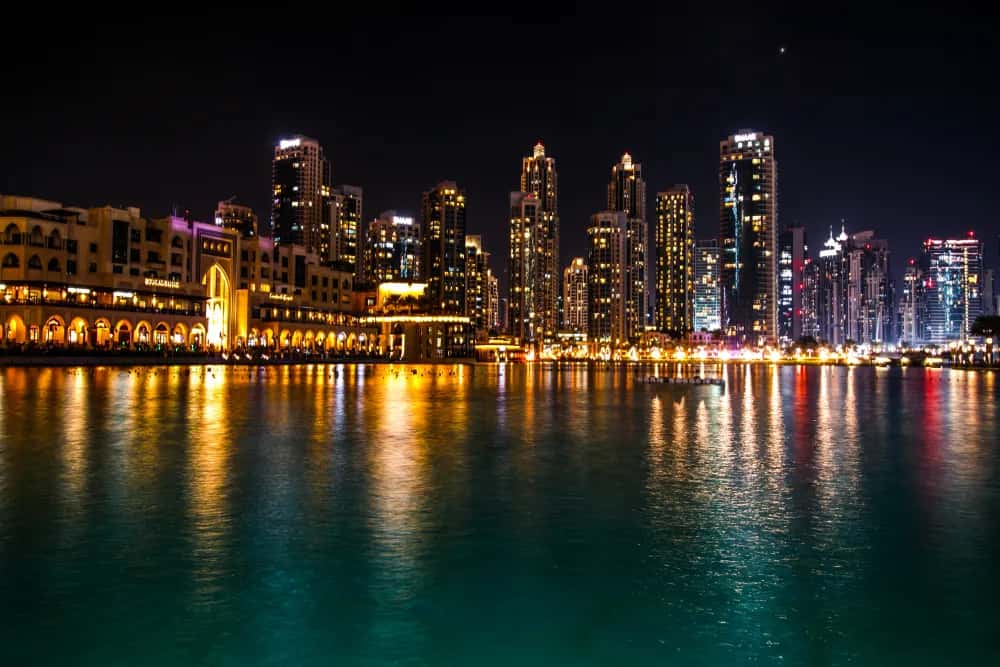
Dubai supply wave 2026: what buyers need to know now
Tens of thousands of new units are due for delivery across Dubai and the UAE by end of 2026. Here is how smart buyers should position themselves before the wave lands.
By Roy El Baba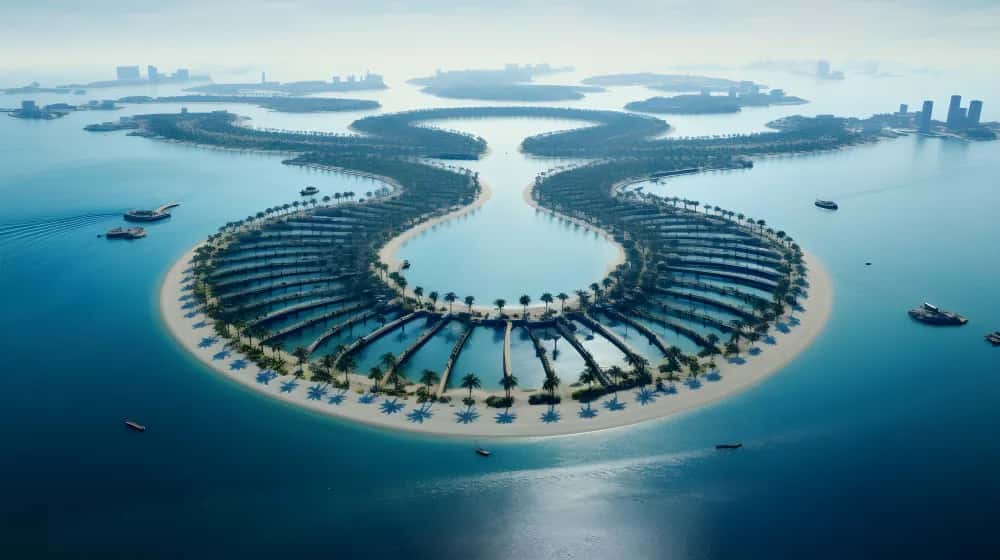 Market Insights
What a Dh260 million Palm Jumeirah sale tells buyers
A single villa transaction on Palm Jumeirah just hit Dh260 million. Here is what that figure reveals about micro-location pricing across the entire island.
By Roy El Baba Market Insights
Dubai hits AED 523bn in 8-month transactions: what it means for Q4
Dubai recorded AED 523.44bn in property transactions across the first eight months of the year. Here is what the deal-type breakdown tells investors about Q4 entry timing.
By Roy El Baba Market Insights
Dubai's $12.6bn August: what the numbers actually tell you
Dubai recorded $12.6bn in total transactions in August, with a single Palm Jumeirah villa selling for $21.5m. Here is what the segment data means for buyers and investors.
By Roy El Baba