

Dubai rentals on track for a record year: what it means for 2027
With 257,000+ contracts logged in eight months and new leases up 19.4%, Dubai's rental market is heading for its strongest year on record. Here is what tenants and investors need to know.
The numbers putting 2026 in record territory
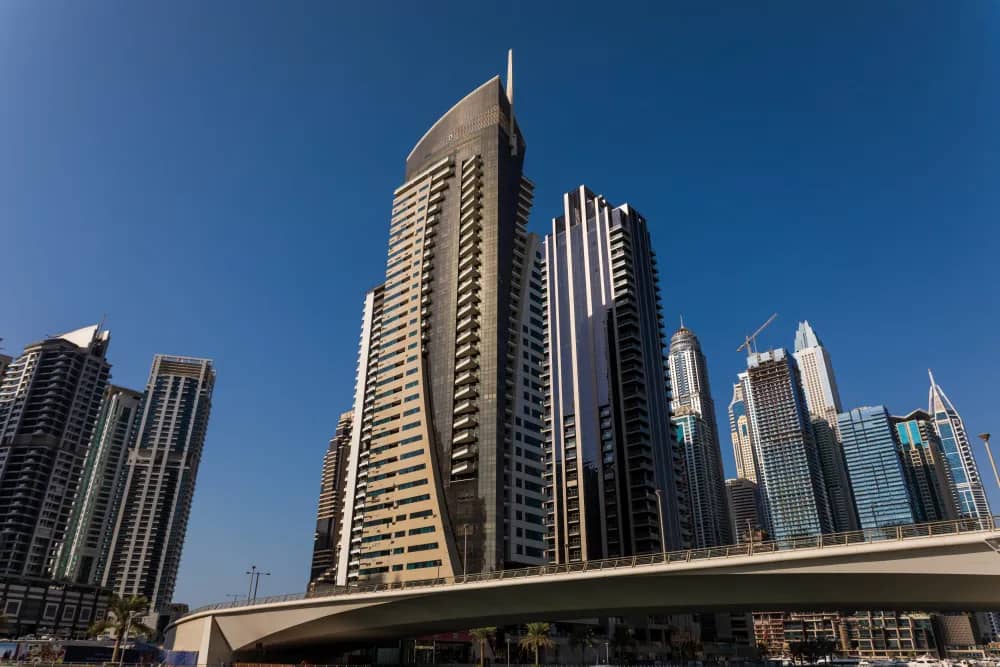
Dubai's rental market logged more than 257,000 contracts in the first eight months of 2026, with new lease registrations rising 19.4% year-on-year. At that pace, the full-year total is set to surpass every previous annual benchmark. The velocity is not a fluke driven by a single quarter. Both new signings and renewals contributed to the upward trend, which points to structural demand rather than a short-term spike driven by, say, a single corporate relocation wave.
For context, the 19.4% jump in new leases matters more than renewal volumes for price discovery. Renewals are capped by RERA's rent increase calculator, which limits how much a landlord can raise rent based on the gap between the existing lease and the RERA index. New leases carry no such ceiling, so a surge in first-time signings feeds directly into headline rent levels across communities. Investors tracking yields should watch new lease growth as the leading indicator.
Supply is not keeping up with leasing demand
The fundamental problem is straightforward. Residential completions in Dubai have increased in absolute terms over the past two years, yet the pipeline has not grown fast enough to absorb a tenant base that keeps expanding. Population growth, sustained business licensing activity, and continued inbound relocation from Europe, South Asia, and East Africa are all compressing the vacancy pool in established communities.
Areas like Jumeirah Village Circle, Dubai Marina, and Business Bay illustrate the pattern. These communities carry high transaction volumes precisely because they offer the density of stock that makes leasing liquid. But density is also why they absorb demand fastest, leaving little room for rents to soften when new tenants arrive. Landlords in these pockets are pricing accordingly, and the RERA index is trailing actual achieved rents in several unit categories.
What tenants should budget for in 2027
If you are a tenant whose lease expires in the first half of 2027, your renewal negotiation will be shaped by where the RERA index stands relative to your current rent. The calculator allows landlords to increase rent by up to 20% if the existing rent is 40% or more below the market average for a comparable unit. With rents having moved materially over the past 24 months, a growing share of legacy leases now sit in the range where double-digit increases are legally permissible.
Tenants who want to contain costs have two practical options. First, negotiate a two-year renewal now, before the RERA index catches up further. Second, look at Dubai South, Town Square, or DAMAC Hills 2, where achieved rents remain relatively lower than central Dubai and new supply from active off-plan delivery is providing a modest buffer. If you are unfamiliar with how the rental process works, the guide to renting in Dubai covers the registration steps, EJARI requirements, and renewal rights in practical detail.
One scenario tenants often overlook is the impact of multi-cheque payment terms. Landlords in a tight market frequently demand fewer cheques, effectively raising the cost of tenancy for anyone relying on monthly cash flow. Factoring in payment schedule flexibility when comparing quoted rents is worth doing before signing.
Investor read: yield compression, expansion, or rotation?
A record leasing year does not automatically translate into yield expansion for investors. The relationship depends on whether capital values are rising faster or slower than rents. In communities where transaction prices have already repriced sharply, such as Palm Jumeirah or Downtown Dubai, gross yields have compressed toward the 4% to 5% range for apartments. The rental income is higher in absolute terms, but the entry price has risen proportionally, or in some cases more.
The yield opportunity sits in mid-market communities where capital value appreciation has lagged the rental recovery. Al Furjan, Jumeirah Village Triangle, and Dubai Hills Estate are examples where yields of 6% to 7% gross are achievable on well-selected units, and where the tenant pool from nearby employment hubs keeps occupancy rates high. Investors entering Dubai off-plan projects in these corridors today are locking in a cost base before further rental inflation reaches the index.
For investors considering whether to buy or hold, the calculation also involves service charges, which erode net yields and vary significantly by community and developer. A unit yielding 7% gross in a building with AED 25 per sq ft in service charges can net closer to 5%, which changes the asset ranking considerably.
Communities worth tracking as lease data evolves
Not every community will see the same rental trajectory through the rest of 2026 and into 2027. Communities receiving large off-plan delivery volumes, such as Sobha Hartland 2 and areas within Mohammed Bin Rashid City, will see localized supply increases that can temporarily moderate rent growth. Conversely, communities with little new stock and strong employer proximity will sustain upward pressure.
Jumeirah Beach Residence and Al Barsha continue to attract tenants priced out of newer waterfront addresses, creating secondary demand that keeps rents firmer than their age and building quality might otherwise justify. Investors with existing stock in these areas should reassess at lease renewal whether the achieved rent is close to the RERA ceiling, and if so, factor that into any exit or refinancing calculations. For those still evaluating where to buy, browsing Dubai properties for sale filtered by community gives a useful view of the current ask price spread against these rental benchmarks.
Key takeaways for tenants and investors
For tenants: act early on renewals, understand exactly where your current rent sits on the RERA index, and explore communities with active new supply if cost containment is the priority. For investors: gross yield figures are less meaningful than net yield after service charges, and mid-market communities with a pipeline lag offer a better entry point than already-repriced prestige addresses. The record leasing volumes of 2026 confirm that rental demand is durable, which is the foundational condition for sustained income returns. The risk is overpaying on the asset side, not the income side.
Frequently asked questions
Can my landlord increase my rent at renewal in Dubai?
Yes, but only within limits set by RERA's rent increase calculator. The permitted increase depends on the gap between your current rent and the RERA market average for a comparable unit in the same area. If your rent is less than 10% below the index, no increase is allowed. Increases of up to 20% apply when the existing rent sits 40% or more below the market average.
What is the EJARI system and do I need it?
EJARI is Dubai's mandatory tenancy registration system administered by the Real Estate Regulatory Agency. All residential lease contracts must be registered through EJARI to be legally enforceable. You will need a valid EJARI registration to connect utilities, renew a residence visa, and settle any rental dispute through the RERA dispute resolution centre.
Are rental yields in Dubai still competitive compared with other global cities?
Yes. Gross residential yields in Dubai typically range from 4% to 7% depending on community, unit type, and purchase price. That compares favorably with major cities such as London (2% to 3.5%) or Singapore (2.5% to 4%). Dubai also has no capital gains tax or rental income tax, which improves the net return further.
Which Dubai communities offer the best balance of yield and occupancy for buy-to-let investors?
Mid-market communities with strong employer proximity tend to offer the best risk-adjusted returns. Areas such as Dubai Hills Estate, Jumeirah Village Circle, and Al Furjan consistently attract working professionals, keep occupancy rates high, and offer gross yields in the 6% to 7% range. Premium waterfront communities offer lower yields but higher capital growth potential.
How do service charges affect my net rental yield in Dubai?
Service charges reduce gross yield to net yield and vary considerably, from around AED 10 per sq ft in some mid-market buildings to AED 30 or more per sq ft in premium towers. On a 1,000 sq ft unit, that is AED 10,000 to AED 30,000 per year in costs. Always calculate net yield using the actual service charge rate for the specific building before making an investment decision.
More Market Insights posts
 Market Insights
When global brokerages enter Dubai: what buyers should know
International brokerage brands are entering Dubai's luxury market. Here is what that means for buyers and whether local expertise still wins.
By Roy El Baba Market Insights
Why Gulf tensions push capital into Dubai property
Regional instability historically drives capital toward Dubai real estate. Here is what that pattern means for buyers weighing entry timing right now.
By Roy El Baba Market Insights
What $2.9 billion in one week tells Dubai fence-sitters
Dubai recorded $2.9 billion across 2,931 sales in a single week. Here is what that velocity means if you are still waiting for the right moment.
By Roy El Baba Market Insights
What Dubai's end-user shift means for homebuyers
Dubai developers are restructuring projects for buyers who plan to live there. Here is what that means for payment plans, layouts, and your purchase strategy.
By Roy El Baba