
Villa renovation vs buying new in Dubai: which pays off?
Some Dubai villa owners are spending up to $5.4m on renovations. We break down whether upgrading delivers better ROI than buying off-plan or resale.
Renovation budgets that rival new purchase prices
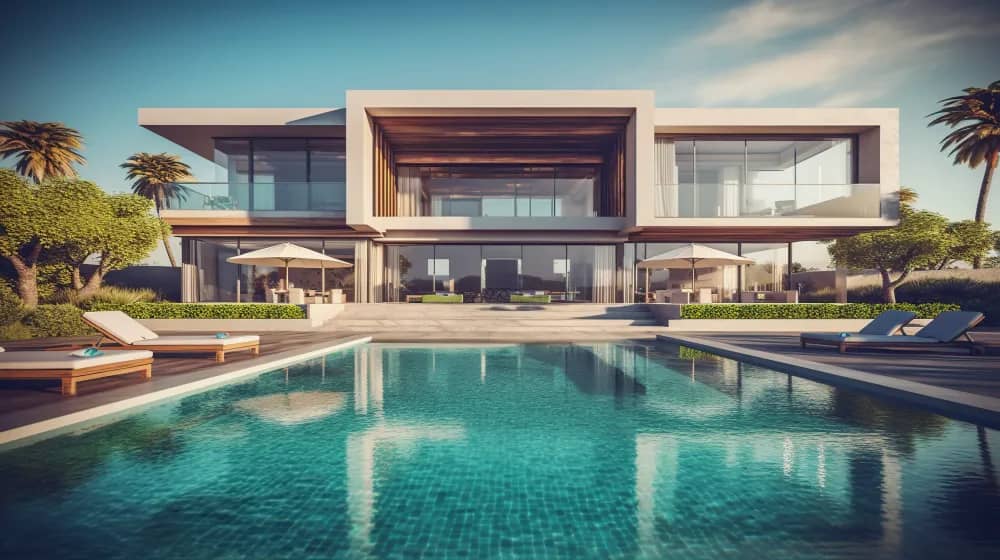
The numbers coming out of the Dubai villa renovation space are striking. Some owners are committing up to AED 20 million (approximately $5.4 million) to upgrade existing properties, covering everything from bespoke kitchen fitouts and temperature-controlled pools to fully integrated smart home systems. To put that in context, AED 20 million buys a brand-new villa in several established communities outright, including parts of Arabian Ranches and Dubai Hills Estate.
This is not a niche behaviour. Across the Dubai property market, villa owners who bought in the 2018 to 2021 window, when prices were comparatively suppressed, are now sitting on significant paper gains. Rather than selling and re-entering at today's elevated prices, many are choosing to invest in the asset they already hold. The logic is financially sound in principle, but execution determines whether it actually creates value or simply spends it.
What buyers actually pay a premium for
Not every renovation delivers equal returns at the point of resale. Transactional data from communities like Palm Jumeirah consistently shows that buyers in the AED 15 million-plus bracket are prepared to pay a measurable premium for three specific upgrades: high-specification kitchens with imported cabinetry and integrated appliances, private pools where none existed, and whole-home automation covering lighting, climate, and security. These are no longer considered luxury add-ons in that price band; they are expected.
Below that bracket, the calculus shifts. In mid-market villa communities, over-capitalising is a genuine risk. A homeowner in Arabian Ranches who spends AED 800,000 on a kitchen renovation in a community where comparable villas trade between AED 3.5 million and AED 5 million will struggle to recoup that spend in a resale scenario. The ceiling price of the community caps what any individual unit can achieve, regardless of its internal finish level.
Pools are the exception that partially crosses price brackets. In Dubai's climate, a private pool adds genuine utility for nine to ten months of the year. Agents consistently report that villa listings with pools spend fewer days on the market and attract stronger opening offers, even in the AED 4 million to AED 8 million range. The installed cost of a pool ranges widely, from AED 120,000 for a basic 8x4 metre structure to AED 500,000 or more for a fully tiled, heated, and landscaped installation.
The real cost of renovating a Dubai villa
Buyers considering an upgrade project need to account for more than contractor quotes. Dubai Municipality requires a No Objection Certificate (NOC) for structural work, and in master-planned communities the developer's own approval process runs in parallel. In Nakheel communities like Palm Jumeirah, for example, the Nakheel masterplan guidelines restrict certain external modifications. Overlooking this step creates compliance liability that can complicate any future sale.
Carrying costs during renovation also matter. If the villa is tenanted, the owner must factor in potential rental income loss, particularly relevant given current gross yields of 4% to 6% on villa assets across established communities. A six-month full renovation on a villa generating AED 300,000 per year in rent is a AED 150,000 opportunity cost before the first contractor invoice is settled. For investors rather than owner-occupiers, this changes the net ROI calculation materially.
A realistic budget breakdown for a substantive villa renovation in the AED 5 million to AED 10 million asset range: kitchen remodel (AED 150,000 to AED 400,000), bathrooms per unit (AED 40,000 to AED 120,000), pool installation (AED 120,000 to AED 500,000), smart home integration (AED 80,000 to AED 250,000), and landscaping (AED 50,000 to AED 200,000). Total project budgets of AED 500,000 to AED 1.5 million are common for a thorough upgrade without structural changes.
How renovation ROI compares to buying off-plan
The alternative to renovating is redeploying capital into a new purchase, either a resale villa or an off-plan project. Off-plan in the current Dubai real estate cycle carries its own profile: flexible payment plans (typically 60/40 or 70/30), below-market entry pricing in some cases, but a two to four year wait before the asset can be occupied or rented, and developer execution risk. For an owner-occupier already living in a well-located villa, locking capital into an off-plan unit that delivers in 2027 or 2028 solves a different problem than it creates.
Resale purchases, on the other hand, come with an immediate 4% DLD transfer fee, agency fees of 2%, and potential mortgage arrangement costs if financing is involved. On a AED 6 million villa, total acquisition costs run to approximately AED 360,000 to AED 400,000 before any renovation to bring the new purchase up to personal specification. That cost rarely features in informal ROI comparisons but is real money out of the door. For a detailed walkthrough of what buying in Dubai actually costs, the guide to buying property in Dubai covers the full fee structure.
The renovation-versus-buy decision ultimately depends on three variables: how much equity the owner already holds, the specific community's price ceiling, and personal timeline. An owner with a fully paid-off villa in a high-demand area like Dubai Hills Estate who wants to remain in that community has a strong financial case for upgrading in place. An investor holding a villa in a community where price growth has plateaued should run the numbers on selling, absorbing the transaction costs, and redeploying into a community with stronger forward momentum.
Which communities make renovation economics work
Community selection is the primary determinant of whether renovation ROI is achievable. The strongest cases exist where the gap between current transaction prices for upgraded and unupgraded villas is wide, and where the community itself has structural demand drivers: good schools, low service charges, and limited new supply. Dubai Hills Estate meets most of those criteria, and price variance between original-specification and renovated villas in the same sub-community can exceed AED 1.5 million on a three or four bedroom unit.
Palm Jumeirah is the most compelling case at the top end of the market. Land is finite, no new villa plots are being released, and buyer demand from HNWI purchasers is structurally strong. A villa on the Palm with a premium kitchen, smart home build-out, and a well-designed pool and terrace area is targeting a buyer profile that does not negotiate heavily on finish quality. The resale premium for fully upgraded Palm Jumeirah villas over original-spec equivalents is well-documented among agents active in that market.
Communities where the renovation case is weakest include areas with significant nearby supply of new-build villas, and those where service charges are already high enough to suppress buyer appetite at the top of the price range. Always run the service charge figure against community benchmarks before committing. The service charge calculator is a useful reference point for those comparisons.
Making the right call for your asset
The overarching principle is straightforward: renovation creates value when it brings a property closer to what the top buyer in that specific community is willing to pay, and when the cost of the upgrade is less than the resulting price uplift. It destroys value when the community's ceiling is already being approached, or when the renovation is driven by personal taste rather than market demand.
For investors considering the Dubai property market from outside the country, renovation is generally a higher-execution-risk strategy than buying a finished, tenanted asset. It requires active management, reliable contractor relationships, and local regulatory knowledge. Owner-occupiers, particularly those with long time horizons and strong existing locations, are better positioned to capture the upside. If you are weighing whether to upgrade your current villa or move into a new purchase, the decision tree starts with a current market valuation of your existing asset and a clear view of comparable sales in your community, both upgraded and unimproved.
Frequently asked questions
Does renovating a Dubai villa increase its resale value?
It depends on the community and the type of renovation. Pools, premium kitchens, and smart home systems deliver the strongest resale uplift in communities like Palm Jumeirah and Dubai Hills Estate, where buyers actively pay a premium for those features. In mid-market communities with lower price ceilings, over-investment in renovation can be difficult to recover at resale.
Do I need planning permission to renovate a villa in Dubai?
Yes. Structural changes require a No Objection Certificate (NOC) from Dubai Municipality. In master-planned communities, you will also need the developer's own approval before work begins. Skipping this step creates compliance issues that can complicate future sales or mortgage applications.
Is it cheaper to renovate or buy a new villa in Dubai?
Not always. A resale purchase carries 4% DLD transfer fees, 2% agency fees, and potential mortgage costs, totalling roughly 6% to 7% of the purchase price before any renovation to personalise the new home. Upgrading an existing owned villa avoids those transaction costs, but renovation projects carry their own risks around contractor management, timeline overruns, and regulatory approvals.
What features add the most value to a Dubai villa?
Private pools, high-specification kitchens, and integrated smart home systems consistently command buyer premiums across the AED 5 million-plus villa segment. Landscaping and outdoor entertaining areas are strong secondary contributors, particularly on Palm Jumeirah where outdoor space is a key purchase driver.
How much does it cost to add a pool to a villa in Dubai?
A basic pool installation starts at approximately AED 120,000 for a standard 8x4 metre structure. A fully tiled, heated, and landscaped pool with water features and automation can reach AED 500,000 or above. Developer and municipality approvals are required before construction, and timelines typically run eight to sixteen weeks depending on complexity.
More Investment posts
 Investment
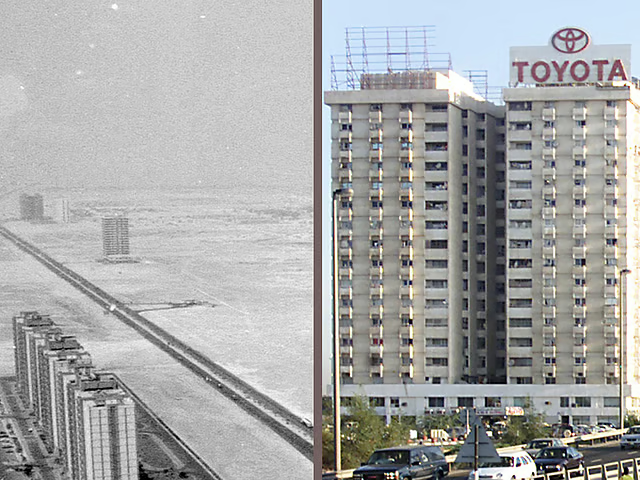
Sheikh Zayed Road redevelopment: what it means for investors
The Toyota Building's demolition signals a broader redevelopment wave on Sheikh Zayed Road. Here is what plot clearances along prime corridors mean for land values and off-plan launches.
By Roy El Baba Investment
Why Indian investors keep choosing Dubai real estate
Indian nationals are Dubai's largest foreign buyer group. Here's what drives that demand and how NRIs can buy freehold property step by step.
By Roy El Baba Investment
ELLE residences on Dubai Islands: what branded living costs you
ELLE's entry into Dubai real estate signals how fashion brands are reshaping the branded residence market. Here's what the premium actually buys you.
By Roy El Baba Investment
What metrics Dubai property investors should track themselves
DLD data is free and public. Here is the analytical framework every Dubai property investor should build before spending a dirham.
By Roy El Baba