
Sheikh Zayed Road redevelopment: what it means for investors
The Toyota Building's demolition signals a broader redevelopment wave on Sheikh Zayed Road. Here is what plot clearances along prime corridors mean for land values and off-plan launches.
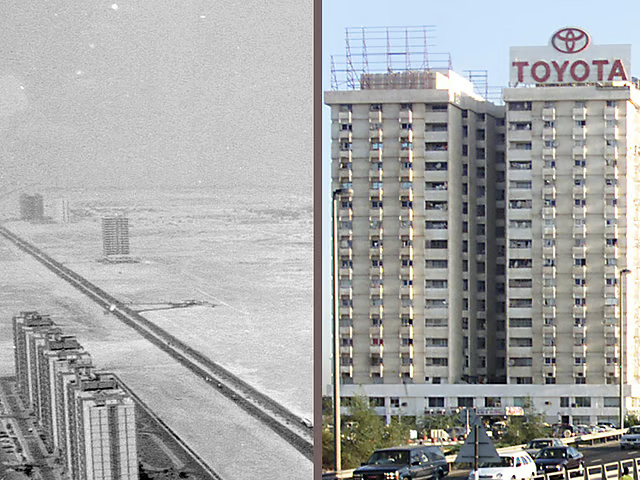
A 52-year-old building and what its removal signals
The Toyota Building has stood on Sheikh Zayed Road since the early 1970s, a period when the corridor was a modest arterial route rather than the dense commercial spine it is today. Its imminent demolition is not simply a heritage footnote. It is a signal that Dubai's redevelopment machine has reached even the most established plots along one of its most scrutinised addresses. For anyone tracking the dubai real estate cycle, demolitions like this one are worth reading carefully.
Dubai has gone through several waves of urban renewal, but the current phase is different in scale. The plots being cleared today sit on land that was valued at a fraction of current rates when original structures were built. As those structures come down, the replacement projects almost always reflect a step-change in density, height, and therefore yield potential. Investors who recognise that pattern early tend to position more effectively than those who wait for the cranes to arrive.
How plot clearances historically affect land values
When a significant building on a prime corridor is demolished, the immediate effect is a land valuation reset. The plot is reassessed on the basis of what it can now accommodate under current master planning regulations, not what it previously held. On Sheikh Zayed Road, where plot ratio allowances permit towers of 50 or more floors, that reset can be substantial. Historical transactions along the corridor show that cleared plots have traded at premiums of 30 to 60 percent above the value implied by the demolished structure's residual income.
The secondary effect is equally important for the surrounding market. When one major plot clears, developers and investors reappraise adjacent sites using the new comparable. This creates a localised repricing wave that can push valuations in a 500-metre radius higher within 12 to 18 months of the initial demolition. The dubai property market has documented this pattern repeatedly, most visibly around the Business Bay and Downtown Dubai corridors in the mid-2010s, where successive demolitions preceded some of the strongest capital growth cycles the city recorded.
Buyers looking to understand the mechanics of these transactions in more detail should review the complete process outlined in our guide on how to buy property in Dubai, which covers plot acquisition, SPA structures, and DLD fee calculations.
Off-plan launches that follow corridor redevelopment
Cleared plots do not stay empty long in Dubai. The gap between demolition and the launch of a replacement project has shortened considerably over the past decade, in part because developers now pre-position planning submissions ahead of acquisition. For off plan dubai buyers, this compressed timeline matters because the best entry prices are typically available in the six to twelve months following a high-profile demolition, before the corridor attracts sustained media attention and broader retail demand.
Sheikh Zayed Road already hosts projects from several of Dubai's most active developers. The demolition of legacy structures creates fresh supply of freehold-eligible plots in a corridor where very little undeveloped land remains. Developers including Emaar Properties and DAMAC Properties have historically moved quickly on such opportunities, and the pattern of launches following clearances on parallel corridors like Al Khail Road and Financial Centre Road suggests similar activity is plausible here.
For investors who prefer established communities adjacent to Sheikh Zayed Road rather than direct corridor exposure, Business Bay and Jumeirah Lake Towers (JLT) offer existing supply with strong rental demand and reasonable liquidity. These areas often benefit indirectly from corridor redevelopment because improved streetscape and infrastructure upgrades tend to follow large-scale demolition and rebuild cycles.
What investors should watch on Sheikh Zayed Road now
The most actionable indicators are DLD plot transfer records, municipality demolition permits, and new master plan applications filed with Dubai Municipality. When these three data points converge on the same stretch of road within a short period, it is a reliable precursor to a launch cluster. Sheikh Zayed Road between the Trade Centre Roundabout and the interchange at Defence Roundabout is the stretch most likely to see activity in the near term, based on the concentration of ageing mid-rise structures in that segment.
Rental yields on the corridor itself have historically been lower than in submarkets like Dubai Marina or Jumeirah Beach Residence (JBR) because the supply mix skews commercial. But new residential towers replacing legacy commercial stock tend to achieve yields in the 6 to 8 percent range in the first two to three years after handover, before the market fully prices in the address premium. That window is where patient investors have historically extracted the strongest returns.
One structural consideration often overlooked: properties on Sheikh Zayed Road meeting the AED 2 million threshold qualify buyers for UAE Golden Visa through Dubai property, adding a residency dimension to what is already a capital growth and yield thesis.
Risk factors worth pricing in before you commit
Corridor redevelopment is not a guaranteed win. Construction timelines on Sheikh Zayed Road are complex because the road itself carries approximately 400,000 vehicles per day, which restricts access windows for heavy plant and materials. Delays are common, and they compress the rental income period that underpins the yield calculation. Buyers entering at launch price need to model a handover delay of 12 to 18 months beyond the scheduled date as a base case, not a worst case.
Supply is the other risk. If multiple plots clear simultaneously and several developers launch within the same 24-month window, the pipeline can outpace absorption. The Dubai property market has experienced localised oversupply on specific corridors before, and the period following a demolition wave is precisely when supply projections deserve careful scrutiny. Checking the service charge calculator for comparable towers on the corridor before signing a SPA is one practical step toward understanding the full holding cost.
The longer view on Dubai's urban redevelopment cycle
Dubai is unusual among global cities in that its urban redevelopment cycle is not driven primarily by decay. Buildings like the Toyota Building are not coming down because they have failed structurally. They are coming down because the land beneath them is now worth more than the income the structure can generate at its current density. That is a function of a city whose planning ambition has consistently outrun the built environment inherited from earlier decades.
For investors, this cycle creates a repeating opportunity set. Each time a legacy building on a prime corridor is cleared, it resets the pricing benchmark for surrounding assets, creates a window for off-plan entry before that reset is fully priced in, and typically triggers infrastructure improvements that benefit the wider submarket. The Toyota Building's demolition is one data point in that cycle. The investors who act on it systematically, rather than reactively, are the ones who tend to compound returns across multiple Dubai market cycles.
Frequently asked questions
Does the demolition of old buildings on Sheikh Zayed Road make nearby properties more valuable?
Generally yes, though the effect is not immediate. When a significant structure is cleared, the plot is repriced based on what can be built under current planning regulations, which is typically denser and taller than the original. This repricing tends to lift valuations in the surrounding 500-metre radius within 12 to 18 months, based on historical patterns along Dubai's prime corridors.
When is the best time to buy off-plan near a major redevelopment corridor?
The strongest entry prices are usually available in the six to twelve months following a high-profile demolition, before sustained media coverage drives broad retail demand. Once a corridor becomes widely discussed, developer pricing already reflects the anticipated uplift.
Are Sheikh Zayed Road properties freehold for foreign buyers?
Sheikh Zayed Road falls within Dubai's designated freehold zones, which means foreign nationals can purchase freehold title. Buyers should confirm the specific plot's freehold status in the sale and purchase agreement and verify registration with the Dubai Land Department.
What yield can investors realistically expect from new residential towers on Sheikh Zayed Road?
New residential towers replacing legacy commercial stock on Sheikh Zayed Road have historically achieved gross yields of 6 to 8 percent in the first two to three years after handover. Yields tend to compress as the address premium becomes fully priced into capital values, so early entry matters.
Does a Sheikh Zayed Road property qualify for the UAE Golden Visa?
A property on Sheikh Zayed Road purchased at or above AED 2 million qualifies the buyer for a UAE Golden Visa, provided the purchase is completed and registered with the Dubai Land Department. The visa grants a 10-year renewable residency and does not require the property to be owner-occupied.
More Investment posts
 Investment
Villa renovation vs buying new in Dubai: which pays off?
Some Dubai villa owners are spending up to $5.4m on renovations. We break down whether upgrading delivers better ROI than buying off-plan or resale.
By Roy El Baba Investment
Why Indian investors keep choosing Dubai real estate
Indian nationals are Dubai's largest foreign buyer group. Here's what drives that demand and how NRIs can buy freehold property step by step.
By Roy El Baba Investment
ELLE residences on Dubai Islands: what branded living costs you
ELLE's entry into Dubai real estate signals how fashion brands are reshaping the branded residence market. Here's what the premium actually buys you.
By Roy El Baba Investment
What metrics Dubai property investors should track themselves
DLD data is free and public. Here is the analytical framework every Dubai property investor should build before spending a dirham.
By Roy El Baba