

How geopolitical instability drives Dubai property demand
Regional conflict has repeatedly pushed capital toward Dubai. Here is what the current Middle East tensions mean for buyers and sellers in 2025.
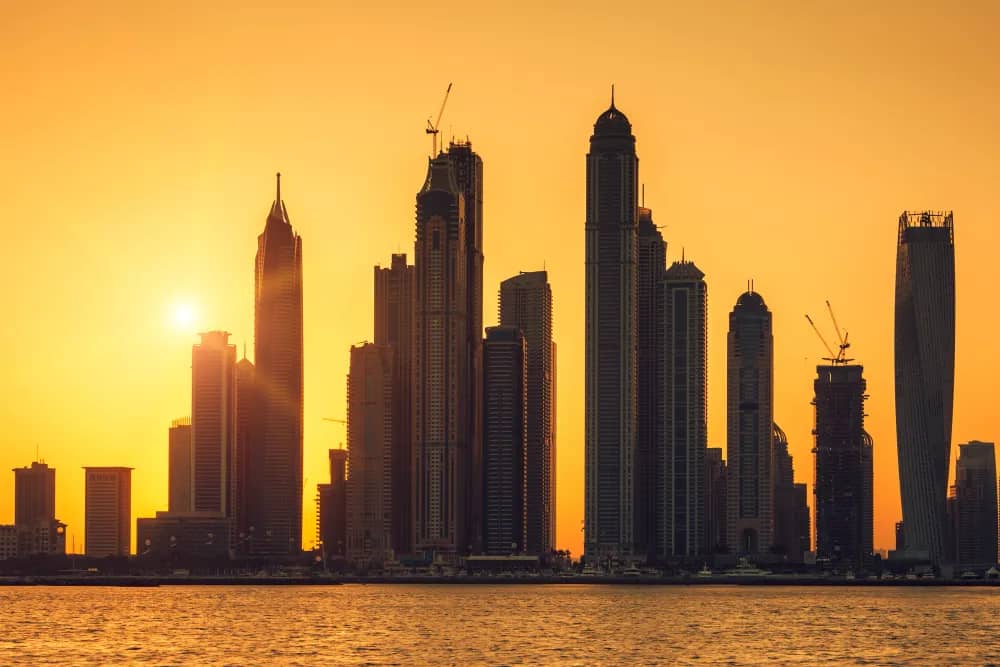
Dubai's safe-haven status is not accidental
Every sustained period of regional instability since the early 2000s has produced a measurable uptick in capital flowing into the Dubai property market. The Gulf War of the early 1990s, the 2006 Lebanon conflict, the Arab Spring of 2011 and the Yemen crisis all correlated with surges in Middle Eastern buyer registrations at the Dubai Land Department. The current conflict environment is producing the same pattern, but at a scale and speed that earlier episodes did not match.
What makes Dubai structurally attractive is not geography alone. The emirate offers freehold ownership for foreigners in designated zones, a legal framework that has been progressively strengthened since the Real Estate Regulatory Agency (RERA) was established in 2007, zero capital gains tax, and a residency pathway through property investment. These fundamentals existed before any single geopolitical event. Instability elsewhere simply makes them more visible to capital looking for a landing point.
Who is selling, and why now makes sense
A meaningful cohort of long-term Dubai residents, many of whom bought between 2012 and 2019 when prices corrected sharply from their 2008 peak, are now sitting on substantial paper gains. Villa prices in communities such as Dubai Hills Estate and Arabian Ranches have in several cases doubled from their 2019 lows, according to transaction data from Property Monitor. Apartment values in Dubai Marina and Downtown Dubai have recovered most of their post-2014 losses and in premium tiers have surpassed prior highs.
For these sellers, the calculus is straightforward. Buyers with fresh capital from Lebanon, Iraq, Sudan and more recently Israeli residents diversifying out of the region are competing actively for ready stock. Liquidity is high, time-on-market for well-priced units is short, and mortgage rates, while not as low as the 2021 environment, remain below long-term global averages. Selling into this demand is not panic; it is timing a cycle correctly.
What geopolitical demand looks like on the ground
Geopolitically driven buyers share a distinct behavioral profile compared with yield-focused investors or lifestyle purchasers. They prioritize capital preservation over rental yield, they tend to move quickly once a decision is made, and they concentrate in communities with strong brand recognition and secondary market liquidity. Palm Jumeirah, Downtown Dubai and Dubai Creek Harbour absorb a disproportionate share of this demand.
The golden visa mechanism amplifies this. A purchase of AED 2 million or more in qualifying property entitles the buyer to a 10-year UAE residency visa. For a family relocating from a conflict zone or an unstable regulatory environment, that residency is frequently worth more than the investment return itself. Our guide to UAE Golden Visa through Dubai property covers the current eligibility thresholds and application process in detail. The combination of a tangible asset and a legal residency anchor is what separates Dubai from other capital havens such as Swiss bank accounts or London bonds.
Risks buyers should price in before acting
It would be dishonest to frame geopolitically driven demand as a guarantee of sustained price growth. Dubai has overshot before. The 2008 correction erased roughly 50 percent of values in some segments. The 2014 to 2020 correction, though shallower, still ran for six consecutive years. Current supply pipelines from Emaar Properties, DAMAC Properties, Nakheel and others are substantial. Valuation Intelligence data published in Q1 2025 points to approximately 77,000 units due for handover through 2026. If conflict resolution accelerates and the demand surge reverses before those units deliver, pricing pressure is a real outcome.
Buyers entering the market now, particularly in the off-plan segment, should stress-test two scenarios: a demand plateau where geopolitical buyers stop arriving, and a supply glut where completions outpace absorption. Neither scenario means the market collapses, but both scenarios affect the entry price at which a purchase becomes defensible. Use our Dubai off-plan projects page to compare what is currently available, and factor in ongoing costs using the service charge calculator before committing.
How to buy Dubai property as an international buyer
The mechanical process of purchasing Dubai real estate is simpler than most international markets but carries its own specific requirements. Non-residents can buy freehold property in designated zones with no restriction on ownership percentage. The standard transaction involves a Form F sale agreement, a 10 percent deposit into an escrow or directly to the seller, a 4 percent DLD registration fee, and a RERA-mandated No Objection Certificate from the developer on off-plan transfers.
For a full step-by-step breakdown, our guide on how to buy property in Dubai covers the process from initial offer to title deed. Communities worth evaluating at current price points for capital preservation include Jumeirah Village Circle for yield, Business Bay for liquidity and Dubai Marina for secondary market depth. For those exploring Dubai properties for sale across all budget bands, filtering by handover date and developer track record will narrow the field more effectively than filtering by price alone.
One detail often overlooked by first-time international buyers: mortgage availability for non-residents is real but carries a lower loan-to-value cap than for UAE residents, typically 50 percent versus 80 percent for residents purchasing a first home. Cash buyers, who represent a large proportion of geopolitically motivated purchasers, skip this entirely, which partly explains the speed at which they can close transactions.
What this cycle means for long-term holders
For investors already holding Dubai real estate, the current environment presents a choice: sell into strong demand now, refinance to release equity, or hold and benefit from the rental compression that follows rising capital values. Rental yields in villa communities have actually compressed slightly as purchase prices outpaced rents in 2023 and 2024, but absolute rental income in dirham terms remains at multi-year highs because the underlying rent levels rose sharply through 2022 and 2023.
The historical pattern in Dubai suggests that geopolitically driven demand cycles last 18 to 36 months before normalizing. That does not mean prices fall sharply at the end of the cycle; it means the rate of appreciation slows. Investors who bought at the right entry point in the last down cycle are in the strongest position. Those entering now should have a hold horizon of at least five years to ride through any normalization without being forced to sell at an inconvenient moment.
Frequently asked questions
Does Middle East conflict reliably push buyers into Dubai real estate?
Historically, yes. Regional instability in Lebanon, Iraq, Sudan and Egypt has consistently produced spikes in Dubai DLD registrations from buyers in those countries. Dubai's freehold laws, golden visa and zero capital gains tax make it a natural landing point for displaced capital.
What is the minimum property value to qualify for a UAE golden visa?
As of 2025, a property purchase of AED 2 million or more in a qualifying freehold zone makes the buyer eligible for a 10-year UAE residency visa. The property can be mortgaged as long as the paid-up equity meets the AED 2 million threshold.
Are Dubai property prices at risk of a correction if the conflict ends?
A resolution to regional conflict could reduce one source of demand, but Dubai's buyer pool is globally diversified. A correction would more likely result from a supply overhang, with approximately 77,000 units scheduled for handover through 2026, than from any single demand driver reversing.
Can non-residents get a mortgage to buy property in Dubai?
Yes, several UAE banks offer mortgages to non-residents, but the maximum loan-to-value is typically 50 percent of the property value. That means a non-resident buyer needs to fund at least half the purchase price in cash, plus transaction costs.
Which Dubai communities offer the best secondary market liquidity?
Dubai Marina, Downtown Dubai and Palm Jumeirah consistently show the highest transaction volumes in the secondary market, which means resale is more predictable. Jumeirah Village Circle and Business Bay also show strong liquidity at lower price points.
More Market Insights posts
 Market Insights
What $2.7 billion in weekly Dubai deals really signals
Dubai recorded $2.7bn across 3,098 sales in a single week. Here is what that volume, and a standout Business Bay office deal, tells investors right now.
By Roy El Baba Market Insights
Dubai off-plan villas, Business Bay, and the August 2026 buyer decision framework
Off-plan villa transactions surged in August 2026 while Business Bay gained ground as an investment district. Here is how to match your buyer profile to the right opportunity.
By Roy El Baba Market Insights
DLD's AI registration platform: what it means for buyers
Dubai Land Department's new AI-powered registration system could cut title deed processing from days to hours. Here's what buyers need to know.
By Roy El Baba Market Insights
Dubai supply wave 2026: what buyers need to know now
Tens of thousands of new units are due for delivery across Dubai and the UAE by end of 2026. Here is how smart buyers should position themselves before the wave lands.
By Roy El Baba