

What the Dh110m Jumeirah Golf Estates sale signals for Dubai's ultra-prime market
A Dh110 million villa sale at Jumeirah Golf Estates isn't just a headline. It maps where high-net-worth capital is moving inside Dubai's luxury property market.
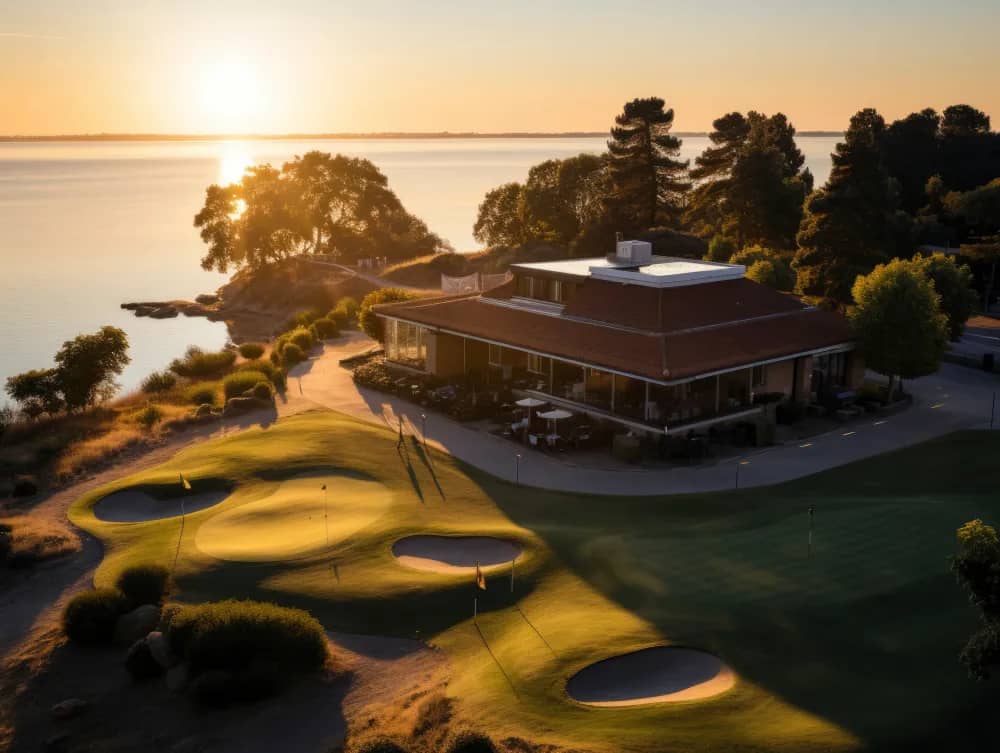
A Dh110 million transaction in context
A single villa sale at Jumeirah Golf Estates has closed at Dh110 million, setting a new community record. On the surface, it is another big number in a market that has generated several of them over the past three years. Looked at more carefully, it tells you something specific about the direction of the Dubai property market, who is buying, and which communities are next in line for price discovery at the ultra-prime end.
Jumeirah Golf Estates is a master-planned golf community in Dubai land, built around two championship courses designed by Greg Norman. Villas here are large-format, plot-heavy assets. A Dh110 million exit price implies a buyer who is not primarily motivated by yield. This is capital preservation and lifestyle consolidation in one transaction, the defining profile of the current ultra-high-net-worth buyer in Dubai real estate.
Why golf communities are attracting record bids
Golf-fronting inventory in Dubai is structurally limited. Unlike waterfront supply, which developers can partially expand through reclamation, fairway-adjacent plots are fixed by the course footprint. That scarcity dynamic has sharpened considerably since 2022, when a wave of wealth migration from Europe, South Asia, and East Asia accelerated demand for large private villas with controlled, low-density surroundings.
The lifestyle credentials of a golf address extend well beyond the sport itself. Residents cite privacy, green open space, and community management quality as primary drivers. Those attributes are hard to replicate in higher-density districts. For a buyer choosing between a penthouse on Palm Jumeirah and a standalone villa on a golf course, the villa offers something the penthouse cannot: ground-level private space at scale.
Institutional investors and family offices tracking the Dubai property market have taken note. When a community sets a new price record, comparable assets in adjacent communities re-price within one to two transaction cycles. That ripple effect is already visible in enquiry volumes at DAMAC Hills, another golf-integrated community with a broader price entry point and growing secondary-market depth.
Which communities are positioned for the next record
Three communities merit close attention for investors looking beyond Jumeirah Golf Estates. First, DAMAC Hills, developed by DAMAC Properties, sits on the Trump International Golf Club Dubai course. It has a large inventory base, which historically suppresses records, but ultra-premium individual villa plots here have been transacting at rising per-square-foot rates throughout 2023 and 2024. As the broader stock gets absorbed, the top tier will reprice.
Dubai Hills Estate, developed by Emaar Properties around an 18-hole championship course, is arguably the most liquid golf community in Dubai right now. Its proximity to the city core and the depth of its resale market make it the most likely venue for the next publicly visible record transaction in a golf-adjacent community. Several mansions in the Estate Villas subcommunity are currently listed at Dh50 million to Dh80 million.
Further out, Sobha Hartland II and the Meydan corridor are attracting buyers who want a similar profile at a lower absolute price. These are not golf communities in the strict sense, but their low-density, large-format villa positioning puts them in the same competitive consideration set for the buyer spending Dh20 million to Dh50 million.
The Golden Visa dimension for ultra-prime buyers
Every transaction above Dh2 million in Dubai qualifies the buyer for consideration under the UAE Golden Visa through Dubai property framework, which grants a ten-year renewable residency. At Dh110 million, that visa benefit is almost incidental. What it does represent, however, is a signal of intent to establish long-term residency, and that behavioral shift is material for the market.
Buyers at this price point are not purchasing a second home and leaving. They are relocating capital and often their primary residence. That increases the likelihood they reinvest in Dubai real estate over time, whether in further residential acquisitions or in commercial and hospitality assets. The golden visa dubai policy framework has made Dubai a structurally more attractive long-term base than comparable markets in Europe or Southeast Asia from a tax and mobility standpoint.
What buyers and investors should do now
If you are evaluating golf community villas as an investment or primary residence, the Dh110 million Jumeirah Golf Estates transaction tells you that price ceilings in these communities are not yet established. There is still room above the current mid-market pricing in most comparable locations. That means the window for acquiring at pre-record pricing in communities like DAMAC Hills or Dubai Hills is narrowing.
For investors working with a more moderate budget, the same structural logic applies at smaller scale. Understanding how to buy property in Dubai as a non-resident, including transfer fees, DLD registration charges, and agency costs, is essential before committing. A Dh5 million villa in a golf community today operates under the same ownership framework as a Dh110 million one. The DLD fee is 4% of the transaction value regardless of price point.
Browsing current Dubai properties for sale across these communities will give you a live read on where asking prices sit relative to recent transacted values. In a market moving as quickly as the ultra-prime segment, that gap between listed and transacted price is one of the most informative data points available to a buyer.
The broader pattern this transaction confirms
Dubai's ultra-luxury segment has now produced community records across multiple districts in a compressed timeframe. Palm Jumeirah, Emirates Hills, Jumeirah Bay Island, and now Jumeirah Golf Estates have each seen transactions that reset expectations for what prime Dubai real estate is worth. The common thread is not location type. It is scarcity of a specific product, large-format private villas with a premium amenity anchor, combined with a buyer pool that is both global and growing.
The Dubai property market is not uniform. Apartment supply in some submarkets remains high, and service charges, particularly for older buildings, can erode net yields significantly. Use a service charge calculator when underwriting any villa purchase to understand the annual carrying cost. But in the golf and lifestyle villa segment, supply constraints and wealth migration tailwinds are aligned in a way that makes further price appreciation the base case, not the optimistic one.
Frequently asked questions
What is Jumeirah Golf Estates and why is it significant for Dubai real estate investors?
Jumeirah Golf Estates is a master-planned residential community in Dubai land built around two Greg Norman-designed championship golf courses. It is significant because its villa inventory is structurally limited by the course footprint, which creates a scarcity dynamic that supports long-term capital appreciation. The recent Dh110 million record sale confirms active demand at the ultra-prime end of the market.
How does the Dh110 million sale affect pricing in other Dubai golf communities?
Community records typically trigger re-pricing of comparable assets in adjacent or similar communities within one to two transaction cycles. Communities like DAMAC Hills and Dubai Hills Estate are likely to see upward pressure on top-tier asking prices as buyers and sellers reference the Jumeirah Golf Estates benchmark when negotiating.
Do ultra-luxury Dubai villa buyers qualify for the UAE Golden Visa?
Yes. Any property purchase above Dh2 million in Dubai qualifies the buyer for a ten-year renewable UAE Golden Visa, which grants residency rights. At the Dh110 million price point, this benefit is standard, but it does reflect a broader trend of high-net-worth buyers using Dubai property as a vehicle for long-term residency, not just investment.
What fees should I budget for when buying a villa in Dubai?
The primary costs are the DLD transfer fee at 4% of the purchase price, an agency commission typically between 2% and 2.5%, and DLD registration admin fees. For a Dh10 million property, you should budget roughly Dh650,000 to Dh700,000 in transaction costs above the purchase price. Ongoing costs include service charges, which vary significantly by community.
Is Dubai Hills Estate a direct competitor to Jumeirah Golf Estates for villa buyers?
They serve overlapping but not identical buyer profiles. Dubai Hills Estate offers higher liquidity, closer proximity to central Dubai, and a wider price range, making it accessible to a broader pool of buyers. Jumeirah Golf Estates tends to attract buyers prioritizing privacy and a more established golf community feel. Both have seen strong capital appreciation over the past three years.
More Market Insights posts
 Market Insights
What Should Dubai Property Owners Do Now? A Data-Based Answer
Cooling market? Crash? Here’s what Dubai’s first-half 2026 transaction data actually shows, and what it means whether you own, are buying, or are still deciding.
By Roy El Baba Market Insights
What $2.7 billion in weekly Dubai deals really signals
Dubai recorded $2.7bn across 3,098 sales in a single week. Here is what that volume, and a standout Business Bay office deal, tells investors right now.
By Roy El Baba Market Insights
Dubai off-plan villas, Business Bay, and the August 2026 buyer decision framework
Off-plan villa transactions surged in August 2026 while Business Bay gained ground as an investment district. Here is how to match your buyer profile to the right opportunity.
By Roy El Baba Market Insights
DLD's AI registration platform: what it means for buyers
Dubai Land Department's new AI-powered registration system could cut title deed processing from days to hours. Here's what buyers need to know.
By Roy El Baba