

Why waiting for a Dubai price dip keeps costing buyers
Buyer confidence in Dubai remains firm, but the real story is in the data: every cycle buyers who waited for a correction paid more in the end.
Buyer confidence holds as sentiment shifts
The latest buyer sentiment data from the Dubai property market tells a familiar story: fewer prospective purchasers are banking on a near-term price drop. That is not a coincidence driven by marketing. It reflects what transaction records at the Dubai Land Department have shown across multiple market cycles: the correction that buyers wait for rarely arrives, and when prices do soften briefly, the window closes faster than most buyers can act.
This shift in sentiment is significant. When the share of buyers expecting price drops shrinks, it typically signals that the market is moving from speculative hesitancy into active participation. For anyone currently sitting on the fence watching the Dubai real estate market, that transition matters more than any single price forecast.
What DLD transaction data actually shows
Dubai Land Department records show that residential transaction volumes hit approximately 122,000 deals in 2023, a figure that surpassed the previous peak set in 2009. Through 2024, monthly volumes continued to outperform the same months in prior years. Median apartment prices in established communities rose roughly 19 percent year-on-year through Q3 2024, with villa prices in areas such as Dubai Hills Estate and Arabian Ranches posting even steeper gains.
Consider the buyer who decided in early 2021 to wait six months for a correction before purchasing in Downtown Dubai. Average transacted prices in that community rose approximately 30 percent over the following 18 months. The six-month delay did not save a deposit. It cost one.
Why Dubai corrections are shorter and shallower than buyers expect
Dubai's property cycles do correct. The 2008 and 2014 downturns were real and painful. But both corrections shared a structural feature: they were triggered by global credit events or oil price collapses that simultaneously reduced both supply finance and buyer purchasing power. The current market operates under different conditions. Mortgage penetration is lower as a share of total transactions, off-plan payment plans have extended buyer timelines, and international demand, particularly from European and Asian investors, has broadened the buyer pool beyond regional dependence.
That does not mean prices cannot soften. It means the trigger would need to be larger, and the recovery would likely be faster, than historical precedent suggests most buyers expect. A buyer waiting for a 10 to 15 percent correction in a market that averages 8 to 10 percent annual appreciation is, mathematically, waiting for two years of gains to evaporate before they act.
Communities such as Business Bay and Dubai Marina have demonstrated this pattern repeatedly. Short dips followed by recoveries that overshoot the previous peak within 12 to 18 months.
The real cost of waiting: opportunity, not just price
Price alone understates the cost of delay. Every month a buyer waits, rental income is not being collected. In Jumeirah Village Circle, gross rental yields on mid-size apartments have been running between 7 and 9 percent annually through 2023 and 2024. A buyer who delayed a AED 1.5 million purchase by 12 months forfeited roughly AED 105,000 to AED 135,000 in gross rental income, assuming they were renting elsewhere in the interim rather than living rent-free.
There is also the off-plan dynamic. Developers including Emaar Properties and Danube Properties have repeatedly raised prices at launch milestones as construction progresses. A unit bought at foundation stage in a community like Dubai Creek Harbour has typically appreciated 15 to 25 percent by handover, simply reflecting the risk premium that early buyers absorbed. Waiting for handover to buy at a discount rarely reflects how Dubai off-plan pricing actually works.
How to buy in Dubai without mistiming the market
The question is not whether prices will be higher or lower in 12 months. The question is whether the investment works at today's price, with today's yield, over the investment horizon you have defined. If you are buying a Dubai properties for sale to hold for five or more years, the precise entry point matters far less than the fundamentals of the asset: location, developer track record, service charge load, and rental demand in the submarket.
A practical starting point is understanding total acquisition cost. Transfer fees sit at 4 percent of purchase price, agent fees are typically 2 percent, and mortgage registration adds 0.25 percent plus a flat AED 290 if financing is involved. Our How to buy property in Dubai guide walks through the full cost stack so that price comparisons are made on a like-for-like basis. Running the Service charge calculator for any shortlisted building adds another layer of cost accuracy before you commit.
For investors targeting the UAE Golden Visa through Dubai property, the AED 2 million minimum threshold has created a specific segment of demand that is largely price-inelastic. Buyers in that bracket are not waiting for corrections because the visa benefit value often exceeds any realistic near-term price move.
Reading market signals without getting paralysed by them
Buyer sentiment data is useful as a directional signal, not a trading trigger. When the proportion of buyers expecting price drops falls, it tells you that the pool of buyers willing to transact at current levels is growing, which is itself a price-supportive force. That does not mean every asset in every community is fairly valued. Palm Jumeirah secondary villa prices at current levels require a specific tenant profile and holding period to pencil out. Jumeirah Lake Towers (JLT) offers a different risk-return profile suited to yield-focused investors at a lower absolute price point.
The investors who have consistently outperformed in Dubai are not the ones who called the top or bottom. They are the ones who bought structurally sound assets in demand-driven locations, held through short-term noise, and reinvested. That discipline matters more than any quarterly sentiment survey, in Dubai or anywhere else.
Frequently asked questions
Is now a good time to buy property in Dubai?
Based on DLD transaction data and rental yield performance, the Dubai property market has sustained strong demand through 2023 and 2024. Whether now is right for a specific buyer depends on their investment horizon, financing structure, and target yield. Assets bought at fundamentally sound price-to-rent ratios have historically performed well regardless of short-term price fluctuations.
Will Dubai property prices drop in 2025?
No credible data points to an imminent broad correction. Supply additions are tracked by the DLD and are broadly aligned with absorption rates. A global macro shock could compress prices, but short-cycle dips in Dubai have historically recovered within 12 to 18 months, making the timing of a correction difficult to exploit even if one occurs.
What are the full costs of buying property in Dubai?
Beyond the purchase price, buyers should budget for a 4 percent DLD transfer fee, 2 percent agent commission, a trustee fee of around AED 4,000, and mortgage registration of 0.25 percent plus AED 290 if financing. Total acquisition costs typically add 6 to 7 percent on top of the agreed price for a cash purchase.
How do off-plan prices compare to secondary market prices in Dubai?
Off-plan units are typically priced below comparable ready units at launch because buyers absorb construction risk. As a project progresses toward handover, developer prices at new milestones rise, often 15 to 25 percent above launch price. Secondary market pricing reflects completed, de-risked assets and tends to trade at a premium to off-plan launch prices in the same community.
Which Dubai communities offer the best rental yields right now?
Communities such as Jumeirah Village Circle, Jumeirah Lake Towers, and Dubai Silicon Oasis have consistently delivered gross yields of 7 to 9 percent on apartments through 2023 and 2024. Established villa communities like Dubai Hills Estate offer lower yields, typically 4 to 6 percent, but with stronger capital appreciation potential.
More Market Insights posts
 Market Insights
Dubai supply wave 2026: what buyers need to know now
Tens of thousands of new units are due for delivery across Dubai and the UAE by end of 2026. Here is how smart buyers should position themselves before the wave lands.
By Roy El Baba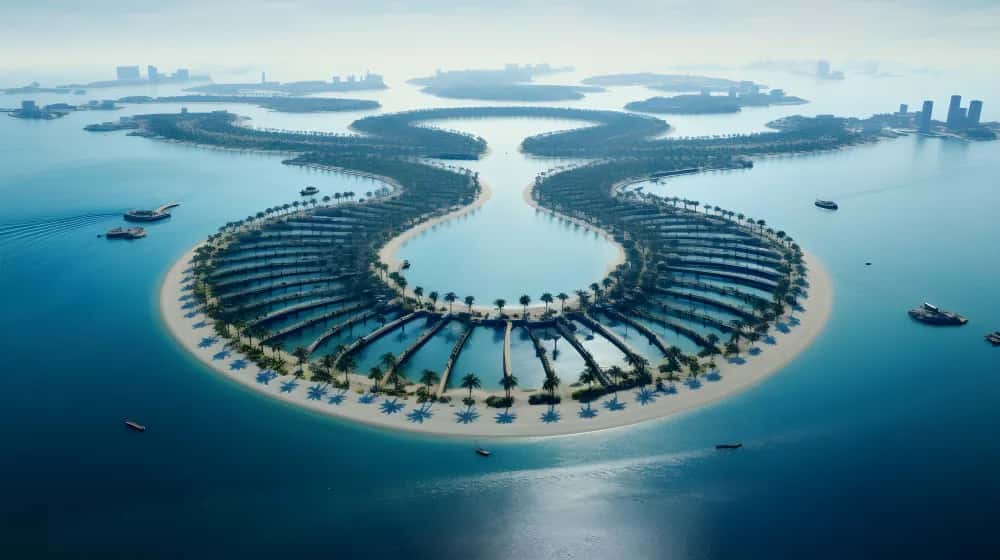 Market Insights
What a Dh260 million Palm Jumeirah sale tells buyers
A single villa transaction on Palm Jumeirah just hit Dh260 million. Here is what that figure reveals about micro-location pricing across the entire island.
By Roy El Baba Market Insights
Dubai hits AED 523bn in 8-month transactions: what it means for Q4
Dubai recorded AED 523.44bn in property transactions across the first eight months of the year. Here is what the deal-type breakdown tells investors about Q4 entry timing.
By Roy El Baba Market Insights
Dubai's $12.6bn August: what the numbers actually tell you
Dubai recorded $12.6bn in total transactions in August, with a single Palm Jumeirah villa selling for $21.5m. Here is what the segment data means for buyers and investors.
By Roy El Baba