

How walkability is reshaping Dubai property demand
The RTA's plan to link 25 communities with walkways and cycling paths is more than an infrastructure story. It signals a measurable shift in what buyers and renters now price into their decisions.
Walkability is no longer a lifestyle perk
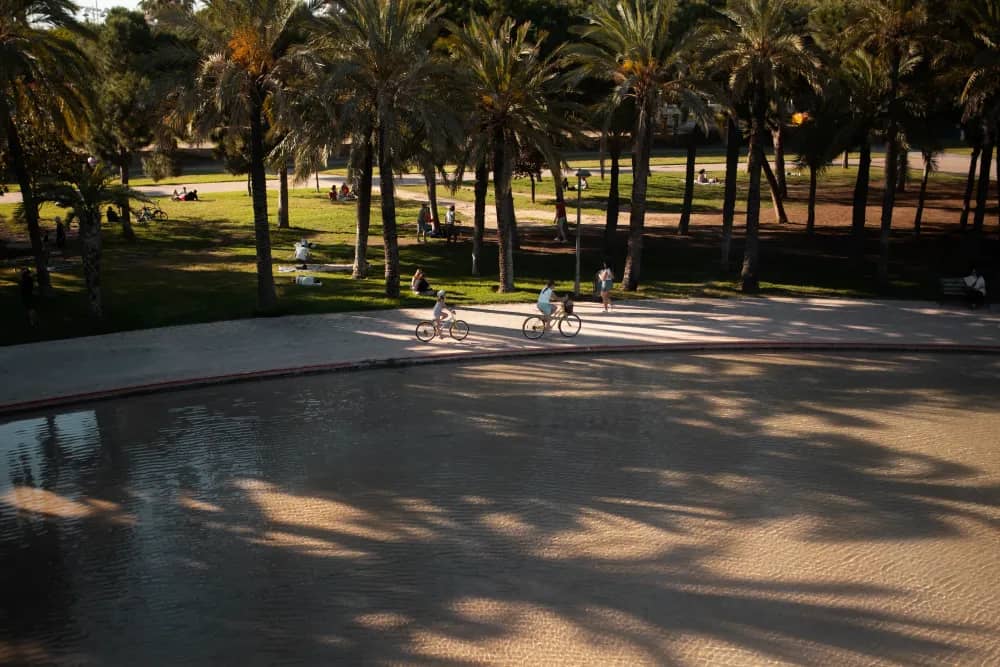
For most of Dubai's modern history, a car was simply assumed. Communities were designed around road access, and the ability to walk to a metro station, a café, or a park was treated as a bonus rather than a baseline. That assumption is shifting. A growing segment of buyers and renters, particularly those relocating from European and Asian cities, now factor pedestrian connectivity into their shortlist criteria before they look at floor plans or service charges.
The RTA's plan to connect 25 communities through a dedicated soft mobility network, running walkways and cycling paths from Dubai Marina through to Rigga, formalizes a trend that was already being priced informally into the market. Communities with mature pedestrian infrastructure have been holding rental premiums for several years. What changes now is that the infrastructure gap between well-connected and car-dependent communities is about to close, and the areas that gain the most are the ones worth watching.
Which communities are best positioned for uplift
Dubai Marina and Jumeirah Beach Residence (JBR) already command some of the highest residential rents in Dubai partly because residents can walk to the beach, the marina promenade, and retail without a car. JBR recorded average apartment rents of around AED 120,000 to AED 160,000 per year for two-bedroom units in 2024, a level that reflects both location and the lived experience of not needing to drive for daily errands. Formalizing cycling infrastructure through these corridors reinforces existing demand rather than creating new demand.
Jumeirah Lake Towers (JLT) sits directly adjacent to Dubai Marina and shares the same metro corridor, but it has historically traded at a discount of 15 to 25 percent on rents and sale prices. Better pedestrian linkage between JLT and the Marina waterfront closes the gap in the one area where JLT has lagged: the ability to access the marina walk and beach on foot. Investors holding JLT stock should pay attention to where the new pathways are routed.
Further east, areas like Rigga and parts of Deira sit at the other end of the planned network. These are communities with dense populations, affordable rents, and strong metro access, but limited pedestrian-friendly infrastructure. A formalized walkway network connecting them into a city-wide soft mobility grid adds a quality-of-life credential that has been absent, and that matters for a renter cohort that is increasingly cost-sensitive but still values walkable environments.
How buyers are factoring this into purchase decisions
When a buyer is evaluating how to buy property in Dubai, they are typically looking at yield, capital appreciation, and holding costs. Walkability has historically been too soft a metric to model. That is changing as short-term rental platforms publish walk scores and proximity-to-amenity data, and as long-term tenants explicitly ask about cycling infrastructure during viewings. These are signals that walkability is moving from aspiration to a quantifiable demand driver.
In practical terms, a property that sits on or adjacent to a dedicated cycling corridor gains two things: genuine usability for residents who cycle or walk, and a marketing differentiator that commands a small but real premium in a competitive rental market. In Business Bay, for example, units facing the canal with direct promenade access consistently outperform comparable units set back from the water by 8 to 12 percent on short-term rental yields. Proximity to quality public infrastructure drives numbers, not just sentiment.
Off-plan projects near the new corridors
Developers have been paying attention to soft mobility trends for several years. Meraas built pedestrian connectivity into Bluewaters Island from the start, and it has become one of the most visited mixed-use destinations in the city. Emaar Properties has consistently positioned the Downtown Dubai master plan around walkable blocks and direct access to the Burj Khalifa district on foot. The RTA network now extends that logic outward to communities that have not historically benefited from it.
For buyers looking at Dubai off-plan projects, the relevant question is whether a project sits on or near one of the planned corridors, and whether the developer has integrated that into the public realm design. Off-plan units in communities that gain new pedestrian linkage before handover are likely to see valuation uplift by the time they transfer, particularly if construction of the soft mobility infrastructure runs in parallel with residential delivery.
Communities like Al Furjan are worth monitoring in this context. The area has improved its metro connectivity with the Route 2020 extension, and additional pedestrian infrastructure could meaningfully improve its livability score without requiring a rezoning or major developer-led intervention.
What this means for rental demand across the corridor
Renters have always voted with their feet, sometimes literally. In surveys of Dubai tenants, proximity to the metro and walkable retail consistently rank in the top three factors after rent level and unit size. A city-wide cycling and walkway network that connects 25 communities changes the calculus for communities that are currently car-dependent but otherwise well-priced.
For landlords and investors, this is the more immediate story. If you hold property in a community that is currently discounted partly because walkability is poor, and that community is on the planned network, rental demand could improve before your lease renewal date. That is not a speculative claim; it mirrors what happened in communities around the Route 2020 metro stations, where rents in areas like Discovery Gardens and Jumeirah Golf Estates shifted upward within 12 to 18 months of the line opening.
If you are considering Dubai rentals as a tenant, the communities at the edges of the new network may offer the best value window: improving infrastructure, still-affordable rents, and a quality-of-life improvement incoming. That window tends to close once the infrastructure is complete and rents adjust.
Reading the signal in the Dubai property market
Infrastructure investment of this scale is rarely neutral in its effect on property values. The Dubai property market has repeatedly demonstrated that government-led improvements in connectivity, whether metro lines, road upgrades, or waterfront development, translate into measurable price and rental adjustments in surrounding communities.
The soft mobility network is different from a metro line in that the impact is more diffuse and harder to model precisely. But the direction is clear. Communities that gain dedicated cycling and walking infrastructure become more livable, more attractive to a globally mobile tenant base, and easier to market both on short-term and long-term rental platforms. Investors who are currently evaluating Dubai properties for sale should treat proximity to the planned corridors as a secondary filter, not a primary one, but a filter worth applying nonetheless.
For a full picture of service charges and running costs in communities along the network, our service charge calculator gives a quick comparison across the most active areas.
Frequently asked questions
Will the new walkways and cycling paths actually increase property values in Dubai?
Infrastructure improvements have a track record of driving rental and capital value uplift in Dubai. The Route 2020 metro extension is the clearest recent example, with communities along the line seeing rent increases of 10 to 20 percent within 18 months of opening. The soft mobility network is likely to have a similar but more gradual effect, particularly in communities that were previously car-dependent.
Which communities along the RTA soft mobility network offer the best investment case right now?
JLT and Al Furjan offer the strongest case for value uplift because they are already metro-connected but discounted relative to adjacent communities due to weaker pedestrian infrastructure. Improved walkability closes the gap without requiring the buyer to pay a premium upfront.
How does walkability affect short-term rental yields in Dubai?
Short-term rental platforms actively display walkability metrics and proximity to attractions. Units with strong pedestrian access to beaches, retail, and dining consistently outperform comparable units in car-dependent locations. In areas like JBR and Dubai Marina, this premium runs at 8 to 15 percent on average nightly rates.
Does cycling infrastructure matter to Dubai tenants, or is this mainly a buyer concern?
It matters to both groups, but for different reasons. Tenants value the lived experience of being able to cycle to work or walk to amenities. Buyers and investors value it because tenant demand drives occupancy rates and lease renewal rates, both of which feed directly into yield.
Is walkability factored into property valuations in Dubai formally?
Not formally in RERA-registered valuations, but it is increasingly reflected in market pricing. Agents and developers use proximity to promenades, metro stations, and cycling tracks as pricing justification, and data from short-term rental platforms is making the premium easier to quantify.
More Market Insights posts
 Market Insights
Dubai supply wave 2026: what buyers need to know now
Tens of thousands of new units are due for delivery across Dubai and the UAE by end of 2026. Here is how smart buyers should position themselves before the wave lands.
By Roy El Baba Market Insights
What a Dh260 million Palm Jumeirah sale tells buyers
A single villa transaction on Palm Jumeirah just hit Dh260 million. Here is what that figure reveals about micro-location pricing across the entire island.
By Roy El Baba Market Insights
Dubai hits AED 523bn in 8-month transactions: what it means for Q4
Dubai recorded AED 523.44bn in property transactions across the first eight months of the year. Here is what the deal-type breakdown tells investors about Q4 entry timing.
By Roy El Baba Market Insights
Dubai's $12.6bn August: what the numbers actually tell you
Dubai recorded $12.6bn in total transactions in August, with a single Palm Jumeirah villa selling for $21.5m. Here is what the segment data means for buyers and investors.
By Roy El Baba