
Who is buying Dubai's $10m+ homes and where
320 transactions above $10m in H1 2026 tells you demand is real. Here is who is writing those cheques and which neighbourhoods they are targeting.
The $10m threshold: what the H1 2026 data actually shows
Dubai recorded 320 residential transactions above $10 million in the first six months of 2026, a 23 percent rise on the same period in 2025. The combined value of those deals reached $6 billion, averaging roughly $18.75 million per transaction. That average matters: it signals that buyers are not clustering just above the $10 million floor. A meaningful share of deals is clearing $20 million and beyond, pulling the mean upward.
For context, that volume across just six months now rivals what some comparable global cities achieve in a full calendar year at that price tier. The data is drawn from Dubai Land Department registrations, which capture all cash and mortgaged freehold transfers, so the figures are not inflated by off-plan reservations or SPV transfers that never reach title registration. You are looking at completed, real-money transactions.
Three buyer archetypes writing the largest cheques
The first group is relocating family offices. In 2025 and into 2026, a wave of single-family and multi-family office principals moved their investment holding structures to the DIFC or Dubai International Financial Centre free zone. Once the entity is domiciled here, the principal often follows. These buyers are not purchasing a holiday home; they are establishing a primary residential base. Budgets typically range from $15 million to $40 million, and they prioritise waterfront villas with private mooring or compounds with multiple staff quarters. Understanding how to buy property in Dubai is straightforward for them because their advisers handle the mechanics, but they still want RERA-licensed brokers who know which plots are genuinely available versus speculatively listed.
The second archetype is the crypto-wealthy millennial. The profile is roughly 30 to 42 years old, technology or Web3 background, significant liquid wealth realised after 2021 or 2024 market cycles. Dubai's absence of capital gains tax on property disposals is a core motivator. Many in this cohort already held residency through a UAE Golden Visa through Dubai property at a lower entry point and are now upgrading as net worth has grown. They tend to buy in developments with a design narrative, favouring branded residences or architect-driven projects over standard developer product.
The third and currently fastest-growing segment is the European second-home seeker, particularly from Italy, France, Germany and the UK. Elevated tax environments at home, currency considerations, and a 90-day visa-free allowance under various bilateral agreements make Dubai a logical secondary base. The typical transaction sits between $10 million and $18 million, often a penthouse or sky villa rather than a standalone villa. These buyers are price-sensitive relative to the other two groups but extremely brand-sensitive, gravitating to address names they can reference in conversation back home.
Neighbourhoods commanding $10m-plus price tags
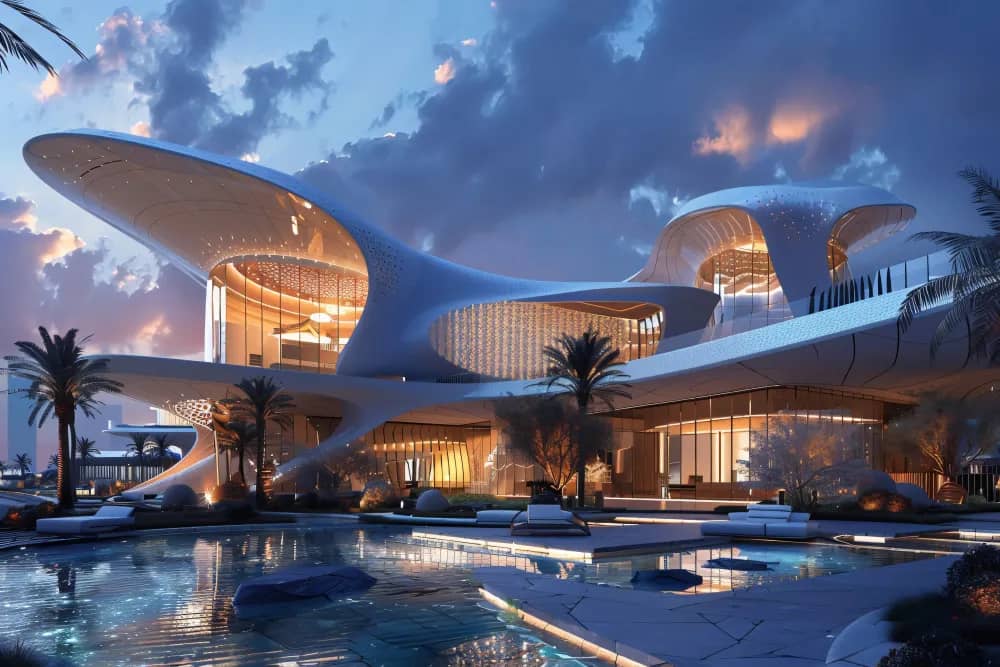
Palm Jumeirah remains the single largest concentration of ultra-prime stock. Signature villas on the fronds regularly transact between $12 million and $30 million, with Garden Homes on the smaller fronds representing the entry level and Palace Beach Residences or One at Palm penthouses clearing $20 million with regularity. The scarcity argument is genuine here: the frond villa count is fixed, resale supply is finite, and new beachfront freehold land equivalent to the Palm's footprint does not exist elsewhere in Dubai.
Downtown Dubai handles the penthouse end of the apartment market. The upper floors of Burj Khalifa, Il Primo and The Address Sky View produce sub-segments of the luxury market that attract buyers who want an urban pied-à-terre rather than a villa compound. Volumes are lower here than on the Palm, but per-square-foot pricing on trophy floors is among the highest in the city.
Dubai Hills Estate is increasingly relevant at the $10 million to $15 million tier, particularly for family office principals and European buyers who want green space, privacy and proximity to schools such as GEMS Wellington Academy. Mansions on Golf Place and the bespoke plots of Sector E have moved this neighbourhood from aspirational mid-market to a genuine ultra-prime alternative for land buyers. It does not carry the waterfront premium of the Palm, but for buyers with children in international curricula, the tradeoff is rational.
What actually drives repeat purchases at this price point
Most analysis of luxury property volumes focuses on new entrants, but a material share of H1 2026 transactions were repeat buyers already resident in Dubai. The pattern is an upgrade cycle: a buyer enters the market at $3 million to $5 million, qualifies for a UAE Golden Visa through Dubai property which anchors residency, and then trades up as wealth grows or family circumstances change. By the second or third transaction, they are often in the $10 million to $20 million bracket.
Tax residency is the structural driver that other global cities cannot replicate through incentive schemes alone. Dubai does not levy income tax, capital gains tax on real estate, or inheritance tax on property held here. For a family office principal managing a multi-generational wealth structure, the compounding effect of those absences over a 10-year horizon is significant. The property itself is almost secondary to the residency and fiscal architecture around it.
Branded residences have also become a category of their own. Developments carrying Four Seasons, Bulgari, Atlantis The Royal and similar hotel brands command a 20 to 35 percent premium over comparable unbranded product in the same geography. That premium is not irrational for the buyer: the brand provides a recognisable anchor for future resale to an international audience, reduces the due diligence burden on the next buyer, and comes with hotel-grade service infrastructure. Developers including Nakheel and Meraas have executed flagship branded projects that continue to set price benchmarks.
Practical considerations for buyers entering this tier
Acquisition costs in Dubai are lower than in comparable luxury markets. The Dubai Land Department transfer fee is 4 percent of the purchase price, there is no stamp duty equivalent, and there is no annual property tax. On a $15 million transaction, total acquisition costs including agent fees and registration typically land between 5.5 and 6 percent of the purchase value. Compare that to 10 to 15 percent in London or Paris and the efficiency of the Dubai structure is clear. A full breakdown of the buying process is covered in our guide to buying property in Dubai.
Due diligence at this tier should include a title search through the DLD, confirmation of any strata or owners association obligations, and a service charge review. For large villas on the Palm, annual service charges can reach AED 200,000 to AED 400,000 depending on plot size and community amenities. Use a service charge calculator to model the holding cost before committing. Buyers operating through a corporate structure should also take advice on whether to hold in personal name or through a DIFC or offshore vehicle, as this affects succession planning and future liquidity.
What this means for the broader Dubai property market
The concentration of ultra-prime activity at the top of the Dubai real estate market has a demonstrable trickle-down effect on mid-market pricing. When $20 million villas on the Palm transact consistently, the reference point for a $6 million apartment in the same emirate shifts upward. This is one reason why Dubai Marina and Dubai Creek Harbour have both seen above-average price growth in 2025 and into 2026 despite being far below the ultra-prime threshold.
For investors operating below the $10 million level, the signal from H1 2026 is that demand fundamentals at the top of the market remain robust. That matters for secondary market liquidity across all price points. A market where the wealthiest buyers are actively transacting rather than waiting on the sidelines is a market where the overall price floor is better supported. The 23 percent year-on-year growth in ultra-prime volumes is not a bubble indicator; it reflects a genuine expansion of the high-net-worth population choosing Dubai as a primary or secondary base.
Frequently asked questions
Which Dubai neighbourhoods have the most transactions above $10 million?
Palm Jumeirah leads by volume, driven by its fixed supply of frond villas and branded residences. Downtown Dubai and Dubai Hills Estate follow, with the former dominant in the penthouse segment and the latter growing in the $10m to $15m villa bracket.
Do I need to be a UAE resident to buy property in Dubai above $10 million?
No. Non-residents can purchase freehold property in designated areas without a prior visa. Purchasing a property valued at AED 2 million or more makes you eligible to apply for a 10-year UAE Golden Visa, which grants residency after the transaction completes.
What are the total acquisition costs on a $10 million Dubai property?
Expect approximately 5.5 to 6 percent of the purchase price. This covers the DLD transfer fee of 4 percent, a trustee registration fee, and a standard agent commission of around 2 percent. There is no stamp duty, annual property tax, or capital gains tax in Dubai.
Are branded residences in Dubai worth the price premium?
Branded residences typically command a 20 to 35 percent premium over comparable unbranded stock in the same area. That premium reflects hotel-grade service infrastructure, easier future resale to international buyers who recognise the brand, and in some cases rental management programmes. Whether it is justified depends on your holding strategy and exit timeline.
Is the surge in ultra-prime sales a sign of a property bubble?
The 23 percent increase in sub-$10m transactions in H1 2026 is supported by structural demand: growing numbers of family offices relocating to Dubai, tax residency incentives, and a fixed-supply freehold market in the most desirable locations. Bubble conditions typically involve high leverage and speculative flipping; the ultra-prime segment is overwhelmingly cash-funded by end-users establishing genuine residency.
More Market Insights posts
 Market Insights
Dubai Creek Lights and what it means for Creek Harbour buyers
A Dh80 million government-led project along Dubai Creek signals serious long-term commitment to the corridor. Here is what it means for buyers in Creek Harbour.
By Roy El Baba Market Insights
Dubai office sales hit record $4.3bn: what investors need to know
Dubai's office market posted AED 15.8bn in H1 2026 sales, up 38% year-on-year. Here's what that means for investors eyeing commercial off-plan deals.
By Roy El Baba Market Insights
Abu Dhabi's 17.8% price surge makes Dubai look cheap
Abu Dhabi residential prices jumped 17.8% year-on-year in Q2 2026. Here is why that number makes Dubai the smarter entry point for UAE capital appreciation.
By Roy El Baba Market Insights
Why Dubai's gated golf villas are being re-priced at record levels
A Dh110m villa sale in Jumeirah Golf Estates nearly doubled the community record. Here is what is actually driving ultra-luxury villa pricing in Dubai.
By Roy El Baba