Al Faqaa
Dubai community · 0 off-plan projects
About Al Faqaa
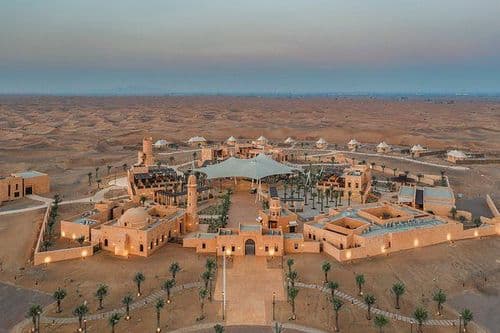
Al Faqaa sits on Dubai's north-eastern desert fringe, where the city's relentless density finally gives way to open sky and red-sand terrain. It's a low-density, large-plot zone that appeals to buyers who want genuine space — not the illusion of it. Right now the area is early in its development arc, which is precisely why our investors are paying attention. Arabian Hills Estate by Deca Properties is the headline project here, and it signals the direction of travel: estate-scale living at a price point that central Dubai simply can't match.
Market overview
Al Faqaa is, by any honest measure, an emerging area. Our catalogue currently lists one active project — Arabian Hills Estate by Deca Properties — which tells you something useful: supply is thin, and the land is still being shaped. That scarcity cuts both ways. Early buyers get in ahead of the infrastructure curve; they also accept that the surrounding ecosystem is not yet complete.
Price per square foot in Al Faqaa runs materially below the Dubai average for comparable villa and estate product. Buyers who have been priced out of Damac Hills, Dubai Hills Estate, or even the outer rings of Arabian Ranches are finding that Al Faqaa offers a credible alternative — larger plots, lower entry tickets, and a developer (Deca Properties) that is positioning the project at the premium end of what this corridor can currently support.
The supply pipeline beyond Arabian Hills Estate is, as far as we can determine, limited. That's not a permanent condition — Dubai's master-planners have a habit of accelerating infrastructure once a flagship project breaks ground — but for now, Al Faqaa remains a single-project story. That concentration of supply actually reduces the short-term oversupply risk that plagues more mature communities.
In our experience, areas at this stage of the cycle tend to attract two distinct buyer profiles: end-users who prioritise plot size and privacy above all else, and investors who are comfortable holding a three-to-five year horizon in exchange for the capital appreciation that comes when infrastructure catches up. We've seen this pattern play out in Damac Hills 2 and in parts of Dubai South — the early movers who bought when the area felt remote are now sitting on meaningful gains.
Off-plan pricing here reflects the location premium discount. Buyers should expect to pay less per square foot than in established villa communities, with the trade-off being a longer wait for the neighbourhood to mature around them. That's a rational trade if your timeline aligns.
Living in Al Faqaa
This is not a walk-to-brunch neighbourhood. Let's be direct about that.
Al Faqaa's appeal is rooted in a very different set of priorities: wide open space, clean desert air, and the kind of plot sizes that have become almost impossible to find within 30 kilometres of Downtown Dubai. The terrain is flat, sandy, and quiet — genuinely quiet, in a way that residents of busier communities often say they didn't realise they were missing until they experienced it.
The buyer profile we see gravitating toward Al Faqaa tends to be families with school-age children who want outdoor space, or professionals who work remotely and have decoupled their daily life from proximity to the CBD. It also attracts a subset of UAE nationals and long-term expat residents who want to build or buy a standalone villa on a meaningful plot — not a townhouse with a shared wall and a postage-stamp garden.
This is emphatically not a singles or young-professional area at this stage. The lack of walkable retail, F&B, and nightlife options means it doesn't suit buyers whose lifestyle depends on those things being five minutes away. That's not a criticism — it's a filter. The people who choose Al Faqaa know what they're choosing.
Arabian Hills Estate, the one project we carry here, appears to be designed around the estate-living concept: larger land parcels, a sense of separation from neighbours, and an environment that prioritises the residential experience over commercial density. If that matches your brief, Al Faqaa deserves serious consideration. If you need a coffee shop downstairs, look elsewhere — at least for now.
Schools, healthcare & retail
Al Faqaa's amenity infrastructure is at an early stage. Buyers should plan around what's accessible by car rather than what's within walking distance — because walkable amenities are, currently, minimal.
Schools within driving range:
- GEMS schools and Taaleem campuses in the Academic City / Nad Al Sheba corridor are the most practical options, typically 25–35 minutes away
- Al Ain Road has a growing cluster of mid-market curriculum schools that serve this part of Dubai
Healthcare:
- Aster, NMC, and government health centres in the Mirdif and Al Warqa areas are the nearest established options
- Residents should expect a 30–40 minute drive for specialist care
Retail & daily needs:
- Major supermarket chains (Carrefour, Lulu) are accessible via Emirates Road in the Nad Al Hamar or Mirdif direction
- The Dubai Outlet Mall on Al Ain Road is one of the closer large-format retail destinations
- Day-to-day convenience retail within Al Faqaa itself is limited at this stage
The amenity picture will improve as Arabian Hills Estate and any subsequent projects reach completion. Until then, self-sufficiency and a reliable car are the practical requirements for living here comfortably.
Getting around
Connectivity in Al Faqaa is car-dependent. There's no metro line serving this corridor, and that's unlikely to change in the near term. Anyone considering a purchase here should be comfortable with the idea that every trip — school run, grocery, gym — involves getting behind the wheel.
That said, the road network in this part of Dubai is generally uncongested compared to the inner-city arteries. Al Faqaa sits off Emirates Road (E611), which is one of Dubai's better-performing highways outside peak hours. Drive times to key destinations are roughly as follows: Dubai International Airport (DXB) is approximately 35–45 minutes depending on traffic; Downtown Dubai and the Burj Khalifa area is around 40–50 minutes; DIFC sits in a similar band; Dubai Marina is closer to 50–60 minutes. Al Maktoum International Airport (DWC) is further, typically 55–70 minutes.
The school run is manageable if you select schools in the Al Ain Road or Academic City corridor rather than trying to reach schools in Jumeirah or Mirdif daily — that would be a grind. Our honest assessment: connectivity here is adequate for residents who structure their lives around it, but it would be misleading to call it strong. If you commute to DIFC five days a week, factor in the time cost carefully.
Investment outlook
Al Faqaa is a patient investor's play. We'll say that plainly.
Rental yields in emerging desert-fringe communities in Dubai typically sit in the 6–8% gross range for villa product, assuming the project is completed, tenanted, and the surrounding area has developed enough to attract renters. The caveat is real: rental demand in very early-stage communities can be soft in the first few years post-handover, because tenants — unlike owner-occupiers — are less willing to accept infrastructure gaps in exchange for space.
The capital appreciation story is more compelling, in our view. Al Faqaa is following a trajectory that several outer Dubai communities have already demonstrated. When Emirates Road corridor land is master-planned and a credible developer commits a flagship project, land values in the surrounding area tend to re-rate. Arabian Hills Estate by Deca Properties is that catalyst here. Buyers who get in at current off-plan pricing are acquiring at a point before that re-rating is fully priced in.
Resale liquidity is the honest risk. Off-plan units in single-project emerging areas can be harder to exit quickly if market sentiment shifts. This is not a community where you can expect to flip in 12 months and find a deep pool of secondary buyers. The exit horizon should be three to five years minimum, ideally timed to coincide with project completion and the arrival of supporting amenities.
We are cautiously bullish on Al Faqaa — specifically because supply is constrained to one project right now, which limits the downside from oversupply, and because the price gap versus established villa communities gives capital appreciation room to run as the area matures.
Frequently asked questions about Al Faqaa
Who are the main developers active in Al Faqaa?
Currently, Deca Properties is the headline developer in Al Faqaa, driving the Arabian Hills Estate masterplan. Deca is positioning the community around equestrian living and large plot sizes — a niche that has very little competition in Dubai right now. We're watching the area closely for additional developer announcements; as infrastructure improves, we expect other mid-to-large developers to acquire land here within the next 12–18 months.
What is Arabian Hills Estate, and what does it offer?
Arabian Hills Estate is a low-density, equestrian-themed community by Deca Properties set across a large desert landscape in Al Faqaa. It offers residential plots, villas, and equestrian facilities — including stables and riding tracks — alongside cycling paths and open green spaces. Plot sizes start from around 10,000 sqft, which is rare for Dubai. Our buyers looking for space, privacy, and a connection to nature consistently shortlist this project.
What is the commute like from Al Faqaa to DIFC, Dubai Marina, or DXB?
Al Faqaa is located in the Al Ain Road corridor, roughly 50–60 km from DIFC and Dubai Marina, translating to approximately 40–55 minutes by car depending on traffic. Dubai International Airport is around 45 minutes away. We're honest with our buyers: this is a destination community, not a commuter one. It suits remote workers, business owners, or families who prioritise space and are comfortable with the drive.
What schools and amenities are near Al Faqaa?
Al Faqaa is still developing its local amenity base, so we always set realistic expectations. The nearest established schools and retail are in Al Ain city (approx. 30 km) and the growing Dubai–Al Ain Road corridor. Within the Arabian Hills Estate masterplan itself, community facilities are planned, but residents should be prepared to travel for daily needs in the short term. This is a trade-off our buyers consciously make for the space and price point.
What rental yields can I expect in Al Faqaa?
Rental data for Al Faqaa is limited right now because the community is pre-handover — Arabian Hills Estate is still in development. That said, comparable equestrian and large-plot communities in Dubai have achieved gross yields of 5–7% once established. We advise our investors to underwrite conservatively at 4–5% initially, with yield compression likely as demand grows. The stronger play here, in our view, is capital appreciation rather than immediate rental income.
Get the Al Faqaa market brief
Live listings, off-plan launches, recent transactions and rental yields — direct from our advisors. No inflated commissions, no spam. One business-day reply.