Al Hamriya
Dubai community · 0 off-plan projects
About Al Hamriya
Al Hamriya sits along the Sharjah coastline, a quietly ambitious waterfront district that most Dubai-focused buyers overlook — which is precisely why it's worth paying attention to. With direct sea access, a pace of life that feels genuinely unhurried, and land prices that still sit well below comparable Gulf-front addresses, this is a market for buyers who'd rather be early than fashionable. Our catalogue currently features one active project here: Al Thuraya Island by Ajmal Makan. One project. That's not a weakness — it's a signal that the area is at the very beginning of its development arc.
Market overview
Al Hamriya's supply pipeline is, by any measure, thin right now. Our catalogue lists a single active project — Al Thuraya Island by Ajmal Makan — and that scarcity tells you something useful about where this market sits in its cycle. You're not buying into a saturated grid of competing towers. You're buying into a district that is, for the most part, still being defined.
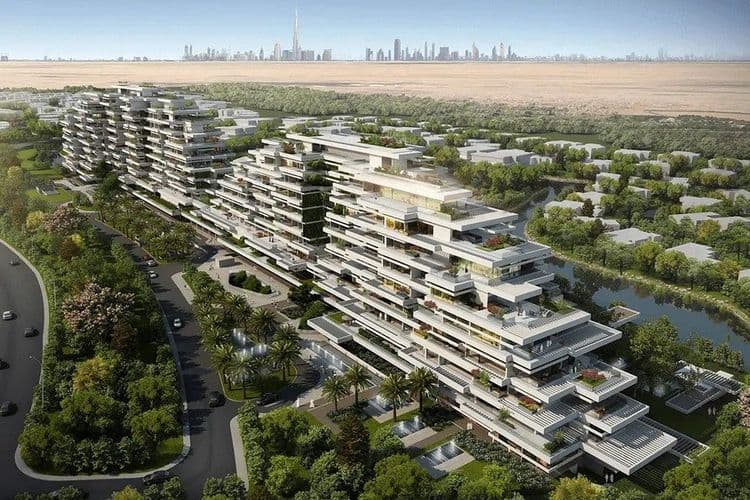
Ajmal Makan is the developer to know here. The group has been the primary force shaping Al Hamriya's residential identity, and Al Thuraya Island is their flagship statement: a man-made island concept with waterfront residences positioned as a premium coastal address outside the Dubai price corridor. For buyers priced out of Palm Jumeirah or Mina Al Arab but unwilling to compromise on sea views, this kind of project fills a real gap.
Price per square foot in Al Hamriya runs materially below Dubai's established waterfront benchmarks. Where Palm Jumeirah apartments regularly trade above AED 2,500–3,500 per sqft and even Mina Al Arab in Ras Al Khaimah has pushed past AED 1,200–1,500 in recent cycles, Al Hamriya still offers entry points that feel like a different era of Gulf property pricing. That gap will close — the only question is timing.
In our experience, areas with a single dominant developer and a clear master-plan tend to hold their character better than piecemeal districts. There's no fragmented ownership pulling the streetscape in six directions. Ajmal Makan controls the narrative here, and that's generally a good thing for long-term asset quality.
The off-plan market is the primary mode of transacting in Al Hamriya at this stage. Resale liquidity is limited — not because demand is absent, but because the stock is new and early buyers tend to hold. Investors considering this area should be comfortable with a 3–5 year horizon rather than expecting a quick flip.
Living in Al Hamriya
This is not a district for people who need a brunch spot on every corner. Al Hamriya's appeal is quieter and more specific: open water, clean air, and a residential pace that the northern Emirates do better than anywhere in the Dubai core.
The demographic our buyers tend to fit here skews toward families and semi-retired professionals — people who've done their time in JBR or Business Bay and now want space, a sea view, and a commute they can live with. It's also attracting a cohort of UAE-based investors from Sharjah and Ajman who understand the northern corridor and see Al Hamriya as the next logical step up from where they already own.
Walkability is honest rather than impressive. The waterfront promenade and immediate surroundings of a project like Al Thuraya Island offer pleasant evening walks and direct beach access. But for daily errands — groceries, pharmacies, school runs — you'll be in a car. That's the trade-off, and buyers who come here knowing that tend to be happy with it.
The vibe is coastal and low-density. No metro, no mall-anchored retail strip, no rooftop pool bars. What you get instead is genuine waterfront living without the noise and density that comes with it in Dubai proper. For the right buyer, that's not a compromise — it's the whole point.
We'd call this a family and investor-skewed neighbourhood, with lifestyle buyers a close third. Singles in their twenties looking for nightlife proximity should look elsewhere. Families wanting a villa or apartment with sea access at a price that doesn't require a second mortgage will find Al Hamriya genuinely compelling.
Schools, healthcare & retail
Schools (within reasonable driving distance):
- Several British and Indian curriculum schools operate in Sharjah city, approximately 20–35 minutes away
- Ajman-based schools provide an alternative for families in the northern part of the catchment
- International school options in this corridor are more limited than in Dubai — families with specific curriculum requirements should verify availability before committing
Healthcare:
- Sharjah's main hospital network covers the area; University Hospital Sharjah and Al Qasimi Hospital are among the established facilities in the emirate
- For specialist care, most residents travel into Sharjah city or Dubai
- GP-level clinics are available in nearby Hamriya Port area and surrounding communities
Retail & daily needs:
- Hamriya Free Zone and the surrounding industrial-residential mix means local retail is functional rather than curated
- Major supermarket chains and hypermarkets are accessible in Sharjah city within a 20–30 minute drive
- The City Centre Sharjah and Sahara Centre provide the nearest significant retail anchors
- Dining options locally are limited; residents typically head into Sharjah or Dubai for a broader restaurant choice
The amenity picture here is honest: Al Hamriya is not yet a self-contained community. Buyers are trading convenience for value and waterfront access — a trade that makes sense for the right profile.
Getting around
Al Hamriya sits in the emirate of Sharjah, north of the main Sharjah urban centre, which means connectivity to Dubai requires honest assessment rather than optimistic spin.
The drive to Dubai's Burj Khalifa area runs approximately 50–65 minutes under normal conditions via Emirates Road (E611) or the coastal routes. DIFC is in a similar band. Dubai Marina is roughly 70–80 minutes. Dubai International Airport (DXB) is around 45–55 minutes depending on traffic and route. Al Maktoum International (DWC) is a longer haul — budget 80–90 minutes.
There is no metro connection. This is a car-dependent address, full stop. Residents who commute daily into Dubai's core should factor that in seriously — the drive is manageable on off-peak timings but can stretch significantly during morning and evening rush hours on the Sharjah–Dubai corridor, which is one of the UAE's most consistently congested stretches of road.
For residents working in Sharjah city, the picture is considerably better — 20–30 minutes to central Sharjah is realistic. And for those who work remotely or run their own schedule, the connectivity picture looks much more comfortable.
School-run logistics depend on which schools families choose. Most established international curricula schools serving this catchment are in Sharjah, which keeps the morning run manageable.
Investment outlook
Al Hamriya is a genuine early-mover opportunity, but it requires patience and a clear-eyed view of the risks.
Rental yields in the northern Emirates waterfront segment tend to run in the 6–8% gross range for well-positioned units, sitting above Dubai's prime waterfront (which typically delivers 4–6% as capital values have risen sharply) but below the mid-market Dubai yields of 7–9% that areas like JVC or Dubai South can generate. Al Hamriya's yield profile is attractive precisely because entry prices remain low — the maths work even at conservative occupancy assumptions.
Capital appreciation is the bigger story here, and it's a longer-term one. The northern Emirates coastal corridor — from Ajman through to Ras Al Khaimah — has seen sustained price growth over the past several years as buyers priced out of Dubai sought alternatives with genuine lifestyle credentials. Al Hamriya is earlier in that curve than Mina Al Arab or Al Zorah, which means more upside but also more patience required.
Resale liquidity is the main caveat. With one active project in our catalogue and a market that's still building its transaction history, buyers should not expect to exit quickly. This is a hold-and-collect-yield play for the first few years, with capital gain becoming the dominant return driver as the district matures and more developers enter.
The single-developer dynamic cuts both ways: Ajmal Makan's continued investment in the area is a positive signal, but the district's trajectory is meaningfully tied to one group's execution. That's a concentration risk worth naming.
Our editorial line: bullish, with a medium-term horizon. The price gap between Al Hamriya and comparable Gulf waterfront addresses is too wide to ignore, and early buyers in similar northern Emirates districts have been well rewarded.
Frequently asked questions about Al Hamriya
Who are the main developers active in Al Hamriya?
Right now, Ajmal Makan is the headline developer in Al Hamriya, driving the Al Thuraya Island project. Ajmal Makan has a track record across Sharjah's coastal belt, and we've found their build quality and handover timelines to be consistent with what they promise at launch. The area is still relatively early in its development cycle, so we expect additional developers to follow as infrastructure matures over the next 2–3 years.
What rental yields can I expect in Al Hamriya?
Gross rental yields in Al Hamriya typically range from 6–8%, which compares favourably to many Dubai waterfront communities sitting at 4–5%. The tenant profile skews toward professionals working in Sharjah's industrial and port sectors, as well as families priced out of Dubai. Short-term holiday rental potential is also growing as the island concept at Al Thuraya attracts weekend visitors. We always recommend stress-testing your numbers at 80% occupancy to stay conservative.
What is the commute from Al Hamriya to Dubai like?
Al Hamriya sits in the northern Sharjah coastal strip, roughly 35–50 km from DIFC and about 25–35 km from Dubai International Airport, depending on your exact route. In off-peak hours, that's a 30–40 minute drive. During morning rush hour on the E311 or E11, budget 60–75 minutes. Our buyers who work in Dubai typically treat this as a trade-off — lower property prices in exchange for a longer commute, which many find worthwhile.
What schools and amenities are near Al Hamriya?
The area is still building out its retail and lifestyle infrastructure, so we're honest with our buyers that it's not a walk-to-everything community yet. Within a 10–15 minute drive you'll find several schools in Sharjah including GEMS and Taaleem-operated campuses, plus Sahara Centre and City Centre Sharjah for shopping. Al Thuraya Island itself is planned to include a marina, beach access, and F&B outlets, which will significantly improve day-to-day convenience once delivered.
Is Al Hamriya suitable for end-users or mainly investors?
Honestly, we see it attracting both, but for different reasons. Investors are drawn by the entry price and yield story. End-users — particularly families and couples who want a quieter, coastal pace of life — appreciate the low density and beach proximity. Al Thuraya Island is designed as a self-contained community, which makes it more viable for owner-occupiers than a typical off-plan investment play. We'd say the split among our current enquiries is roughly 60% investor, 40% end-user.
Get the Al Hamriya market brief
Live listings, off-plan launches, recent transactions and rental yields — direct from our advisors. No inflated commissions, no spam. One business-day reply.