
Al Tay
Dubai community · 0 off-plan projects
About Al Tay
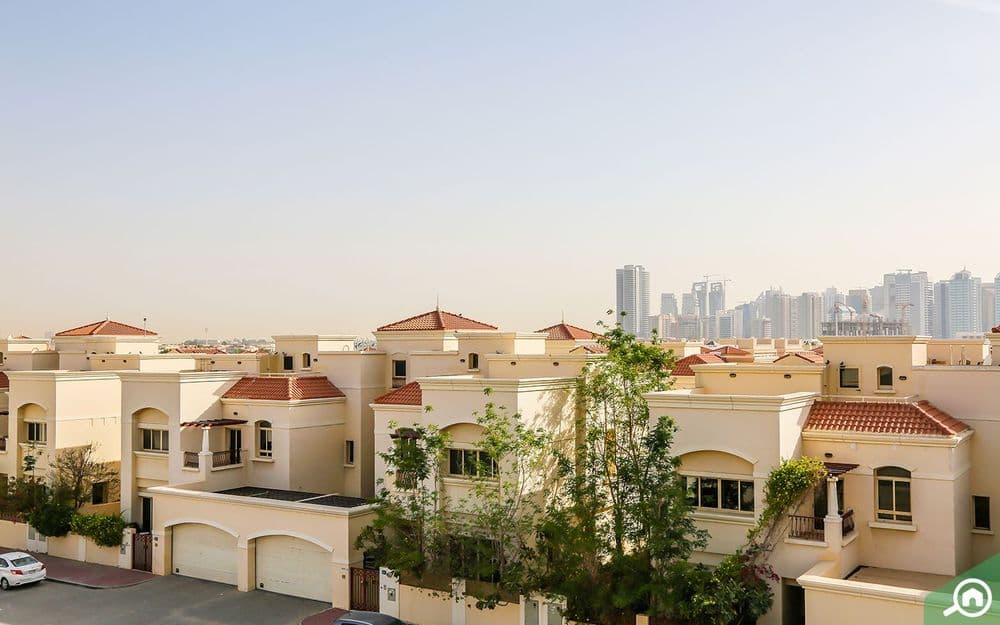
Al Tay is a quietly emerging residential district in Sharjah, sitting close to the Dubai–Sharjah border corridor. It's the kind of area that serious investors find before the crowd does. With land prices still well below comparable Dubai addresses and a growing off-plan pipeline beginning to take shape, Al Tay suits buyers who want genuine capital-appreciation potential without paying a premium for a postcode that's already been discovered. Our honest take: this is an early-mover market, and the window for front-of-the-queue pricing won't stay open indefinitely.
Market overview
Al Tay's off-plan story is only just beginning. Our current catalogue lists one active project here — Sukoon By Sanzen, scheduled for delivery in Q4 2029 — which tells you something important: this is a district where supply is still thin and developer confidence is being tested rather than assumed.
That single-project snapshot is actually a useful signal. In our experience, areas with very limited active supply tend to see sharper price movements once a second or third developer commits. The first mover sets the benchmark; everyone who follows prices off it. Buyers who get in at the Sukoon By Sanzen stage are, in effect, setting that benchmark themselves.
Price per square foot in Al Tay sits meaningfully below the Dubai mid-market. Sharjah's broader residential market has historically traded at a 30–45% discount to comparable Dubai product, and Al Tay, being a developing rather than established node, sits toward the lower end of Sharjah's own range. That gap is the investment thesis in one sentence.
In our experience, the buyers who hesitate on areas like this — waiting for more amenities, more projects, more proof — are the same buyers who later wish they'd moved earlier. That's not a sales line; it's a pattern we've watched play out in JVC, Dubai South, and Town Square over the past decade.
The Q4 2029 delivery horizon for Sukoon By Sanzen gives buyers a relatively long construction runway. That's a double-edged consideration: it extends the off-plan risk window, but it also means payment plans are typically more stretched and entry capital requirements lower. For investors managing cash flow across multiple assets, that structure has real appeal.
Demand drivers here are straightforward: proximity to the Dubai–Sharjah employment corridor, relative affordability, and the steady northward expansion of both emirate's residential footprints. None of that is speculative — it's been the structural story of this border zone for years.
Living in Al Tay
Al Tay doesn't yet have the finished-neighbourhood feel of, say, Aljada or Muwaileh. That's the honest position. What it does have is space, relative quiet, and the kind of low-density environment that families with young children or buyers priced out of central Sharjah genuinely value.
The demographic profile we see gravitating toward Al Tay is specific: mid-income families — often with one earner working in Dubai and one in Sharjah — who want a larger home than Dubai's budget allows, without the daily grind of a long commute from deeper into Sharjah. It's also attracting a cohort of buy-to-let investors who are comfortable with a longer hold horizon.
Singles and young professionals tend to look elsewhere. The area lacks the walkable retail, F&B density, and nightlife adjacency that makes somewhere like Dubai Marina or JLT work for that demographic. Al Tay is a car-dependent community, and that's unlikely to change materially before the late 2020s.
What the area does well is green space and breathing room. Plots are generous, roads aren't yet congested, and the general pace of life is slower than the Dubai side of the border. For families who've spent years in a two-bedroom apartment in Deira or Sharjah's older districts, the step up in space that Al Tay offers is significant.
Dining and retail are currently limited to nearby arterial roads and the broader Sharjah network rather than anything walkable from Al Tay itself. Residents rely on cars for groceries, school runs, and most daily errands. That's a genuine lifestyle trade-off, and we'd rather state it plainly than gloss over it.
Schools, healthcare & retail
Al Tay's amenity base is still developing, and residents currently rely on the wider Sharjah network for most services.
Schools within reasonable reach:
- Several British and Indian curriculum schools operate in the Muwaileh and University City corridor, approximately 10–20 minutes by car
- University City of Sharjah is accessible for families with older students
- The broader Al Zahia and Tilal City zones have seen school investment that benefits nearby communities
Healthcare:
- Sharjah's public and private hospital network is accessible via Emirates Road
- University Hospital Sharjah and several specialist clinics operate within the wider emirate
- For more specialised care, Dubai's hospitals are reachable within 30–40 minutes off-peak
Retail & daily needs:
- Major hypermarkets and retail centres on the Sharjah arterial road network serve the area
- Al Zahia City Centre and Sahara Centre are among the larger malls within a reasonable drive
- Local convenience retail is limited within Al Tay itself at this stage of development
The honest summary: amenities are adequate for families already familiar with Sharjah's car-dependent lifestyle, but buyers relocating from more self-contained Dubai communities will notice the difference. The expectation is that retail and services will follow residential density as the area builds out through the late 2020s.
Getting around
Al Tay's connectivity is functional rather than exceptional, and buyers should go in with clear eyes on this point.
The area sits close to Emirates Road (E611) and Sheikh Mohammed Bin Zayed Road (E311), which are the two main arteries linking Sharjah to Dubai. In light traffic, you're looking at roughly 25–35 minutes to DIFC and around 30–40 minutes to Burj Khalifa. Dubai Marina is further — expect 45–55 minutes under normal conditions. Dubai International Airport (DXB) is approximately 30–35 minutes; Al Maktoum International (DWC) is a longer drive, typically 55–70 minutes.
The honest caveat: those numbers assume off-peak travel. The Dubai–Sharjah corridor is one of the most congested road stretches in the UAE during morning and evening rush hours. A 30-minute commute can double. Anyone planning to commute daily to central Dubai needs to factor that in seriously — it's the single biggest lifestyle friction point for this location.
There is no metro connection serving Al Tay, and no confirmed rapid-transit link in the near-term pipeline that we're aware of. Bus services exist on the broader Sharjah network but aren't a practical commuter option for most residents.
School-run convenience depends heavily on which school families choose. Several established schools operate in the wider Sharjah–Muwaileh corridor, making morning runs manageable if you're not fighting peak-hour traffic on the Dubai-bound lanes.
Investment outlook
The investment case for Al Tay rests on one core argument: you're buying into a border-zone corridor that has a long track record of price convergence with Dubai over time, at a point when that convergence hasn't fully played out.
Rental yields in Sharjah's mid-market residential sector have historically run in the 7–9% gross range — above Dubai's prime average of 5–7% — largely because entry prices are lower relative to achievable rents from the large population of Dubai-employed tenants who choose to live in Sharjah for cost reasons. Al Tay, as an emerging node, sits within that yield band, though actual achieved yields will depend on the specific product and how the area matures by the time Sukoon By Sanzen delivers in Q4 2029.
Resale liquidity is the honest risk here. Al Tay doesn't yet have the transaction depth of established Sharjah communities like Al Nahda or Muwaileh. Selling quickly at a target price requires either a maturing local market by 2029 or a buyer pool that's grown alongside the area's development. Neither is guaranteed, but both are plausible given the trajectory of this corridor.
Capital appreciation potential is real but back-loaded. Don't expect short-cycle flipping returns. The play here is a 5–7 year hold minimum, capturing both the off-plan-to-completion uplift and the broader area maturation premium. Investors who need liquidity within 2–3 years should look elsewhere.
Our editorial line: bullish, with patience required. Al Tay is a genuine early-mover opportunity in a corridor with structural demand tailwinds — but it rewards investors who understand that the upside is priced into time, not immediacy.
Frequently asked questions about Al Tay
Who are the main developers active in Al Tay?
Al Tay is still an emerging community, so the developer list is shorter than established hubs — but that's part of the opportunity. Sanzen is the standout name in our current catalogue, with their Sukoon By Sanzen project setting a quality benchmark for the area. We expect more mid-tier and boutique developers to follow as infrastructure matures. We always advise buyers to check developer track record carefully; Sanzen has delivered previously in the UAE market.
What rental yields can I expect in Al Tay?
Gross rental yields in Al Tay currently range from 6% to 8%, which is attractive compared to saturated Dubai submarkets. Demand is driven largely by families and professionals working in Sharjah's industrial and free-zone corridors. In our experience, furnished units and those close to the main arterial roads lease faster and command a 10–15% premium on rent. We'd recommend factoring in a 2–4 week vacancy buffer when running your numbers.
What is the commute like from Al Tay to Dubai?
Al Tay sits along the Emirates Road (E611) corridor, which gives reasonable access to Dubai — expect 30–45 minutes to DIFC or Business Bay outside peak hours. During morning rush (7–9 AM), that can stretch to 60+ minutes. There's no metro connection yet, so most residents drive. Our buyers who work in Sharjah's free zones or Ajman find the location genuinely convenient, while Dubai-based professionals typically treat it as a trade-off for the lower price point.
What schools and amenities are near Al Tay?
The immediate Al Tay area is still developing its retail and education infrastructure. Within a 10–15 minute drive you can reach several established schools in Sharjah including GEMS and Taaleem-operated campuses. Sahara Centre and City Centre Sharjah cover most retail and dining needs. We're honest with our buyers: if walkable amenities are a priority today, Al Tay isn't quite there yet — but the pipeline of community retail within new projects like Sukoon By Sanzen is promising.
Is Al Tay freehold or leasehold for expat buyers?
This is one of the first questions we get, and it's important. Sharjah has historically been leasehold for non-GCC nationals, but Sharjah introduced 100-year usufruct rights for expats in designated investment zones — and Al Tay falls within this framework. It's not the same as Dubai freehold, but in practice our buyers find the 100-year term functionally similar for investment purposes. We always recommend buyers review the specific title structure with a UAE-registered lawyer before signing.
Get the Al Tay market brief
Live listings, off-plan launches, recent transactions and rental yields — direct from our advisors. No inflated commissions, no spam. One business-day reply.