Off-plan2028-05-15

Dubai community · 1 off-plan project
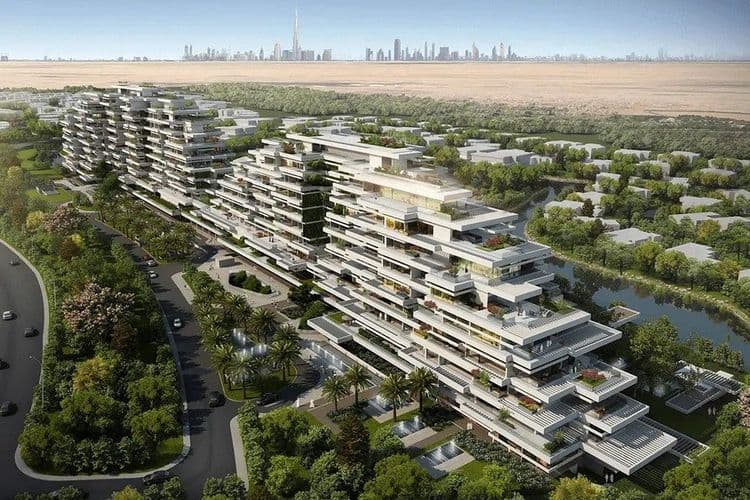
Dubai Industrial City (DIC) is one of the UAE's largest planned industrial and residential zones, sitting in the south-western corridor of Dubai near the Expo City axis. For years it was purely a logistics and manufacturing address. That's changing fast. A cluster of mid-market residential projects is now taking shape here, aimed squarely at end-users who want more square footage for their dirham and investors who want to get in before the area's pricing catches up with its fundamentals. Our read: DIC is an early-mover play, not a lifestyle destination yet — but the gap between value and potential is closing.
We currently carry 7 active projects in Dubai Industrial City, and the pipeline skews heavily toward 2026–2027 handovers. Three of those — Al Haseen Residence 4, Al Haseen Residences 5, and Al Haseen Residences 6 by Dugasta Properties — are confirmed for Q4 2026 and Q4 2027 respectively. That's a meaningful concentration of supply arriving within an 18-month window, which buyers should factor into their exit or leasing strategy.
Price per square foot in DIC sits materially below the Dubai average. Where mid-market communities like Jumeirah Village Circle or Dubai South trade in the AED 900–1,200/sqft range for comparable product, DIC off-plan units are currently accessible at noticeably lower entry points. That discount reflects the area's industrial heritage and the fact that retail and leisure infrastructure is still thin on the ground. It does not, in our view, reflect the medium-term trajectory.
The developer mix here is telling. Dugasta Properties accounts for four of our seven listings — Al Haseen Residence (original), Al Haseen Residence 4, 5, and 6 — which signals a developer that has committed to the area across multiple phases rather than testing it with a single project. GFS Developments brings Coventry Curves 2, and Al Mizan Group adds Terva Homes. Three distinct developers backing the same postcode is a reasonable proxy for growing institutional confidence.
In our experience, areas with a dominant repeat developer tend to see more consistent build quality and phased price appreciation as each successive launch sets a new benchmark. That pattern has played out in Dubai South and, earlier, in JVC. DIC is following a similar script, just a few years behind.
The unit mix across these projects leans toward studios, one-beds, and two-beds — product that suits the area's primary tenant base of skilled workers, logistics professionals, and young professionals priced out of more central communities. Larger family units exist but are not the dominant offer here, which shapes both the rental demand profile and the likely resale buyer pool.
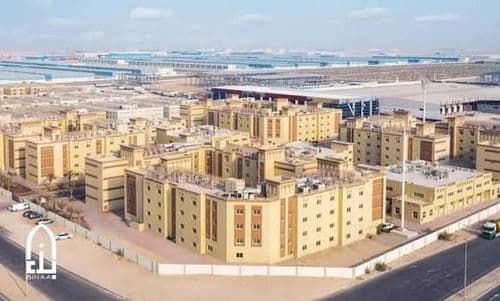
Let's be direct: DIC is not a lifestyle-first address. The area's identity is still defined by its warehouses, light manufacturing facilities, and logistics corridors. If you're comparing it to Dubai Hills or JBR, you're comparing the wrong things.
What DIC does offer is space, quiet, and value — a combination that attracts a specific type of resident. Our buyers here tend to be practical people: professionals working in the southern Dubai corridor, small-business owners with operations nearby, and investors who prioritise yield over postcode prestige.
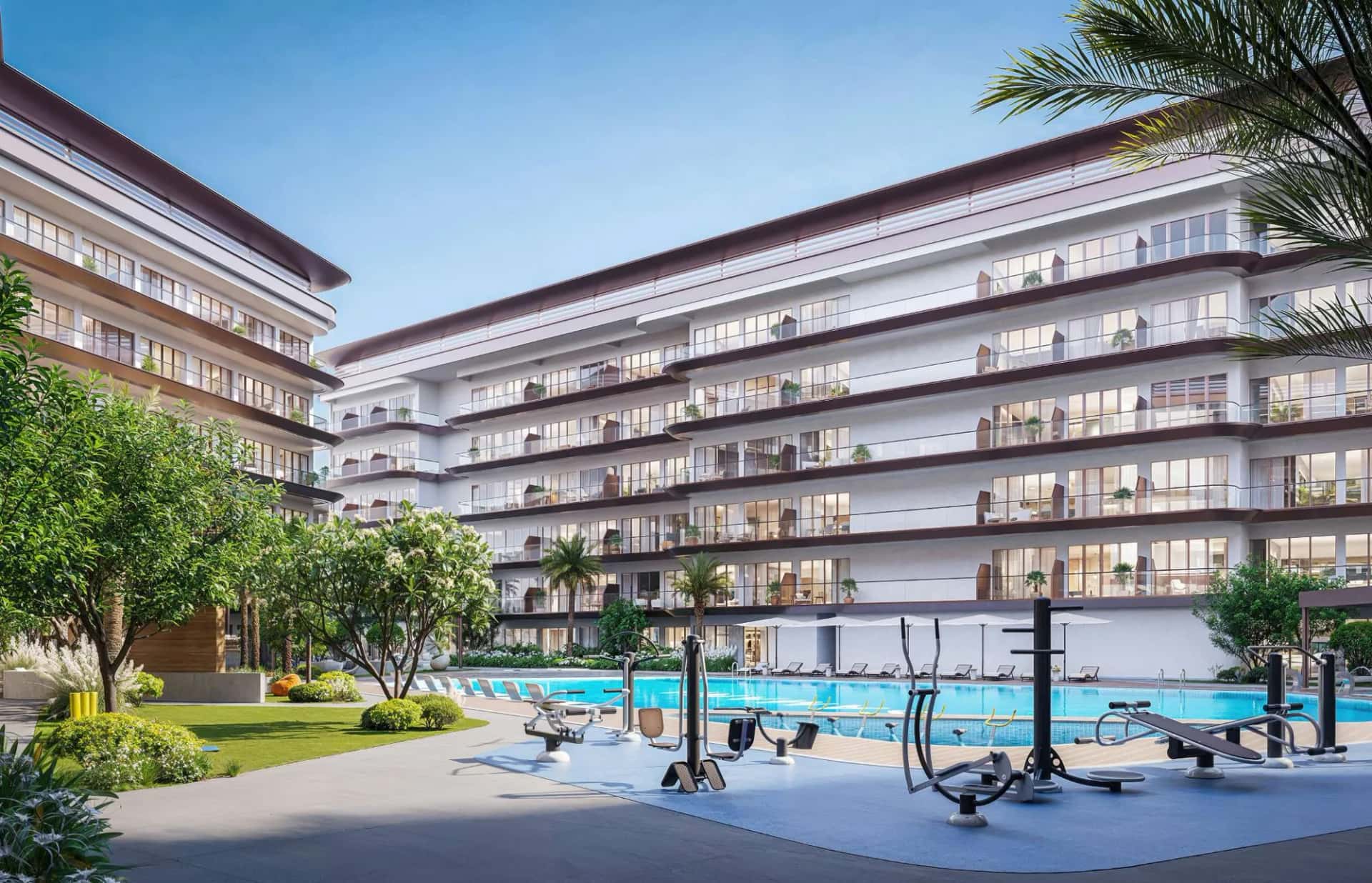
The residential pockets being developed by Dugasta and others are self-contained in design, with amenities built into the projects themselves rather than relying on surrounding neighbourhood infrastructure. That's the right approach given where the area currently stands.
Demographically, this skews toward singles and young couples rather than families with school-age children. The absence of established schools within walking distance, and the limited dining and retail scene, makes it a harder sell for families right now. That will shift as the residential population grows — it always does — but buyers should go in with clear eyes.
Parks and green space are limited compared to master-planned communities. The compensation is apartment sizes that are genuinely generous relative to price, and a low-density feel that residents of busier communities often say they miss.
The broader Expo City and Dubai South corridor, just a short drive away, adds a degree of cultural and retail access that pure industrial zones don't usually have. That proximity is a genuine differentiator for DIC versus older industrial areas in Dubai.
Schools (nearest clusters):
Healthcare:
Retail & daily needs:
Dining:
The honest summary: amenity provision is functional rather than comprehensive. It suits residents who prioritise space and value over walkable convenience.
DIC sits in the south-western quadrant of Dubai, roughly 35–40 minutes from Burj Khalifa and DIFC under normal traffic conditions. Dubai Marina is approximately 30–35 minutes by car. Dubai International Airport (DXB) is around 45–50 minutes, while Al Maktoum International Airport (DWC) is significantly closer — under 20 minutes — which matters increasingly as DWC's expansion progresses.
The primary road access is via Sheikh Mohammed Bin Zayed Road (E311) and Emirates Road (E611), both of which are major arterials. On paper, that's strong connectivity. In practice, the E311 southbound in morning peak hours can add 15–20 minutes to any journey toward the city centre. Residents heading to Expo City or Dubai South have a much easier commute.
There is currently no metro line serving DIC directly. The Route 2020 metro extension terminates at Expo City / Al Maktoum Airport, and while future extensions have been discussed, nothing is confirmed for DIC itself. Residents are car-dependent. That's a real limitation and one we flag to every buyer considering this area.
For school runs, the nearest established school clusters are in Dubai South and further north toward Jebel Ali. This is manageable but not convenient, and it's one reason DIC currently skews toward non-family buyers.
DIC is a mid-market, yield-driven investment case. Gross rental yields in this corridor typically run in the 7–9% range, reflecting the lower entry price points and solid demand from the area's large working population. That's above what you'd expect from prime Dubai addresses, and it's the primary reason our investors are paying attention.
The supply picture requires some nuance. With three Dugasta projects delivering in Q4 2026 and Q4 2027, there will be a meaningful increase in available rental stock within a short window. Investors buying now should plan for a potential softening of rents in 2027 as that supply hits the market simultaneously. Staggered leasing strategies and competitive pricing will matter more here than in supply-constrained communities.
Capital appreciation in DIC has historically been modest — this is not an area where buyers have made quick resale gains. The investment thesis is income-first, with appreciation as a secondary, longer-term story tied to the broader development of the Dubai South and Expo City corridor. If Al Maktoum Airport reaches its projected capacity milestones, the southern Dubai corridor as a whole re-rates. DIC benefits from that, but it's a 5–10 year horizon, not a 2-year flip.
Resale liquidity is currently limited. The buyer pool for DIC units is narrower than in established communities, and exit timelines should be planned accordingly. Off-plan investors who buy now and hold through handover will likely find the rental market more liquid than the resale market in the near term.
Our editorial line: cautiously bullish. The yield profile is real, the entry price is genuinely low, and the southern corridor has structural tailwinds — but buyers need patience and should not underestimate the supply wave arriving in 2026–2027.
We currently have 7 active projects in the area. The most prolific developer is Dugasta Properties, behind the Al Haseen Residence series (phases 1, 4, 5, and 6) and Dezire South. GFS Developments is active with Coventry Curves 2, and Al Mizan Group is delivering Terva Homes. These are boutique developers focused on affordable residential supply, which keeps unit sizes practical and price points accessible.
In our experience, gross rental yields here sit between 8% and 10% annually — among the highest we track across Dubai. Demand is driven by workers and staff employed in the surrounding industrial, logistics, and warehousing facilities. Occupancy rates tend to be high because supply of quality residential units is still limited relative to the workforce population in the area.
Commute times vary. To Dubai Marina, expect roughly 30–40 minutes by car via Sheikh Mohammed Bin Zayed Road. DIFC is around 35–45 minutes depending on traffic. Dubai International Airport (DXB) is approximately 40–50 minutes. Al Maktoum International Airport (DWC) is considerably closer at around 15–20 minutes, which is a genuine advantage as that airport grows. Public transport options are currently limited, so most residents drive.
The area is still developing its retail and education infrastructure. The nearest established schools are in Jebel Ali Village and Dubai South, roughly 15–20 minutes away. For daily needs, residents typically use the Ibn Battuta Mall corridor or the growing retail strip along Emirates Road. We always advise buyers with school-age children to factor in the commute to school — it's manageable, but worth planning for before you commit.
Honestly, our buyer mix here skews heavily toward investors — probably 80% of enquiries we handle are yield-focused. That said, we do see end-users, particularly professionals working in the industrial and logistics sector who want to live close to work. If you're looking for a buzzing social scene on your doorstep, this isn't the right fit. If you want a quiet, affordable home with low service charges and strong rental income potential, it makes a lot of sense.
Live listings, off-plan launches, recent transactions and rental yields — direct from our advisors. No inflated commissions, no spam. One business-day reply.