Dubai International Financial Centre
Dubai community · 0 off-plan projects
About Dubai International Financial Centre
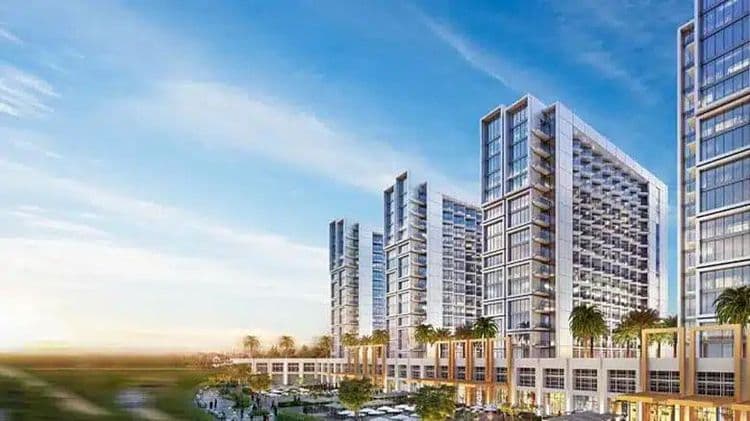
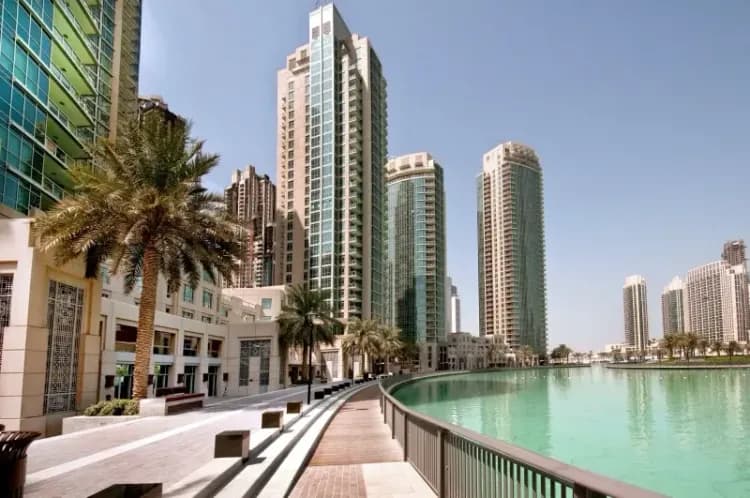
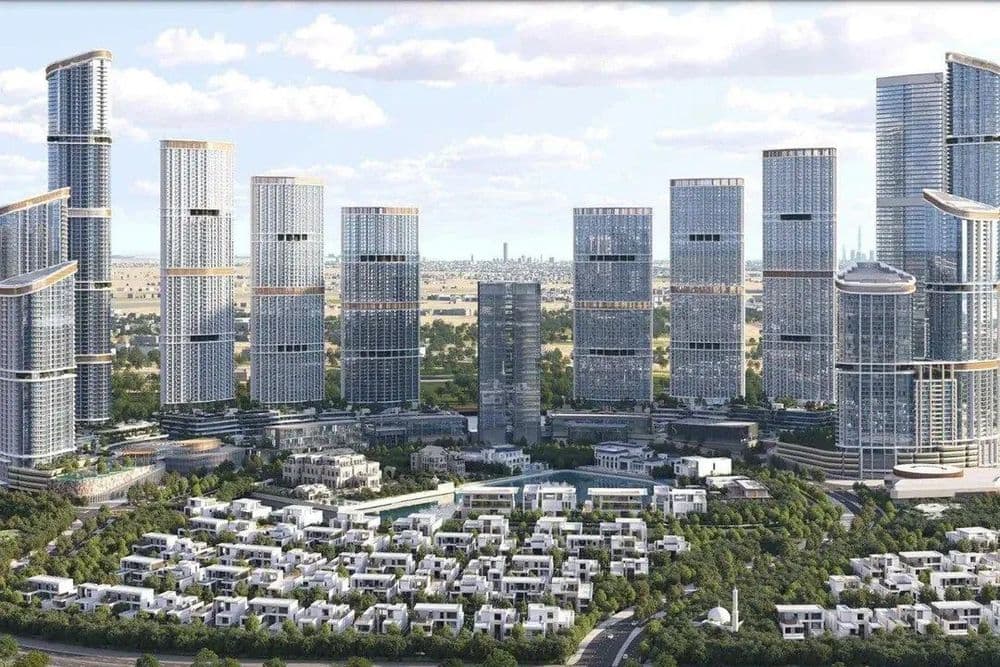
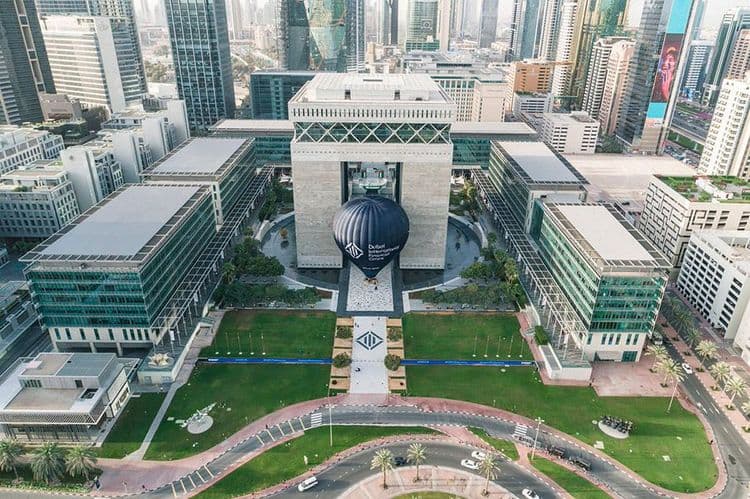
DIFC is Dubai's financial and legal nerve centre — a 110-acre free zone that has quietly become one of the most sought-after residential addresses in the city. It's not for everyone. Prices are among the highest per square foot in Dubai, the pace is fast, and the streets are built around business. But for professionals working in or around the district, and for investors who want a liquid, high-profile asset in a supply-constrained corridor, there is nowhere else quite like it. Our view: DIFC is underrated as a residential play, and the pipeline we're tracking suggests that's changing fast.
Market overview
We currently track 14 active projects across DIFC in our catalogue — a figure that tells you something important: this is not a mass-market release zone. Supply here is curated, slow-moving, and deliberately premium. Compare that to, say, Jumeirah Village Circle, where hundreds of towers compete for the same buyer, and you start to understand why DIFC holds value the way it does.
The delivery timeline across our pipeline stretches from Q3 2026 (The Carlyle Residences) all the way to Q3 2030 (Jumeirah Residences Emirates Towers, both towers). That spread matters. Buyers who commit today to a 2029 or 2030 handover are locking in at today's pricing in a district where land is genuinely finite. AHS Tower is due Q4 2026, The Residences at DIFC Zabeel District lands Q4 2029, and Janu Dubai Branded Residences — one of the more talked-about hospitality-branded plays in the pipeline — is slated for Q4 2027.
On pricing, DIFC sits firmly in Dubai's upper tier. Expect to pay somewhere in the range of AED 2,800–4,500 per square foot depending on the project, floor, and whether you're buying a branded or non-branded unit. Four Seasons Private Residences and Janu Dubai sit at the top of that band. Liberty House and Sky Gardens, which are established completed buildings, trade at comparatively accessible entry points for the district.
In our experience, two things consistently surprise buyers new to DIFC. First, the size of units relative to price — you are paying for address and liquidity, not square footage. Second, service charges here run higher than most of Dubai; factor AED 30–45 per square foot annually into your yield calculations before committing.
The developer mix is notable: DIFC Developments itself is behind two projects (DIFC Heights Tower and DIFC Living), which signals the authority's own confidence in the residential thesis. Meraas, H&H, and SOL Properties round out a credible, well-capitalised group. No single developer dominates, which is healthy for long-term price competition.
Living in Dubai International Financial Centre
Let's be direct: DIFC is a professional's neighbourhood first, a residential community second. The streets fill at 8 am and empty at 10 pm. The Gate Avenue is genuinely one of the better outdoor retail and dining strips in Dubai — walkable, shaded, and with a concentration of quality restaurants that most areas can't match. Zuma, Coya, Gaia, Netsu — the dining offer here punches well above the district's physical size.
Our buyers in DIFC tend to fit a narrow profile: finance and legal professionals who want a 10-minute walk to the office, or high-net-worth investors who want a pied-à-terre in a globally recognised address. Families do live here, but it's not the first choice for those with school-age children — the district lacks the green space and community infrastructure that places like Dubai Hills or Arabian Ranches offer.
Walkability is genuinely strong within the district. The Gate, Gate Avenue, and the surrounding towers create a compact, pedestrian-friendly loop that's rare in Dubai. Step outside that loop, though, and you're back in a car city.
The arts and culture angle is real but modest. Alserkal's outpost, various gallery pop-ups, and the DIFC Art Nights programme give the district a cultural texture that most financial centres globally lack. It's not a reason to buy here on its own, but it adds to the quality of daily life.
For singles and young professionals, DIFC is arguably the best address in Dubai. For families, it's a compromise — liveable, but you'll be driving to parks, schools, and supermarkets rather than walking.
Schools, healthcare & retail
Schools within reach (10–20 min drive)
- GEMS Wellington International School, Al Sufouh
- Jumeirah English Speaking School (JESS), Jumeirah
- Horizon English School, Al Wasl
- Dubai College, Al Sufouh
Healthcare
- Mediclinic City Hospital, Healthcare City (approx. 10 min)
- Emirates Hospital, Jumeirah (approx. 15 min)
- Several GP and specialist clinics within the DIFC district itself, catering to the working population
Retail & daily needs
- Gate Avenue — the district's main retail and F&B strip, with a solid mix of fashion, wellness, and dining
- Dubai Mall, approximately 8 minutes by car or one metro stop
- Waitrose and Spinneys branches accessible within a 10-minute drive in the Jumeirah and Za'abeel directions
- Convenience retail within the towers themselves (Liberty House, Index Tower area)
Fitness & wellness
- Multiple hotel gyms and private fitness studios within the district
- Zabeel Park, one of Dubai's larger green spaces, is directly adjacent to the Za'abeel side of DIFC
The retail and dining offer within DIFC itself is strong for a financial district. Daily grocery shopping requires a short drive, which is the one practical gap in the district's otherwise well-serviced amenity mix.
Getting around
Connectivity is one of DIFC's genuine strengths — and for once, it holds up in practice, not just on a map.
The district sits directly on Sheikh Zayed Road, which means Burj Khalifa and Downtown Dubai are roughly 5–8 minutes by car. Dubai Marina is 20–25 minutes in normal traffic, though that stretches to 35–40 minutes during peak hours on a bad day. Dubai International Airport (DXB) is approximately 15–20 minutes via the Airport Tunnel or Al Khail Road. DWC (Al Maktoum International) is a longer run — allow 40–50 minutes.
The Financial Centre Metro Station sits on the Red Line and is a genuine asset. It connects directly to the Burj Khalifa/Dubai Mall station in one stop and to Dubai Marina in under 25 minutes without touching a car. For a district of this density, having a functioning metro connection is not something to take for granted — many comparable premium areas in Dubai don't have it.
DIFC also connects to Za'abeel and Karama via internal roads, and the proximity to Al Wasl Road gives residents a useful bypass when Sheikh Zayed Road clogs up.
School runs are the one weak point. The nearest international schools — GEMS Wellington, Jumeirah English Speaking School, and others — require a 10–20 minute drive. Not a dealbreaker, but worth planning around if you have children.
Investment outlook
DIFC is a yield-compression story, not a yield-maximisation story. Gross rental yields here typically sit in the 5–6.5% range — lower than mid-market areas like JVC or Dubai Silicon Oasis, but underpinned by a tenant base that is unusually stable: finance professionals on multi-year contracts, law firm partners, and senior banking executives. Void periods are short. Rent defaults are rare. That quality of income matters more than the headline yield number.
Capital appreciation is where the DIFC case gets interesting. The district has a hard cap on developable land. The 14 projects in our pipeline represent a significant share of what will ever be built here residentially. As the financial centre continues to attract global banks, hedge funds, and family offices — and the numbers on that front have been moving in one direction for several years — the residential demand case only strengthens.
Branded residences (Four Seasons, Janu, Carlyle) command a premium at purchase but also tend to hold resale value better than non-branded stock in the same postcode. The trade-off is a higher entry price and, again, elevated service charges. Our investors who've bought branded units in DIFC have generally found the resale process faster than equivalent non-branded stock — the brand does the marketing work for you.
Resale liquidity is above average for Dubai. The buyer pool for a DIFC apartment includes end-users, regional investors, and international buyers who specifically want a DIFC address for business credibility reasons. That breadth of demand keeps the market from seizing up.
Our editorial line: bullish. Supply is structurally constrained, the tenant base is high-quality, and the long delivery timeline on several projects gives off-plan buyers a meaningful window to benefit from price appreciation before handover.
Frequently asked questions about Dubai International Financial Centre
What rental yields can I expect in DIFC?
Gross rental yields in DIFC typically land between 5% and 7% annually, with smaller units and serviced residences trending toward the higher end. Corporate tenants — often on company leases — tend to pay a premium for proximity to their offices, which keeps void periods short. Our landlord clients here regularly achieve above-asking rents during Q1 and Q4 when financial-sector hiring peaks.
Who are the main developers active in DIFC right now?
We're currently working with 10 developers across our DIFC catalogue. The most active include H&H Real Estate Developers (Eden House Zaabeel, Janu Dubai Branded Residences, The Carlyle Residences), Meraas Holding (Jumeirah Residences Emirates Towers A & B), DIFC's own development arm (DIFC Heights Tower, DIFC Living), SOL Properties, and AHS Properties. Each brings a distinct product — from ultra-prime branded residences to more investment-focused mid-rise towers.
What is the commute like from DIFC to other key Dubai hubs?
DIFC's central location is genuinely hard to beat. The DIFC Metro Station on the Red Line puts Downtown Dubai and Dubai Mall about 5 minutes away by train. Driving to Dubai Marina takes roughly 20–25 minutes outside peak hours, and DXB Airport is around 15–20 minutes by car. Our buyers who work in DIFC itself, of course, often walk to the office — a rare luxury in Dubai.
Are there good schools and family amenities near DIFC?
DIFC is primarily a professional district, so families typically look to nearby communities for schools. GEMS Wellington Primary in Al Karama and Jumeirah English Speaking School in Jumeirah are both within a 10–15 minute drive. For day-to-day living, Gate Avenue's retail strip, the Gate Village galleries, and Zabeel Park (a 5-minute walk from the Zabeel District projects) cover most lifestyle needs. Several of our buyers with families pair a DIFC residence with a second car for school runs.
What's the difference between DIFC Living and the branded residences like Four Seasons or Janu Dubai?
DIFC Living is the district's own mid-market residential offering — competitively priced, well-managed, and ideal for owner-occupiers or investors targeting the professional rental market. The branded residences (Four Seasons, Janu Dubai) command a 30–50% price premium but come with hotel-grade services, concierge, and the brand's global cachet. In our experience, branded units attract a different buyer profile — often HNWIs seeking a pied-à-terre or a trophy asset — while DIFC Living suits those prioritising yield and liquidity.
Get the Dubai International Financial Centre market brief
Live listings, off-plan launches, recent transactions and rental yields — direct from our advisors. No inflated commissions, no spam. One business-day reply.