Dubai Internet City
Dubai community · 0 off-plan projects
About Dubai Internet City
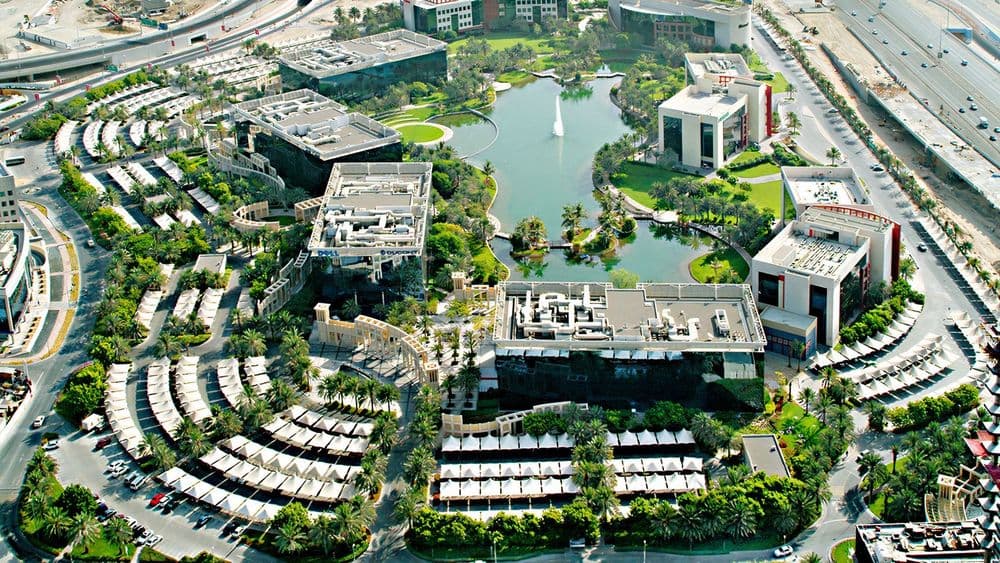
Dubai Internet City (DIC) is the UAE's flagship technology and media free zone, sitting on the western edge of the Sheikh Zayed Road corridor between Dubai Marina and Barsha Heights. It's where regional headquarters for Microsoft, Google, LinkedIn, and dozens of mid-tier tech firms share postcodes with a growing residential and hospitality pipeline. Our take: DIC is one of the few Dubai addresses that genuinely earns its premium — the tenant base is high-income, the infrastructure is mature, and the incoming supply is still selective enough to protect values. If you work in tech or media, or you're an investor who wants to rent to someone who does, this is a serious address.
Market overview
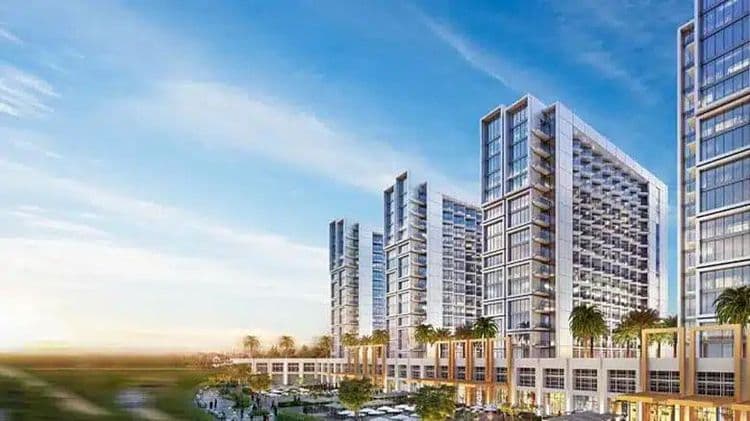
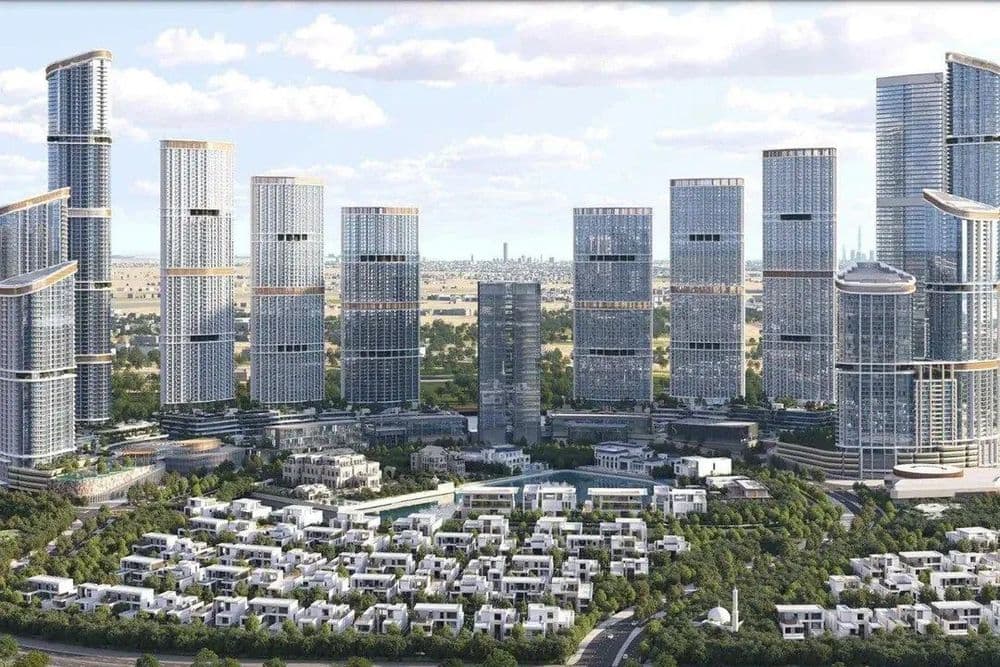
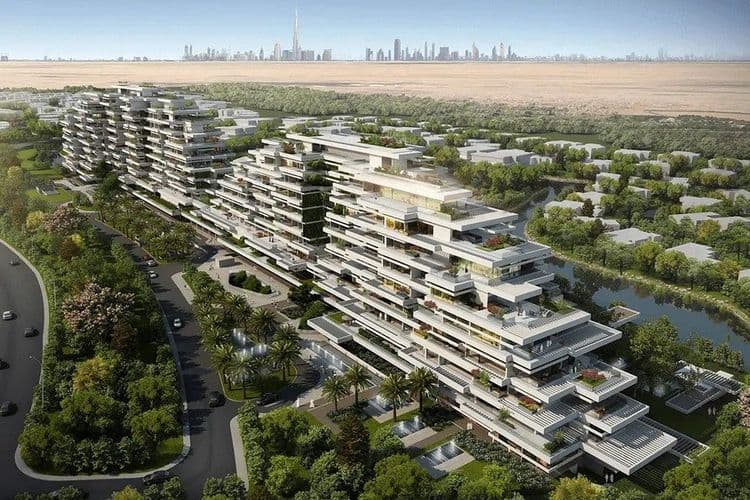
Dubai Internet City's residential and serviced-apartment pipeline is deliberately thin, which is precisely what makes it interesting. Our catalogue currently tracks five active projects in the area: Iconic Tower by Mered (delivering Q3 2027), Rise by Blanco Thornton (Q4 2026), Magnolia Hotel by Palladium Development (Q2 2028), Ramada Encore by Palladium Development (coming soon), and The Royal Yacht by Palladium Development (Q4 2028). That's a mix of branded hospitality, hotel-apartments, and residential towers — not a flood of supply.
Pricing in DIC and its immediate surroundings currently sits in the AED 1,800–2,400 per sqft band for mid-to-upper residential product, with branded or hotel-serviced units pushing toward the higher end. That's meaningfully above JVC or Sports City, but it reflects the captive corporate tenant base rather than speculative froth. Off-plan launches here tend to price at a premium from day one; there's rarely a soft-launch discount window the way you'd see in emerging communities.
Palladium Development accounts for three of the five projects in our catalogue — a concentration worth noting. It signals developer confidence in the hospitality-led model for this corridor, where short-term and corporate lets often outperform vanilla residential on a yield basis. Mered's Iconic Tower and Blanco Thornton's Rise represent the pure residential play, targeting owner-occupiers and long-term investors who want a conventional apartment rather than a hotel-apartment structure.
In our experience, buyers who hesitate on DIC because of the price-per-sqft gap versus nearby areas often regret it within 18 months. The corporate demand here doesn't evaporate in a soft market the way leisure-driven demand can. Tech firms on multi-year free zone licences don't relocate their staff on short notice, and that stickiness underpins both occupancy and rent reviews. The five-project pipeline is tight enough that new completions are unlikely to create an oversupply problem before 2029.
Living in Dubai Internet City
DIC is not a neighbourhood you move to for weekend farmers' markets and community barbecues. It's a working district that happens to have a growing residential layer — and that's a feature, not a bug, for the right buyer.
The demographic skews heavily toward professionals in their late 20s to early 40s: software engineers, product managers, regional sales directors, and the occasional startup founder. Families do live here, but they're typically dual-income households who prioritise the commute-to-zero-minutes advantage over garden space. Singles and young couples are the dominant owner-occupier profile in our experience.
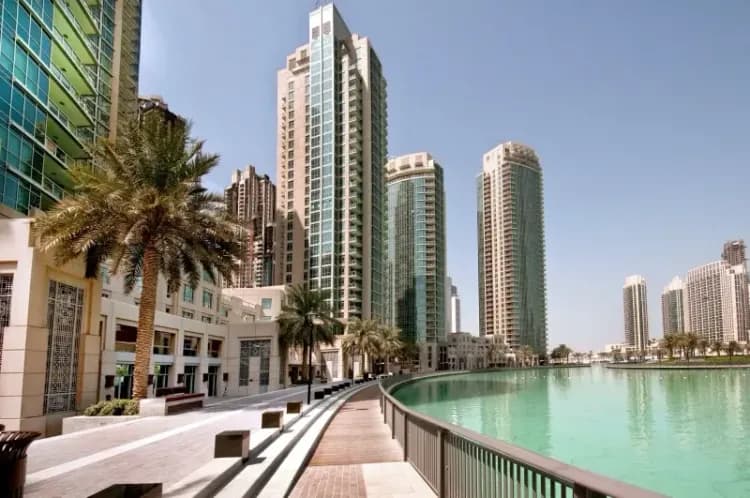
The waterfront promenade along the Dubai Marina edge of DIC is genuinely walkable — a rare claim in this city. You can reach JBR Beach on foot or by a short cycle in under 15 minutes. The cluster of restaurants and cafés along the DIC lake and the adjacent Media City strip gives residents a reasonable dining circuit without needing a car: everything from quick-service Lebanese to sit-down Japanese is within a 10-minute walk.
The vibe is purposeful rather than leisurely. Weekday mornings feel like a tech campus; weekends are quieter than Marina or Downtown. That suits a specific kind of resident — someone who wants proximity to work and the city's best beaches without the noise of a tourist-heavy postcode.
Our honest assessment: DIC is an investor-and-professional neighbourhood first, a family community second. If you need a large villa, a school within walking distance, or a sense of suburban calm, look at Arabian Ranches or Dubai Hills. If you want a 12-minute commute to your office and a 15-minute walk to the sea, DIC is hard to beat.
Schools, healthcare & retail
Schools within reach
- Dubai British School (Al Barsha) — British curriculum, approximately 15 minutes by car
- Regent International School (The Greens) — British curriculum, under 10 minutes
- Dubai International Academy (Emirates Hills) — IB curriculum, 15–20 minutes
- Jumeirah English Speaking School (JESS) Arabian Ranches — 20–25 minutes
Healthcare
- Mediclinic Parkview Hospital (Al Barsha South) — the closest full-service hospital, roughly 15 minutes
- Aster Clinic branches in Media City and JLT serve day-to-day GP and specialist needs within 10 minutes
- Saudi German Hospital (Al Barsha) — 15 minutes
Retail & daily needs
- Mall of the Emirates — 15 minutes; covers everything from grocery to flagship retail
- Ibn Battuta Mall — 15 minutes in the opposite direction along SZR
- Spinneys and Waitrose branches in Marina and JLT for daily grocery runs under 10 minutes
- The DIC and Media City precinct itself has a cluster of cafés, pharmacies, and convenience stores that handle weekday essentials without a car trip
The retail offering within walking distance is functional rather than comprehensive. Residents who want a full supermarket shop will drive. That's a minor inconvenience in a community where most residents own a car or use ride-hail apps daily.
Getting around
Connectivity here is genuinely strong — not just on paper. Sheikh Zayed Road runs along the eastern boundary, giving direct access to the full length of the city. Drive times under normal conditions: Burj Khalifa and Downtown Dubai in roughly 20–25 minutes, DIFC in 20 minutes, Dubai Marina in 8–10 minutes, and DXB Airport in 30–35 minutes. DWC (Al Maktoum International) is approximately 40–45 minutes depending on traffic.
The Dubai Metro's Red Line has two stations that serve DIC directly — Internet City Metro Station and Media City Metro Station — both within comfortable walking distance of the core office and residential buildings. For a Dubai address, that's a genuine advantage. Many of our buyers who work in DIC or Media City genuinely don't need a car for the daily commute.
The school run is the one honest caveat. Most well-regarded schools serving this community — in Al Barsha and Jumeirah — require a car journey of 10–20 minutes, and the Al Barsha road network can back up badly between 7:30 and 8:30 am. It's manageable, but parents should factor it in.
For weekend escapes, the Marina and JBR strip is under 10 minutes by car, and Palm Jumeirah is 15 minutes. The road network west of SZR is well-maintained and rarely the bottleneck — the congestion, when it happens, is on SZR itself heading toward Downtown.
Investment outlook
DIC sits in the mid-to-upper tier of Dubai's investment market, and the yield profile reflects that. Gross rental yields for hotel-apartment and serviced-unit product in this corridor typically run in the 7–9% range, driven by strong corporate short-let demand. Conventional residential units tend to yield 5.5–7% — still healthy, but the real story here is capital appreciation rather than pure income.
The five projects in our catalogue span delivery dates from Q4 2026 through Q4 2028, which means early buyers are still within the off-plan window where capital gains between purchase and handover are realistic. Historically, well-located DIC and Media City product has appreciated 15–25% from off-plan launch to completion in a rising cycle — though past cycles don't guarantee future ones, and buyers should price in the possibility of a flatter market by 2028.
Resale liquidity is above average for Dubai. The tenant pool — corporate professionals on company-assisted housing — means units rarely sit vacant for long, and that occupancy track record makes DIC product easier to sell to the next investor. It's not as liquid as Downtown or Marina, but it's considerably more liquid than fringe communities.
The hospitality-led pipeline from Palladium Development (three projects) is worth watching. Branded hotel-apartments in this zone have historically commanded a premium on both nightly rates and resale, because the operator covenant provides a level of income certainty that pure residential can't match.
Our editorial line: bullish. The supply pipeline is controlled, the corporate tenant base is structurally sticky, and the two incoming residential towers (Iconic Tower and Rise) are targeting a buyer profile — tech-sector professionals — whose purchasing power is growing faster than the Dubai average.
Frequently asked questions about Dubai Internet City
What rental yields can I expect in Dubai Internet City?
In our experience, DIC delivers gross rental yields of 6–8% annually for well-positioned units. Hotel-managed inventory — think Ramada Encore or Magnolia Hotel — can generate income from day one through operator-managed short-stay programmes, which often outperform standard long-let yields. Tech-sector tenants also tend to sign longer leases and pay on time, which our landlord clients genuinely appreciate. We always recommend stress-testing at 75% occupancy to stay conservative.
Who are the main developers active in Dubai Internet City right now?
The most active names in our DIC catalogue are Palladium Development — behind three projects including The Royal Yacht, Magnolia Hotel, and Ramada Encore — along with Mered (Iconic Tower) and Blanco Thornton (Rise by Blanco Thornton). Palladium has a strong track record of hotel-branded delivery in the corridor, while Mered brings a European design sensibility that appeals to buyers looking for something architecturally distinct.
What is the commute like from Dubai Internet City to DIFC, Marina, and Dubai Airport?
DIC is genuinely well-connected. Dubai Marina is a 5–10 minute drive or a short ride on the Red Line Metro from Dubai Internet City station. DIFC takes around 20–25 minutes by car outside peak hours. Dubai International Airport (DXB) is roughly 30–35 minutes via Sheikh Zayed Road. The Metro is a real advantage here — our buyers who work in Media City or JLT often walk or cycle between free zones entirely.
Are there good schools and family amenities near Dubai Internet City?
DIC itself is primarily a commercial free zone, but family infrastructure nearby is solid. Dubai British School in Jumeirah Park and Regent International School in The Greens are both within a 10–15 minute drive. For daily life, The Beach at JBR, Mall of the Emirates (15 minutes), and Spinneys in Al Barsha cover most needs. Families we work with often pair a DIC investment unit with a villa rental in nearby Jumeirah Islands or The Lakes.
Can non-UAE residents buy property in Dubai Internet City?
Yes — all five projects in our DIC catalogue are in designated freehold zones, meaning any nationality can purchase with full ownership rights. There are no restrictions on financing either; most UAE banks will lend to non-residents at up to 50% LTV on off-plan and 60% on ready units. We handle the entire process remotely for international buyers regularly, from reservation to title deed, and it typically takes 4–6 weeks to complete a cash transaction.
Get the Dubai Internet City market brief
Live listings, off-plan launches, recent transactions and rental yields — direct from our advisors. No inflated commissions, no spam. One business-day reply.