Hawana Salalah
Dubai community · 0 off-plan projects
About Hawana Salalah
Hawana Salalah is Oman's flagship integrated coastal resort, sitting on the Arabian Sea shoreline just outside Salalah in the Dhofar Governorate. It isn't Dubai — and that's precisely the point. Buyers come here for a different proposition: cooler summers during the khareef monsoon season, a genuinely low-density beachfront setting, and freehold ownership rights extended to international investors. Our honest take? This is a niche, long-horizon play that suits lifestyle-led buyers and patient capital rather than traders chasing quick flips.
Market overview
Hawana Salalah sits in a category of its own within the Gulf property market. It is an Integrated Tourism Complex (ITC), which means foreign nationals can hold freehold title — a significant legal distinction in Oman, where such designations remain selective.
Our current catalogue lists 1 active project in this area: Amazi Hawana Salalah by Muriya. That's a thin pipeline by Dubai standards, but it reflects the deliberate, low-density philosophy of the master-plan rather than a lack of developer confidence. Muriya is the joint-venture vehicle behind Hawana Salalah's development, and the Amazi brand sits at the upper end of the resort's residential offering.
Pricing here is denominated in Omani Rials (OMR) rather than AED, and the per-square-metre figures are materially lower than comparable beachfront product in Dubai or Abu Dhabi. That gap is real, and it's one of the reasons our investors take the destination seriously. Entry points for resort-style units can come in well below what you'd pay for a mid-tier apartment in Dubai Marina, with a genuine sea view included.
In our experience, buyers at Hawana Salalah fall into two camps. The first are GCC nationals — particularly Emiratis and Kuwaitis — who want a cool-weather retreat during July and August when Salalah's khareef mist rolls in and temperatures drop to the low 20s Celsius. The second are international buyers, often European or South Asian, drawn by Oman's political stability, low crime, and the relative scarcity of freehold coastal product in the wider region.
The supply pipeline is intentionally constrained. The master-plan has been phased over many years, and Muriya has historically avoided flooding the market. That discipline has kept resale values relatively stable, though liquidity is thinner than in a high-volume market like Dubai. Don't expect to exit in 90 days. Do expect that the asset you buy today won't be surrounded by 40 competing towers by next year.
Living in Hawana Salalah
Salalah is not a city that rushes. That's a feature, not a bug, for the buyers we work with here.
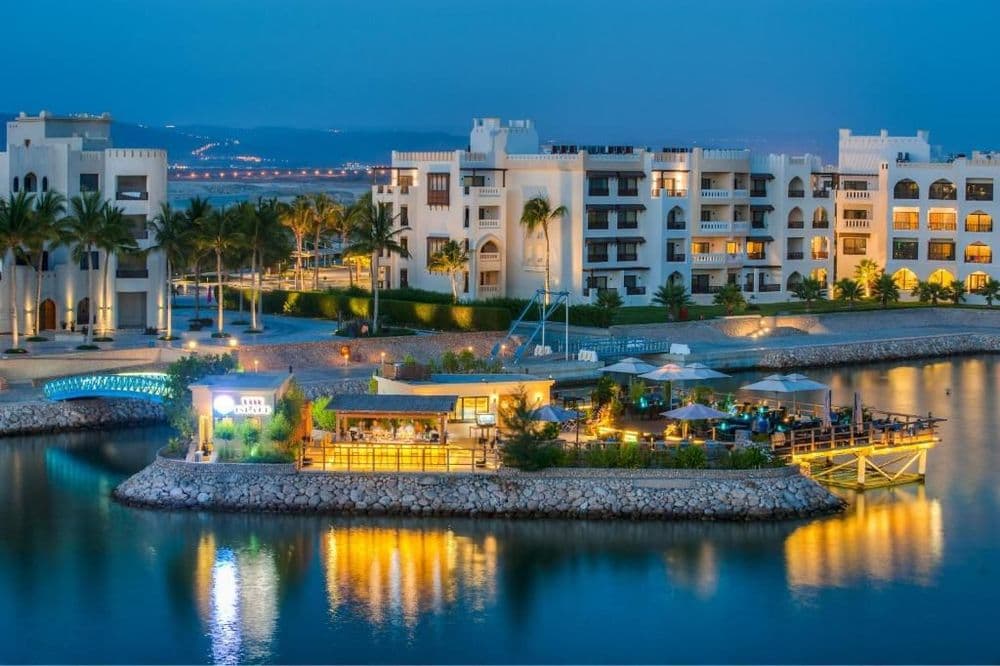
The resort itself wraps around a marina and a long stretch of sandy beach. The khareef season — roughly June through September — transforms the Dhofar region into something genuinely unusual for the Arabian Peninsula: green hills, cool mist, and temperatures that make outdoor living comfortable when the rest of the Gulf is sweltering. Many owners use the property primarily during this window, treating it as a seasonal retreat rather than a permanent residence.
Outside the resort perimeter, Salalah city offers a relaxed pace, a strong local food scene centred on fresh seafood and Omani cuisine, and the frankincense souqs that the region has traded on for millennia. The Dhofar landscape — wadis, coconut groves, the Qara Mountains — is unlike anywhere else in the Gulf.
Who actually buys here? Our buyers skew towards families and couples in their 40s and 50s who already own in Dubai or their home country and want a second-home asset that doubles as a genuine holiday destination. It's not a singles market. It's not a short-term-rental hustle market either, though holiday-let income is possible through the resort's managed rental programme.
Walkability within the resort is reasonable — the marina promenade, beach access, and the resort's own F&B outlets are all within easy reach on foot. Outside the gates, you'll need a car. Salalah's urban layout doesn't reward pedestrians.
Our honest opinion: this is one of the most genuinely liveable resort destinations in the Gulf for people who want space, quiet, and a coastline that doesn't feel overbuilt.
Schools, healthcare & retail
Within the resort:
- Marina promenade with F&B outlets and retail
- Beach club and water sports facilities
- Resort-managed pools and leisure amenities
- Hotel facilities (the resort includes hotel components that residents can access)
Healthcare:
- Salalah's main private and government hospitals are approximately 15–20 minutes by car
- The city has a reasonable standard of healthcare for a regional centre, though complex specialist care may require travel to Muscat or Dubai
Schools:
- International schools in Salalah city serve the expatriate community; expect a 15–25 minute drive from the resort
- The options are more limited than in Muscat — families with specific curriculum requirements should research availability before committing
Retail:
- Salalah's main shopping centres, including Salalah Gardens Mall, are roughly 20 minutes away
- The city centre souqs offer fresh produce, frankincense, and local goods
- For high-end retail, Muscat or Dubai remain the practical destinations
The amenity picture is honest resort-town fare: sufficient for comfortable living, not a match for a major city.
Getting around
Salalah International Airport (SLL) is approximately 20–25 minutes by car from Hawana Salalah, depending on traffic — and traffic here is rarely an issue. Oman Air and flydubai operate direct routes between Dubai and Salalah, with flight times around 1 hour 45 minutes. That makes a long-weekend trip from the UAE entirely practical.
By road, Salalah is roughly 1,000 kilometres from Dubai — a drive that takes 10–11 hours and is popular with road-trip enthusiasts but not a commute anyone would consider.
Within Salalah, the road network is well-maintained and uncongested by Gulf standards. The resort sits on the coastal road west of the city centre, putting it about 15–20 minutes from Salalah's main retail and commercial areas.
There is no metro or tram. Personal vehicles or taxis are the practical options. Ride-hailing apps operate in Salalah, though availability is patchier than in Dubai.
For school-run purposes, the resort's distance from Salalah's international schools means families with school-age children should factor in a daily 20-minute drive each way. That's manageable, but worth planning around.
Connectivity is genuinely good for a resort destination — the airport proximity is a real advantage — but this is not a place you choose for urban convenience. You choose it for the opposite reason.
Investment outlook
Hawana Salalah occupies a specific and defensible niche: freehold coastal resort property in a politically stable, low-tax jurisdiction, with a natural demand driver in the khareef season that no developer can replicate elsewhere in the Gulf.
Rental yields at managed resort properties in Oman's ITC developments have historically tracked in the 5–7% gross range when units are enrolled in the official rental pool, though actual net returns depend heavily on occupancy rates and management fees. The khareef season drives a concentrated burst of demand — occupancy during July and August can be strong, but the shoulder months are quieter. Buyers should model conservatively and treat rental income as a supplement rather than the primary investment thesis.
Capital appreciation has been steady rather than spectacular. Oman's property market doesn't move at Dubai's pace, and that's a reasonable trade-off for lower volatility. The OMR's peg to the US dollar removes currency risk for dollar-denominated investors, which is a genuine structural advantage.
Resale liquidity is the honest caveat. The buyer pool for Hawana Salalah is narrower than for a Dubai apartment, and exit timelines can stretch. We'd suggest treating any investment here with a minimum 5-year horizon.
With only 1 project currently active in our catalogue — Amazi by Muriya — the supply picture is tight. Limited new inventory, combined with Oman's broader tourism growth ambitions and the government's continued support for ITC development, creates a reasonable case for gradual price appreciation over the medium term.
Our editorial line: cautiously bullish, with the caveat that this is a lifestyle-first asset. Buyers who love Salalah tend to hold; buyers who bought purely on yield projections sometimes don't.
Frequently asked questions about Hawana Salalah
Who are the main developers active in Hawana Salalah?
Muriya is the master developer behind Hawana Salalah and is a joint venture between Omran (Oman's tourism development company) and Orascom Development. That government-backed structure gives our buyers confidence around delivery and long-term management. Amazi is one of Muriya's latest residential phases within the wider Hawana resort, which already includes hotels, a marina, and a water park.
What rental yields can I expect at Hawana Salalah?
Gross rental yields in managed resort communities like Hawana Salalah typically range between 6–9% annually, depending on unit type and whether you opt into the official hotel rental pool. The Khareef season (July–September) commands premium nightly rates, often 2–3× the off-season average. We always recommend buyers review the specific rental management agreement with Muriya before committing, as pool terms vary by phase.
Can foreigners buy property at Hawana Salalah and get residency?
Yes — Hawana Salalah is a designated Integrated Tourism Complex (ITC), which means non-Omani nationals can purchase freehold property here. Buyers who invest above a certain threshold (currently OMR 500,000 for a full residency visa) may qualify for an Omani residency permit. We work with local legal partners to guide our international clients through the registration process at the Muscat Securities Market (MSM) property registry.
What amenities and lifestyle does Hawana Salalah offer residents?
The wider Hawana resort already has a functioning marina, Salalah Gardens Mall nearby, a water park, beach clubs, and several hotel brands on-site. Salalah International Airport is roughly 20–25 minutes away, with direct flights to Dubai, Muscat, and several GCC cities. For families, the Dhofar region offers some of the cleanest beaches in the Arabian Peninsula, cooler temperatures than the UAE, and a noticeably relaxed pace of life.
How does the commute or travel from Dubai to Hawana Salalah work?
Salalah is about a 1-hour 45-minute direct flight from Dubai, with flydubai and Air Arabia both operating regular routes. Many of our Dubai-based buyers treat Hawana Salalah as a second home or holiday retreat rather than a daily commute destination. The short flight time makes weekend visits very practical, and the contrast in climate — especially during the Khareef — is a big draw for UAE residents looking to escape the summer heat.
Get the Hawana Salalah market brief
Live listings, off-plan launches, recent transactions and rental yields — direct from our advisors. No inflated commissions, no spam. One business-day reply.