Off-planQ1 2027
Dubai community · 2 off-plan projects
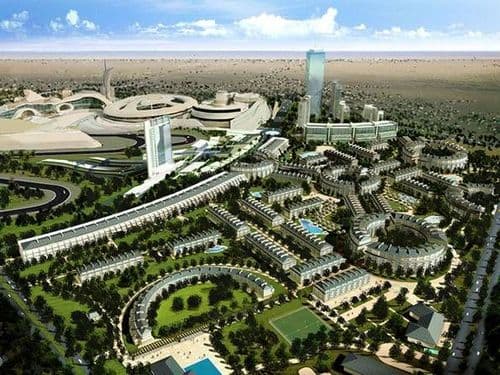
Motor City is one of Dubai's most underrated mid-market communities — a low-rise, car-themed master-plan developed largely by Union Properties, sitting between Arabian Ranches and Al Barsha. It draws a loyal mix of families, motorsport fans, and value-conscious professionals who want space, greenery, and reasonable rents without paying Downtown prices. Our honest take: Motor City has been quietly maturing for years, and the current wave of off-plan launches — 19 active projects in our catalogue alone — signals that developers have finally caught up to what residents already knew. This is a community worth serious attention right now, before pricing catches up with demand.
Motor City's supply pipeline is genuinely busy. Our catalogue currently lists 19 active projects across the community, spanning developers from Sobha Realty and Binghatti to Union Properties' own Takaya and Mirdad series. That's a meaningful concentration of new stock for a single mid-market community, and it tells you something: developers are betting on sustained demand here, not just speculative noise.
Delivery dates cluster between Q2 2027 and Q1 2029, with RPM Residence by Al Ansari Properties the nearest to handover at Q4 2025. The pipeline is weighted toward apartments — studios through to two-bedroom units — which suits the area's dominant renter and first-time-buyer profile.
On pricing, Motor City sits comfortably in Dubai's mid-market band. Secondary market apartments typically trade in the AED 800–1,100 per sqft range depending on floor, view, and building quality. Off-plan launches in the current cycle are pricing in at the lower end of that band for early buyers, with some premium projects — Sobha Orbis and Sobha Solis being the obvious examples — pushing toward the upper boundary. Villas and townhouses in the broader community command a premium over apartments, though supply of those is far tighter.
In our experience, Motor City buyers are often upgraders from JVC or Discovery Gardens who want more greenery and a quieter street-level environment without stretching to Arabian Ranches pricing. That upgrade dynamic keeps secondary demand relatively stable even when new supply enters the market.
One thing worth flagging: the sheer number of projects completing in a tight 2027–2029 window could create short-term rental softness if absorption doesn't keep pace. We're watching that closely. For now, occupancy rates in existing stock remain healthy, and the community's established amenity base — the autodrome, retail strip, parks — continues to attract tenants who stay for multiple lease cycles. That stickiness is a genuine positive for landlords.
Motor City has a personality that's hard to replicate elsewhere in Dubai. The street grid is wide, the buildings are low, and the whole community feels like it was designed for people who actually want to live there — not just pass through. Green corridors run between clusters, the Dubai Autodrome sits at the community's edge (you'll hear it on race weekends, which some residents love and others tolerate), and the retail strip along Motor City's main boulevard handles most daily needs without requiring a car trip to a mall.
The demographic skews toward families and established professionals in their 30s and 40s. We see fewer single young professionals here than in JLT or Business Bay — the apartment stock tends toward larger units, and the community pace is slower. That's not a criticism; it's a feature for the buyers who choose it.
Dining is functional rather than destination-worthy. You'll find a solid spread of casual restaurants, cafés, and fast-casual chains in the retail strip, plus the options at nearby First Avenue Mall. It's not a foodie neighbourhood, and anyone expecting a Jumeirah-level F&B scene will be disappointed. What it does offer is a genuine sense of community — residents tend to know their neighbours, use the parks regularly, and stay for years rather than months.
Walkability is reasonable by Dubai standards. The internal community roads are pedestrian-friendly, and the parks and cycling tracks make outdoor activity genuinely practical. That said, you'll still need a car for anything beyond the immediate community — this isn't a walk-to-the-metro neighbourhood.
Our view: Motor City is firmly a family and long-term-resident community. Investors targeting short-term lets or high-turnover tenants will find it a poor fit. Investors targeting stable, multi-year tenancies will find it one of the more reliable communities in this price bracket.
Schools within or near Motor City:
Healthcare:
Retail & daily needs:
The amenity base is genuinely self-sufficient for daily life. It's not a destination for luxury retail, but that's not what Motor City residents are looking for.
Motor City sits on Sheikh Mohammed Bin Zayed Road (E311), which is the honest answer to most connectivity questions here. The road access is good — in light traffic, you're looking at roughly 25–30 minutes to the Burj Khalifa and Downtown, 20 minutes to Dubai Marina, and around 35–40 minutes to Dubai International Airport. DWC (Al Maktoum International) is closer, sitting around 25–30 minutes to the south-west.
DIFC is approximately 25 minutes in normal conditions. That said, E311 during morning peak hours — particularly the interchange toward Sheikh Zayed Road — can stretch those times considerably. The connectivity is real, but it's road-dependent, and anyone commuting daily to DIFC or Business Bay should factor in 45-minute journeys on bad mornings.
There is no metro station in Motor City, and that's the community's most significant infrastructure gap. The nearest Red Line stations are at Jumeirah Lake Towers or Mall of the Emirates, both requiring a drive or taxi. Bus routes serve the area but aren't a practical daily commute option for most residents.
For school runs, the cluster of schools along Umm Suqeim Road and in Arabian Ranches is accessible in 10–15 minutes, which works well for families. Internal community roads are calm enough that cycling to the retail strip or parks is a realistic option — something that can't be said for many Dubai communities.
Motor City has been punching above its weight as an investment destination for several years, and the current off-plan cycle is the clearest evidence yet that institutional developers agree. Sobha Realty doesn't enter a community unless the numbers stack up — their presence here with two projects (Orbis and Solis) is a meaningful signal.
Rental yields in Motor City typically land in the 7–8.5% gross range for apartments, which puts it firmly in Dubai's mid-market sweet spot. Studios and one-bedroom units tend to yield at the higher end of that band; larger two-bedroom units compress slightly but benefit from longer tenancy periods and lower vacancy rates. In our experience, well-located Motor City apartments rarely sit empty for more than a few weeks between tenants — the community's established reputation does the marketing work for you.
Capital appreciation has been steady rather than spectacular. Motor City didn't see the sharp price spikes of 2021–2022 that hit Marina or Downtown, which means it also didn't see the correction that followed in some of those markets. The trade-off is a more gradual appreciation curve — typically 5–8% annually in recent years — but with lower volatility. For investors who want reliable income over a five-to-seven year hold, that profile is attractive.
The risk to watch is the 2027–2029 delivery cluster. Nineteen projects completing in roughly a two-year window will test absorption. If Dubai's broader population growth continues at its current pace, the community should absorb the new stock without significant yield compression. If macro conditions shift, Motor City's mid-market positioning gives it more cushion than premium areas — tenants trade down into it, not out of it.
Our editorial line: bullish, with patience required. Buy early in the off-plan cycle, target the established developers in the pipeline, and plan for a five-year-plus hold. The fundamentals are sound; the timing just needs to account for the supply wave ahead.
We think so, yes. Motor City has quietly outperformed several mid-market communities over the past two years, with transaction volumes up noticeably as buyers price out of Dubai Marina and JVC. The mix of established infrastructure, a low-rise feel, and a wave of new launches — we currently carry 19 active projects here — gives investors both near-term rental demand and solid medium-term capital growth potential. It's one of the communities we actively recommend to clients with a 3–5 year horizon.
For ready stock, our buyers are generally seeing AED 900–1,150 per sqft depending on floor, view, and finish level. Off-plan launches from developers like Sobha Realty (Orbis and Solis) and Binghatti are pricing closer to AED 1,100–1,350 per sqft, reflecting brand premium and post-handover payment plans. Older Union Properties stock in the Green Community West pocket can still be found below AED 900 per sqft, which we consider good value for long-term holds.
In our experience, well-located one- and two-bedroom apartments in Motor City are achieving gross yields of 6–7.5%, which is competitive for Dubai's mid-market segment. Studios in newer buildings like RPM Residence and The Community Motor City tend to sit at the higher end of that range. Furnished units targeting short-term rentals can push yields above 8%, though that requires active management. We always advise clients to stress-test at 85% occupancy before committing.
By car, DIFC is roughly 25–35 minutes outside peak hours — add 10–15 minutes during morning rush. Dubai Marina is about 20 minutes via Sheikh Mohammed Bin Zayed Road. Dubai International Airport (DXB) is a 30–40 minute drive. Motor City doesn't have a Metro station yet, so most residents drive or use ride-hailing. The planned Route 2020 Metro extension could eventually improve connectivity, but we'd call it a car-dependent community for now.
The most active names in our current catalogue are Union Properties (Mirdad series, Takaya series), Sobha Realty (Orbis, Solis), Iman Developers (15 Cascade, Sierra), and Binghatti Developers (Sky Terraces). Union Properties has deep roots in Motor City — they built much of the original community. Sobha and Binghatti both have strong delivery track records across Dubai. We always recommend buyers check RERA escrow registration and construction progress before signing, regardless of developer reputation.
Motor City is genuinely well-served for a mid-sized community. Victory Heights Primary School is within the area, and several well-regarded schools — including Sunmarke and Kings' School Al Barsha — are within a 10-minute drive. For daily needs, the AutoDrome retail strip and nearby First Avenue Mall cover supermarkets, cafés, and clinics. Residents also have quick access to the larger retail options along Hessa Street. Green spaces and cycling tracks are a genuine draw for families and active buyers.
Motor City has a distinct character — lower density, wider roads, and a motorsport heritage that gives it a slightly quirky identity most residents genuinely like. Compared to JVC, it feels less congested and more planned. Against Damac Hills, it's more affordable and has a stronger existing community feel rather than a purely villa-led demographic. Our buyers who prioritise walkability within the community, green space, and a quieter pace consistently prefer Motor City over its neighbours at a similar price point.
Live listings, off-plan launches, recent transactions and rental yields — direct from our advisors. No inflated commissions, no spam. One business-day reply.