Near Emirates Living
Dubai community · 0 off-plan projects
About Near Emirates Living
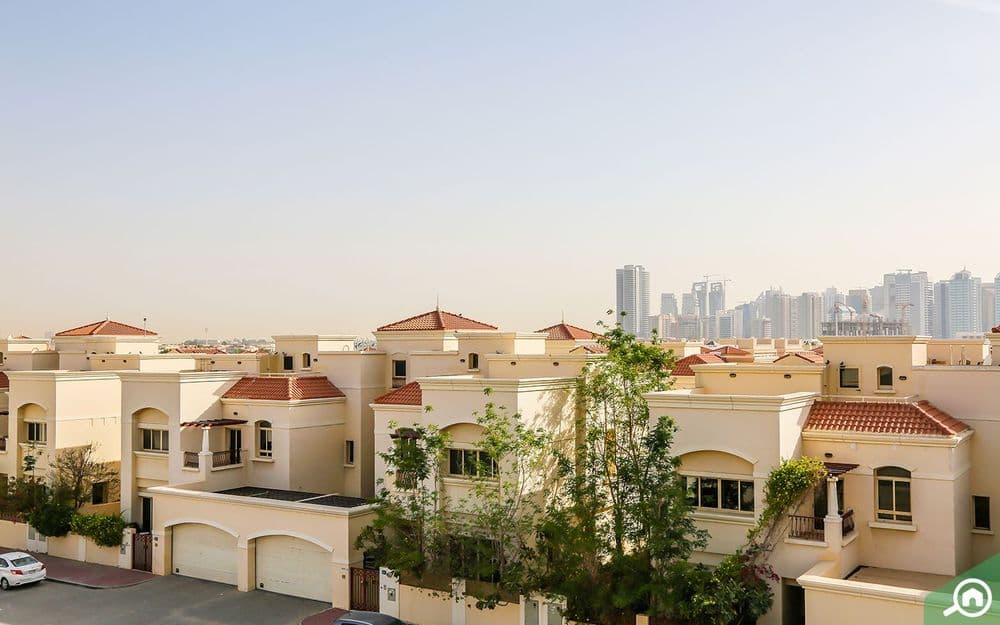
Near Emirates Living sits on the western edge of Dubai's most established villa belt — close enough to The Springs, The Meadows, and Emirates Hills to share their green, low-rise character, but with a fresher supply pipeline that still offers genuine upside. This is a neighbourhood for buyers who want the calm of a mature community without paying the full Emirates Hills premium. Our view: it's one of the better-value pockets in this corridor right now, and the arrival of considered projects like The Banyan Tree Residences signals that developers are paying attention.
Market overview
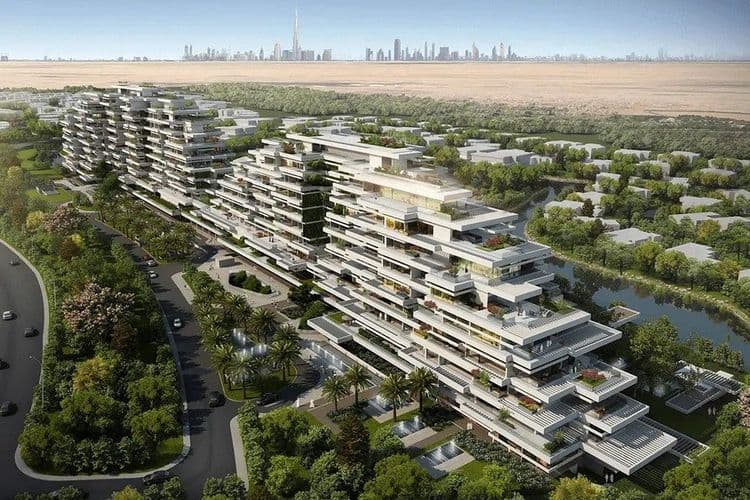
Our catalogue currently lists one active project in this pocket: The Banyan Tree Residences by Sweid & Sweid. That's a deliberately thin pipeline — and in this part of Dubai, thin supply is a feature, not a flaw. The Emirates Living corridor has never been a high-volume, high-churn market. It moves slowly, holds value, and rewards patience.
Sweid & Sweid are worth naming here because they're not a volume developer. Their projects tend to be smaller, specification-led, and targeted at an end-user who knows what they want. That profile fits the Near Emirates Living buyer almost exactly.
On pricing, this corridor sits in a clear band. Established villa communities nearby — The Springs, The Meadows — trade in a range that reflects both land scarcity and the quality of the master-plan. Apartments and townhouses in adjacent newer pockets typically come in somewhere between AED 1,400 and AED 1,900 per sqft depending on finish level, floor, and view. Premium branded or boutique product — which The Banyan Tree Residences qualifies as — can push above that ceiling, particularly for larger units.
In our experience, buyers who come to this corridor are rarely impulse purchasers. They've usually already lived in JLT, Dubai Marina, or JVC, they've done the commute maths, and they've decided they want more space and less noise. That's a sticky buyer profile — it translates into low resale churn and relatively stable secondary-market pricing even when the broader Dubai market softens.
One honest caveat: because transaction volumes here are lower than in, say, Business Bay or JVC, price discovery can be slower. You won't find 50 comparable listings to benchmark against. That cuts both ways — it can make negotiation harder, but it also means the market doesn't reprice downward quickly when sentiment dips.
The single-project pipeline we're tracking isn't a sign of stagnation. It reflects the limited land available and the deliberate pace at which this sub-market develops. For investors, that scarcity dynamic is worth taking seriously.
Living in Near Emirates Living
The honest description of this area is quiet, green, and genuinely residential. There are no mega-malls on the doorstep, no hotel-bar strips, no constant construction noise from a dozen simultaneous towers. That's the point.
Our buyers here skew heavily towards families — typically couples with one or two children, often relocating from a busier Dubai neighbourhood after deciding the trade-off between convenience and calm has shifted. We also see a meaningful share of long-term Dubai residents who've simply decided they want a garden, a car park that isn't a multi-storey, and neighbours who aren't rotating on short-term leases.
Singles and young professionals do buy here, but they're the minority. If you're optimising for nightlife proximity or walking to a co-working space, this isn't your neighbourhood.
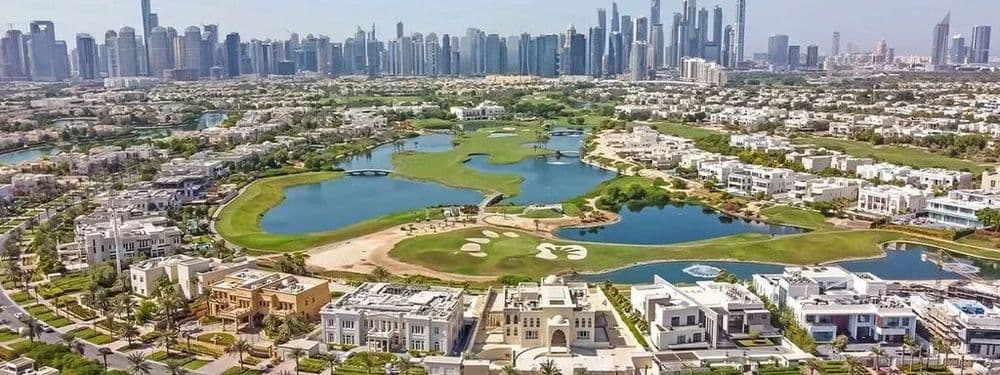
The green infrastructure is the area's strongest lifestyle card. The Emirates Living corridor is one of the few parts of Dubai where you can walk or cycle for 20-30 minutes without feeling like you're navigating a construction site or a six-lane road. The lakes, parks, and tree-lined streets that define The Meadows and The Springs extend their character into adjacent pockets.
Dining is low-key rather than destination-level. The Montgomerie golf club and a handful of community retail strips provide day-to-day options. For a proper restaurant evening, most residents drive 10-15 minutes to Dubai Marina or JLT — that's a reasonable trade-off, not a hardship.
Walkability is moderate by Dubai standards, which means it's genuinely walkable within the community but car-dependent for anything outside it. School runs are manageable — several well-regarded schools sit within a 5-10 minute drive, which matters enormously to the family buyers who dominate this market.
Schools, healthcare & retail
Schools within reach:
- Dubai British School (Emirates Hills) — one of the most established British-curriculum schools in this corridor
- Regent International School — popular with families in The Greens and Emirates Living
- Dubai International Academy — IB curriculum, well-regarded in the area
- Raffles World Academy — a short drive along Hessa Street
Healthcare:
- Mediclinic Meadows — the go-to community clinic for most Emirates Living residents
- Saudi German Hospital (Al Barsha) — larger facility within 15 minutes
- Several general practice and specialist clinics along the Barsha / Greens retail strip
Retail & daily needs:
- The Greens community retail — supermarkets, pharmacies, cafés within a short drive
- Mall of the Emirates — approximately 15 minutes, covering all major retail and leisure needs
- Ibn Battuta Mall — 15-20 minutes, useful for larger shopping runs
- Local community retail strips within The Springs and The Meadows for day-to-day errands
Leisure:
- Emirates Golf Club and The Montgomerie — both within the immediate vicinity
- Community parks and lake-walk circuits throughout the Emirates Living master-plan
- Jebel Ali Racecourse area for open-space recreation
Getting around
Connectivity here is solid rather than spectacular. The area sits close to Sheikh Zayed Road (E11) and Al Khail Road (E44), which are the two main arteries running through this part of Dubai. In practice, that means:
- Burj Khalifa / Downtown Dubai: roughly 25-30 minutes in normal traffic, longer during the morning peak on Sheikh Zayed Road.
- DIFC: similar — 25-30 minutes, with the same caveat about peak-hour congestion on the E11.
- Dubai Marina: 15-20 minutes. This is the genuinely easy commute from this corridor.
- Dubai International Airport (DXB): 35-40 minutes, using Al Khail Road to avoid the worst of the city-centre traffic.
- Al Maktoum International (DWC): 25-30 minutes, which is one of the better DWC access points in Dubai.
There is no metro station within walking distance — this is car country. The nearest metro access is at Nakheel Harbour & Tower (formerly Ibn Battuta) or along the Red Line corridor, both requiring a drive. For buyers who rely on public transport, that's a genuine limitation and we won't dress it up otherwise.
School-run logistics are one of the area's practical strengths. The cluster of schools along Hessa Street and in the Emirates Hills / Barsha corridor means most families can complete the morning drop-off in under 10 minutes without touching a major highway.
Investment outlook
The Near Emirates Living corridor doesn't generate the headline rental yields you'll find in JVC or International City. That's not a criticism — it reflects the asset class. This is a low-churn, capital-appreciation market rather than a high-yield, high-turnover one.
For apartments and townhouses in this pocket, gross rental yields typically sit in the 5-6% range. Branded or boutique product — which The Banyan Tree Residences represents — may come in slightly below that on yield but tends to hold resale value more reliably, particularly in a market correction. The trade-off is deliberate: you're buying scarcity and specification, not yield maximisation.
Capital appreciation in the Emirates Living corridor has historically been steady rather than explosive. The area didn't spike as aggressively as Downtown or Palm Jumeirah during the 2021-2023 run-up, but it also didn't correct as sharply. That pattern suits investors with a 5-7 year horizon who want a store of value rather than a short-term flip.
Resale liquidity is the one area where buyers should go in clear-eyed. With a smaller pool of comparable transactions, selling can take longer than in higher-volume communities. Pricing needs to be sharp; overpriced listings sit. In our experience, well-priced units in this corridor do find buyers — they just take 60-90 days rather than 30.
The single active project in our catalogue — The Banyan Tree Residences — is the kind of product that tends to attract end-users over pure investors, which historically supports secondary-market pricing. When end-users dominate a building, distressed resales are rarer.
Our editorial line: bullish, with patience required. The scarcity of new supply, the quality of the one project we're tracking, and the corridor's proven ability to hold value through market cycles make this a sound medium-term bet — just don't expect a quick flip.
Frequently asked questions about Near Emirates Living
Who are the main developers active near Emirates Living right now?
Emaar built the original Emirates Living master plan and still dominates resale stock here. On the new-development side, Sweid & Sweid is the standout active developer in our current catalogue, with The Banyan Tree Residences being their flagship project in this pocket. They have a track record of boutique, design-led buildings, which appeals to buyers who want something more curated than a large-scale community launch.
What rental yields can I expect near Emirates Living?
Gross rental yields in Emirates Living typically run between 4.5% and 6%, with smaller units and townhouses at the higher end. Family demand is strong year-round because of the proximity to good schools and parks, which keeps void periods short — our landlord clients here rarely sit empty for more than two to three weeks between tenancies. Branded residences can push yields slightly higher on short-term or furnished leases.
What is the commute like from Emirates Living to DIFC, Marina, and Dubai Airport?
Emirates Living sits just off Sheikh Zayed Road, so commutes are straightforward by Dubai standards. Dubai Marina is roughly 10–15 minutes by car, DIFC is around 20–25 minutes outside peak hours, and Dubai International Airport is 30–40 minutes depending on traffic. There is no direct Metro access within the community itself, so most residents drive or use ride-hailing apps — something our buyers factor into their decision when comparing this area to more transit-connected neighbourhoods.
What schools and family amenities are near Emirates Living?
This is one of the strongest family areas in Dubai. Dubai British School, Emirates International School, and Regent International School are all within a 5–10 minute drive. Spinneys and Waitrose cover daily groceries, and the Emirates Golf Club and The Els Club are practically on the doorstep for weekend leisure. In our experience, families rarely feel the need to leave the area for day-to-day life, which is a big part of why retention rates among residents are so high.
What makes The Banyan Tree Residences by Sweid & Sweid stand out in this area?
The Banyan Tree Residences is one of the very few branded residential projects in the Emirates Living vicinity, which immediately differentiates it from the surrounding Emaar resale stock. Sweid & Sweid are known for low unit counts and high specification finishes, meaning owners get a quieter, more private building rather than a large complex. The Banyan Tree hospitality brand also opens the door to managed rental programmes — a genuine draw for investors who want hands-off income.
Get the Near Emirates Living market brief
Live listings, off-plan launches, recent transactions and rental yields — direct from our advisors. No inflated commissions, no spam. One business-day reply.