Zayed City
Dubai community · 0 off-plan projects
About Zayed City
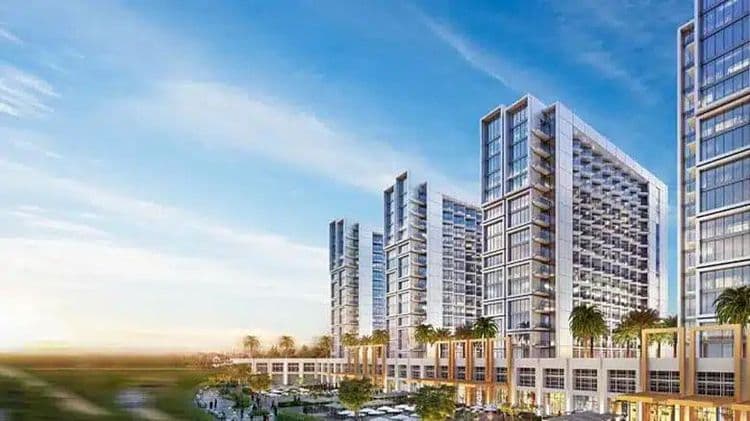
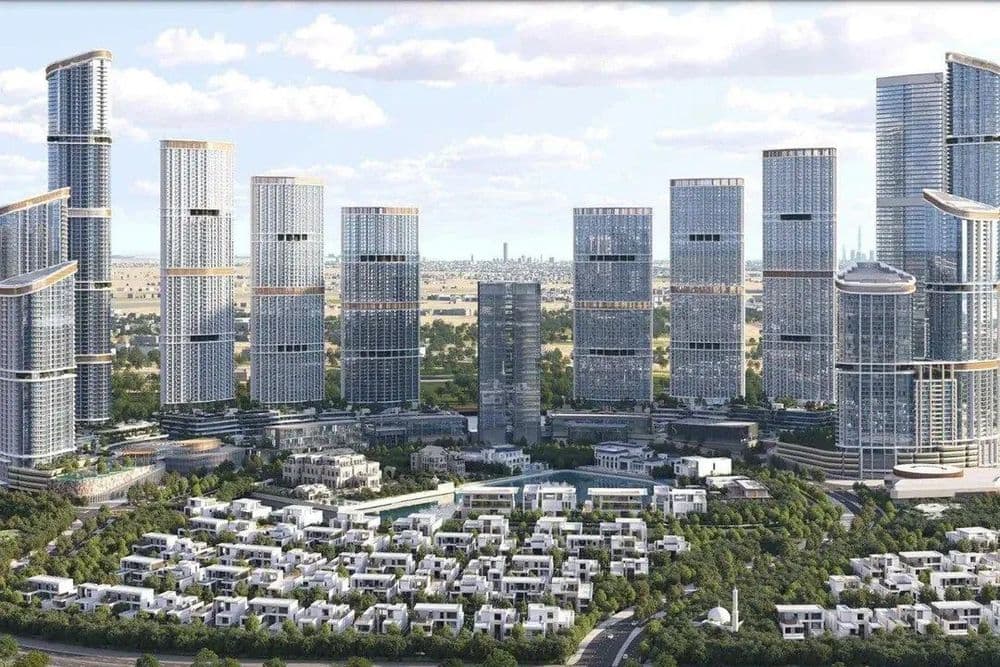
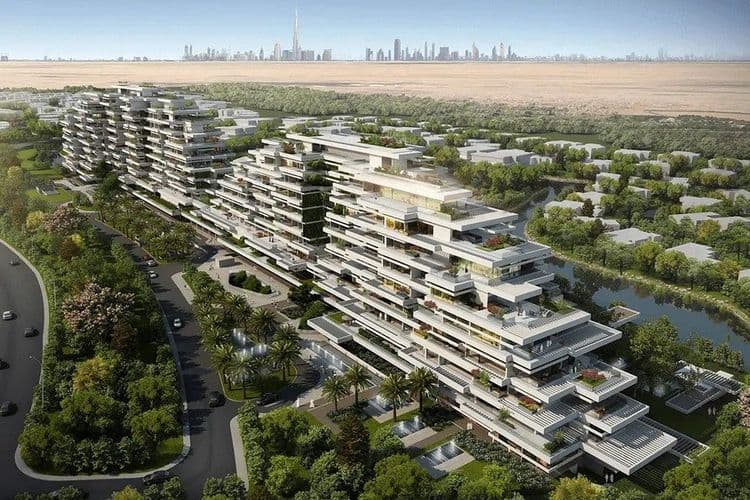
Zayed City is Abu Dhabi's most ambitious planned expansion — a large-scale master-planned district taking shape between the capital's urban core and the emirate's inland growth corridor. It's built for families who want space, greenery, and a long-term community rather than a transient address. Our honest take: this is one of the most coherently planned districts in the UAE right now, and buyers who move early will almost certainly look back on it as the right call. The Bloom Living collection — four distinct phases anchored here — gives you a rare chance to buy into a genuine neighbourhood before the infrastructure catches up with the vision.
Market overview
Zayed City currently carries four active projects in our catalogue, all developed by Bloom Holding under the Bloom Living umbrella: Cordoba, Granada, Seville, and Toledo. That's a single-developer master-plan, which matters more than people realise. When one developer controls the entire supply pipeline, you get consistent build quality, coordinated landscaping, and a community management structure that doesn't fracture into competing HOAs. We've seen fragmented master-plans in Dubai and Abu Dhabi age badly. Zayed City, at least within the Bloom Living footprint, doesn't have that problem.
On pricing, Zayed City sits in Abu Dhabi's mid-to-upper mid-market band. Townhouses and villas in planned communities of this type have historically traded in the AED 900–1,400 per sqft range depending on unit size, finish tier, and phase. Earlier phases — Cordoba and Granada — tend to carry a slight premium on the secondary market simply because they're closer to handover. Toledo, being the newest phase, offers the most competitive entry point off-plan.
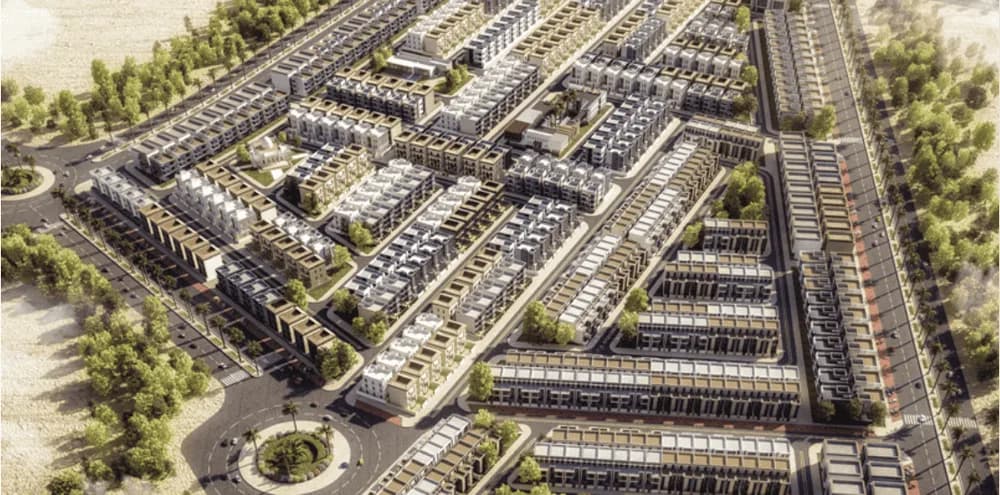
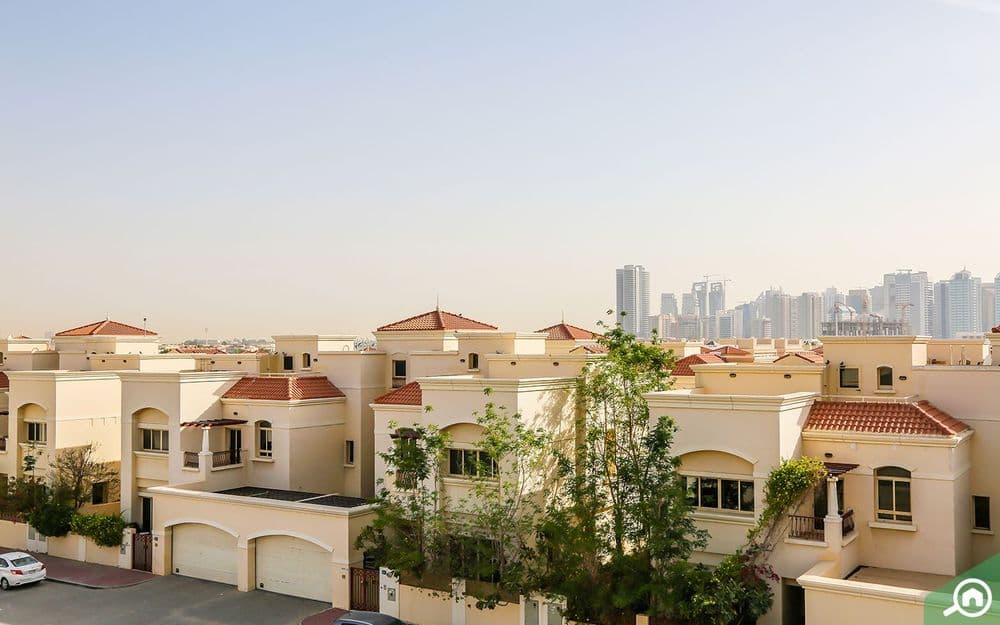
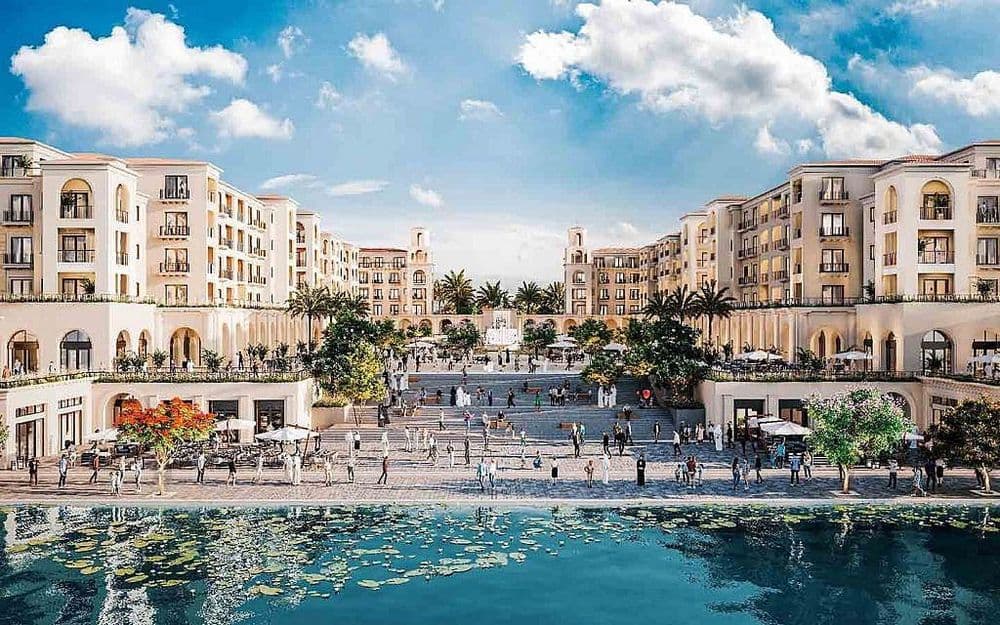
The Spanish-themed naming across all four projects (Cordoba, Granada, Seville, Toledo) signals a deliberate Mediterranean aesthetic — terracotta tones, courtyard-influenced layouts, and pedestrian-friendly streetscapes. That's not just branding; it shapes the actual built environment and tends to attract a specific buyer profile who values architectural coherence over variety.
In our experience, single-developer master-plans in Abu Dhabi's growth corridors have outperformed fragmented communities on capital appreciation over five-year horizons. The reason is simple: the developer has a financial incentive to maintain and improve the community long after handover, because unsold phases depend on the reputation of completed ones. Bloom Holding has a track record in Abu Dhabi that supports this thesis.
Supply is controlled but not scarce. Four phases across one master-plan means there's genuine choice — villa sizes, plot orientations, proximity to community facilities — without the oversupply risk you'd see in a district with a dozen competing developers all launching simultaneously.
Living in Zayed City
This is unambiguously a family district. Not family-friendly in the vague, catch-all sense that every developer uses — genuinely family-oriented in its layout, density, and the type of buyer it attracts. Our buyers here are typically couples with young children, or families relocating from Abu Dhabi's older villa communities who want more space and a newer build without leaving the emirate.
The Bloom Living master-plan is built around low-rise residential clusters, internal parks, and pedestrian pathways that actually connect to something. That last point is rarer than it should be. Too many Abu Dhabi communities have beautiful walking paths that lead to a perimeter wall. Here, the internal circulation is designed to keep residents within the community for daily errands and leisure — schools, retail, and recreational facilities are planned as part of the same master-plan rather than bolted on later.
The Mediterranean design language gives the streetscape a warmth that a lot of UAE communities lack. Shaded walkways, courtyards, and human-scale building heights make a real difference to how a neighbourhood feels at 7pm on a weekday. Singles and young professionals will find it quiet — perhaps too quiet. There's no nightlife, no dense F&B strip, no co-working buzz. That's a feature for the target demographic, not a flaw.
Zayed City sits inland, away from the coastal density of Yas Island or Saadiyat. The trade-off is space: plots are generous, roads are wide, and the sense of openness is genuine. Families coming from Dubai's more compressed communities often find it a significant quality-of-life upgrade. We'd describe the vibe as calm, considered, and built for the long haul rather than the short let.
Schools, healthcare & retail
Education
- The Bloom Living master-plan includes provision for on-site or adjacent educational facilities as part of the community design
- Khalifa City and Mohammed Bin Zayed City — both within a 15–20 minute drive — carry a range of established international curriculum schools
- Abu Dhabi's broader school network (British, American, IB curricula) is accessible from Zayed City without crossing the city centre
Healthcare
- Abu Dhabi's main hospital network, including Cleveland Clinic Abu Dhabi and Sheikh Khalifa Medical City, is accessible within 30–40 minutes
- Community-level clinics and pharmacies are expected within the Bloom Living master-plan as phases mature
- The airport corridor location means proximity to several private medical facilities serving the Khalifa City catchment
Retail & daily needs
- Community retail is planned within the Bloom Living development; current residents in early phases use Khalifa City and MBZ City retail corridors for major shopping
- Abu Dhabi's large-format retail (Yas Mall, Al Wahda Mall) is within a 20–30 minute drive
- The inland location means you're not paying a coastal premium for groceries or dining — a practical advantage that our buyers consistently mention
Getting around
Zayed City's location in Abu Dhabi's inland expansion zone means connectivity is improving but not yet complete. The honest position: it's paper-strong right now, with genuine convenience coming as the surrounding infrastructure matures.
By car, Abu Dhabi city centre is approximately 25–35 minutes depending on traffic and your specific entry point. Dubai is roughly 90–100 minutes via the E11 or E311 — manageable for occasional trips, not for a daily commute. Abu Dhabi International Airport sits around 20–25 minutes away, which is a genuine advantage for frequent travellers.
The district connects to Abu Dhabi's main arterial road network, giving relatively straightforward access to Khalifa City, Mohammed Bin Zayed City, and the airport corridor. Sheikh Zayed Road links are accessible without navigating the capital's more congested inner-city routes.
Public transport options are limited at this stage — this is a car-dependent community, and buyers should plan accordingly. Abu Dhabi's metro expansion plans include future coverage of growth corridors like Zayed City, but timelines remain subject to change and we wouldn't factor metro access into a near-term purchase decision.
School-run logistics are manageable given the planned inclusion of educational facilities within or adjacent to the Bloom Living master-plan. For families with children in established schools elsewhere in Abu Dhabi, the morning drive is worth mapping before you commit.
Investment outlook
Zayed City sits in a sweet spot that mid-market Abu Dhabi investors should pay attention to. The emirate's rental market has tightened considerably over the past two years, driven by population growth, government employment expansion, and a shortage of quality family housing in well-managed communities. Zayed City addresses all three of those demand drivers directly.
Gross rental yields for villa and townhouse communities in Abu Dhabi's planned districts have generally tracked in the 6–8% range, with newer, well-managed communities at the upper end of that band. Zayed City, once phases reach handover and the community population reaches critical mass, should sit comfortably in that range. The single-developer structure helps here — consistent community management keeps vacancy rates lower and tenant retention higher than in fragmented developments.
Capital appreciation is the more interesting story. Planned master-communities in Abu Dhabi have historically shown a clear appreciation curve: flat to modest in the off-plan and early construction phase, then a step-change as handover approaches and the community becomes tangible. Buyers in Cordoba and Granada — the earlier phases — are already past the flattest part of that curve. Toledo buyers are entering at the point where the surrounding community is visible and the risk profile is lower than a blank-site launch.
Resale liquidity in Zayed City will depend on how quickly the broader district infrastructure (retail, schools, transport links) comes online. That's the main risk to flag honestly. A community that's beautiful but isolated takes longer to build a secondary market. We're watching that closely.
Our editorial line: bullish, with a medium-term horizon of five-plus years. The fundamentals — controlled supply, credible developer, genuine family demand, and Abu Dhabi's sustained population growth — are all pointing in the same direction.
Frequently asked questions about Zayed City
Is Zayed City a good investment in 2025–2026?
We think so, yes. Zayed City sits along the Abu Dhabi–Dubai corridor and is earmarked as one of Abu Dhabi's major growth zones under the 2030 Urban Master Plan. Our buyers are getting in early — off-plan prices are still well below what comparable master-planned communities command closer to Abu Dhabi's centre. With infrastructure spending accelerating and population targets set for the area, we expect capital appreciation to be meaningful over a 3–5 year hold.
What is the typical price per sqft in Zayed City right now?
Across the four projects we currently carry — all by Bloom Holding — prices are running roughly AED 900–1,150 per sqft depending on unit type and phase. Townhouses and villas in Bloom Living Cordoba, Granada, and Seville sit at the lower end of that range on a per-sqft basis, while the Toledo collection edges higher. Prices have moved up around 8–10% since the first launches, so earlier phases remain the better entry point.
Who are the main developers building in Zayed City?
Right now, Bloom Holding dominates our Zayed City catalogue with four active projects: Bloom Living Cordoba, Bloom Living Granada, Bloom Living Seville, and Toledo. Bloom is an Abu Dhabi–based developer with a solid delivery track record, which matters a lot to our buyers who are cautious about off-plan risk. We expect other developers to announce plots as infrastructure milestones are hit, but Bloom has the clearest head-start on the ground today.
What rental yields can I expect in Zayed City?
Because most projects are still under construction, live rental data is limited — but we benchmark against comparable Abu Dhabi villa communities where gross yields typically land between 5.5% and 7%. Zayed City's lower entry price point compared to Saadiyat or Yas Island means the yield math can work well, especially for 3–4 bedroom townhouses. We always recommend stress-testing at 80% occupancy before committing, and we're happy to model that for any unit you're considering.
How long is the commute from Zayed City to Abu Dhabi city centre and Dubai?
Zayed City sits on the E10 (Sheikh Maktoum Bin Rashid Road), putting Abu Dhabi city centre roughly 25–35 minutes away in normal traffic. Dubai Marina and JLT are around 60–75 minutes, and Al Maktoum International Airport is approximately 40 minutes. It's a realistic base for professionals who split time between both emirates, and the planned Etihad Rail corridor could cut those times further once operational. We'd call it a commuter-friendly location, not a commuter-punishing one.
What schools and everyday amenities are available near Zayed City?
The area is still maturing, so honesty matters here: most established schools are currently a 15–20 minute drive away, with options like Aldar Academies schools in Khalifa City and GEMS schools along the corridor. Within the Bloom Living master plan itself, a retail spine, community pools, and parks are part of the phased delivery. Our buyers with school-age children typically factor in a car-dependent school run for the first few years, which is worth planning for.
What makes the Bloom Living communities in Zayed City different from each other?
All three Bloom Living phases — Cordoba, Granada, and Seville — share the same Spanish-inspired architectural language and master-plan amenities, but they differ in unit mix, plot sizes, and release pricing. Cordoba was the first phase and is most advanced in construction. Granada introduced larger villa plots. Seville brought in more townhouse options at a slightly sharper price point. Toledo sits apart as a more premium, limited-collection offering. We walk every buyer through a side-by-side comparison before recommending which phase fits their budget and timeline.
Get the Zayed City market brief
Live listings, off-plan launches, recent transactions and rental yields — direct from our advisors. No inflated commissions, no spam. One business-day reply.