

Al Maktoum Airport expansion: south Dubai's next property hotspot
A $35 billion airport overhaul is redirecting Dubai's growth axis southward. Here's why investors should be paying attention before prices reflect the infrastructure.
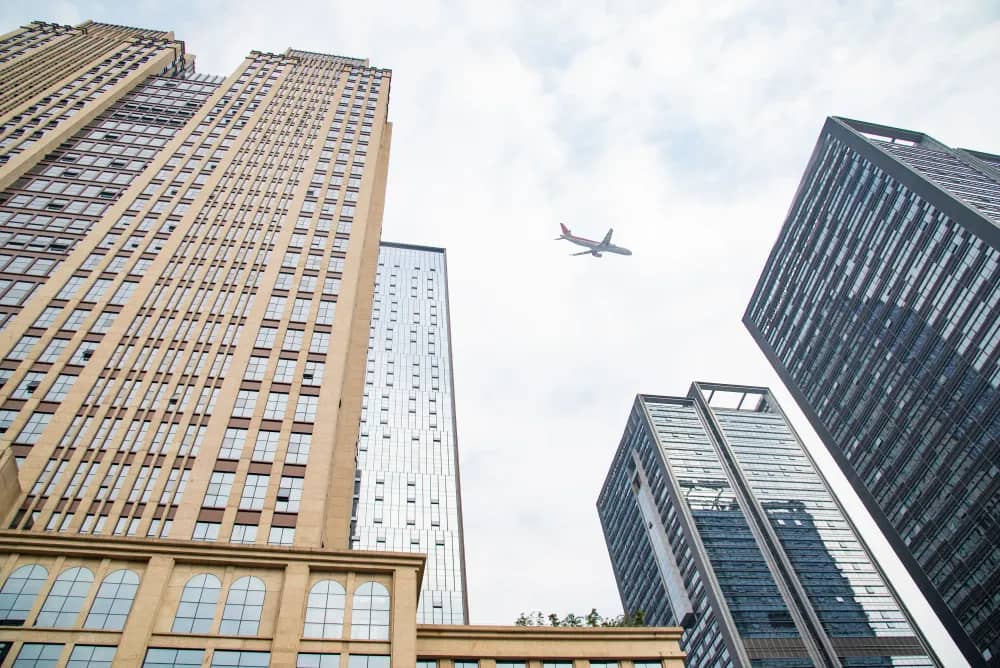
Why a $35 billion airport changes the property equation
Infrastructure at this scale does not just move passengers. It moves capital, employment, and eventually, residential demand. The expansion of Al Maktoum International Airport, carrying a price tag of approximately $35 billion, is the largest single aviation infrastructure commitment in the region's history. When complete, the facility is designed to handle up to 260 million passengers annually, which would make it the world's highest-capacity airport by a significant margin.
For buyers focused on the Dubai property market, the relevant question is not whether this project matters. It is whether prices in the surrounding southern corridors already reflect what is coming. Right now, they largely do not. That gap is where the investment case lives.
Which communities sit inside the growth corridor
The airport sits within Dubai South, a purpose-built district that already hosts the Expo City precinct and a growing logistics ecosystem. Directly north and northeast, the southern residential belt runs through communities that offer significantly lower entry prices than the established postcode favourites. Al Furjan is the clearest example. Average apartment prices there currently sit in the AED 900 per square foot range, compared to north of AED 2,500 in Downtown Dubai or Dubai Marina. That is not a like-for-like comparison on product quality, but it illustrates the pricing gap that infrastructure investment tends to compress over time.
DAMAC Hills and the broader Dubailand axis also fall within a reasonable distance of the expansion zone. These are established communities with operational schools, retail, and leisure, which matters when evaluating liveability rather than speculative land plays. The distinction is important: buyers looking for rental yield over the next three to five years need communities where tenants already want to live, not just areas where developers are drawing masterplans.
The off-plan pipeline in south Dubai is accelerating
Developer activity is a reliable leading indicator of where institutional confidence is pointing. The volume of off-plan launches across the Dubai South and Al Furjan corridors has increased materially over the past 18 months. Nakheel and Dubai Properties both have active project pipelines in the area, and international developers have been acquiring land plots in Dubai South at a pace not seen since the pre-2008 cycle, though the financing structures are considerably more disciplined this time.
For buyers considering off-plan in this corridor, payment plans extending to handover and beyond have become standard. That changes the capital efficiency of the investment meaningfully: a 1,200 sq ft apartment priced at AED 1.1 million with a 60/40 construction-to-handover split requires roughly AED 660,000 deployed before keys are handed over. Compared to ready stock in core locations where full purchase price plus 4% DLD fee lands on day one, the capital commitment curve is structurally different. Review the full process in our guide to buying property in Dubai before committing to either route.
Golden visa eligibility adds a long-term incentive layer
Investors purchasing property at AED 2 million or above qualify for the UAE 10-year golden visa. This threshold is increasingly achievable in the south Dubai corridor, particularly for buyers combining two units or acquiring larger villa plots in communities like Al Furjan. The visa pathway matters because it changes the nature of demand: buyers who hold long-term residency have no incentive to exit at the first sign of a market softening. That structural stickiness in the investor base tends to dampen volatility in ways that purely transactional markets do not.
For non-resident investors considering Dubai real estate as a portfolio allocation, the golden visa removes one of the key objections to deploying significant capital in a market where they have no operational presence. The combination of long-term residency rights, zero income tax, and capital gains tax exemption remains a genuinely differentiated offer within global real estate investment.
What the timing actually looks like for buyers
The airport expansion is a phased project. Initial capacity upgrades are expected to come online within the next four to five years, with full build-out extending well beyond 2030. That timeline is relevant because it means the price catalyst will not materialise overnight. Buyers entering now are positioning ahead of the operational reality, not in response to it. Historically in Dubai, infrastructure-adjacent communities see their sharpest appreciation in the 18 to 36 months before a major facility becomes operational, as the media coverage intensifies and the physical construction becomes visible to the public.
That window has not yet opened in a material way for this corridor. Buyers who entered Dubai Creek Harbour in 2018 to 2019, ahead of its operational buildout, saw significantly different outcomes than those who waited for the tower cranes to leave. The dynamic is not identical, but the principle holds: infrastructure pricing tends to front-run the infrastructure itself. The question is by how many months, not whether.
How to assess south Dubai deals without overpaying early
The risk in pre-infrastructure investing is straightforward: project delays extend the timeline, and buyers who stretch financially for a three-year hold may find themselves holding through a five or six year cycle. Stress-testing for this scenario is not pessimism; it is basic underwriting discipline. For ready stock, run the rental yield first. If a unit in Al Furjan nets 6% to 7% annually at current asking rents, you are being paid to wait for the capital appreciation thesis to materialise. If the yield drops below 5% net after service charges, the deal relies more heavily on price appreciation, which increases risk.
Use our service charge calculator to model the holding cost before negotiating. Service charges in newer master communities in this corridor typically run between AED 10 and AED 18 per square foot annually depending on the development and facilities. For a 1,000 sq ft unit, that is AED 10,000 to AED 18,000 per year in fixed cost regardless of occupancy. That number needs to be in the return model from the start, not discovered post-purchase.
Frequently asked questions
How does the Al Maktoum Airport expansion affect nearby property prices?
Large-scale infrastructure creates employment hubs, logistics demand, and residential catchment areas around them. Communities within 15 to 20 minutes of the expanded airport, including those in the Dubai South and Al Furjan corridor, are expected to see increased demand from workers and businesses relocating to the area. Price appreciation in these zones has historically tracked the pace of infrastructure delivery and occupancy growth.
Is Al Furjan a good investment choice in 2024 and 2025?
Al Furjan offers entry-level pricing relative to established communities, operational amenities, and metro connectivity via the Route 2020 extension. Gross rental yields in the area have been recorded between 7% and 8% for apartments, which is competitive within the Dubai property market. Proximity to the Dubai South growth corridor adds a medium-term capital appreciation thesis on top of current yield performance.
What is the minimum property price required to qualify for the UAE Golden Visa?
A minimum property value of AED 2 million is required to qualify for the UAE 10-year Golden Visa through real estate ownership. The property must be fully paid or financed through approved UAE banks, and off-plan properties must meet specific completion thresholds set by the relevant emirate authority.
Are off-plan properties near Dubai South a safe investment?
Off-plan investments carry project delivery risk regardless of location. In Dubai, RERA escrow regulations require developers to deposit buyer funds into ring-fenced accounts, which provides meaningful protection against developer insolvency. Buyers should verify the developer's track record of delivery, the project's escrow account registration, and their own capacity to hold through potential delays before committing.
How long will the Al Maktoum Airport expansion take to complete?
The full expansion is a multi-phase project expected to extend beyond 2030. Early phases targeting initial capacity increases are projected to come online within four to five years. Investors should factor this timeline into their hold period assumptions, as the strongest price catalysts typically emerge in the period immediately before major facilities become operational.
More Investment posts
 Investment
Villa renovation vs buying new in Dubai: which pays off?
Some Dubai villa owners are spending up to $5.4m on renovations. We break down whether upgrading delivers better ROI than buying off-plan or resale.
By Roy El Baba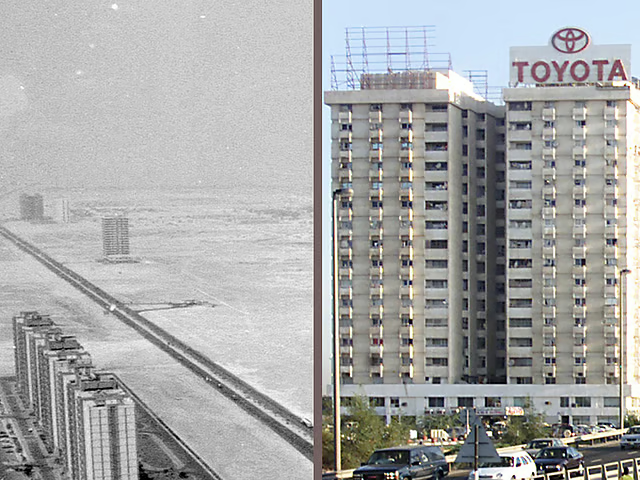 Investment
Sheikh Zayed Road redevelopment: what it means for investors
The Toyota Building's demolition signals a broader redevelopment wave on Sheikh Zayed Road. Here is what plot clearances along prime corridors mean for land values and off-plan launches.
By Roy El Baba Investment
Why Indian investors keep choosing Dubai real estate
Indian nationals are Dubai's largest foreign buyer group. Here's what drives that demand and how NRIs can buy freehold property step by step.
By Roy El Baba Investment
ELLE residences on Dubai Islands: what branded living costs you
ELLE's entry into Dubai real estate signals how fashion brands are reshaping the branded residence market. Here's what the premium actually buys you.
By Roy El Baba