

Dubai vs Abu Dhabi: Why location drives property returns
Abu Dhabi's 40% gains and 22% declines in the same market cycle prove one rule: location selection beats every other investment variable.
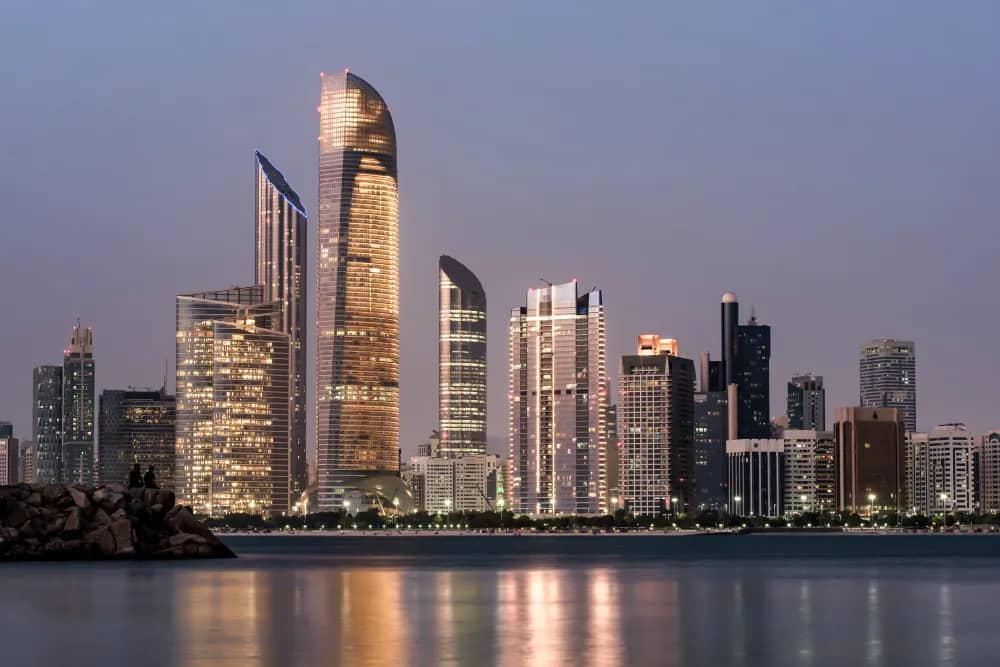
Abu Dhabi's price split is a warning for every UAE buyer
Recent Knight Frank data on abu dhabi property prices revealed something every property investor in the UAE should read carefully. Within a single market cycle, certain Abu Dhabi apartment submarkets posted gains close to 40 percent while specific villa communities shed as much as 22 percent of their value. Same city, same period, opposite outcomes. The single variable separating winners from losers was not timing, leverage, or developer brand. It was location selection.
This is not an Abu Dhabi-specific phenomenon. The dubai property market shows an almost identical pattern when you break performance down to the community level. Aggregated city-wide price indices are useful for headlines, but they are actively misleading for investment decisions. A buyer who relied on a 'Dubai is up 15 percent' figure in 2022 and bought in the wrong submarket still lost ground in real terms. The data demands a more granular read.
How Dubai communities diverge on price performance
Look at the distance between Dubai's top and bottom performers over the past three years and the spread is dramatic. Waterfront and branded-residence product in Palm Jumeirah and Dubai Marina has held strong rental yields and capital appreciation simultaneously, driven by constrained supply on the waterfront and sustained demand from high-net-worth relocators. Meanwhile, certain mid-market villa clusters in established communities have seen flat or negative real returns once you account for service charges and inflation.
Dubai Hills Estate sits in an interesting middle position. Villa prices there have been supported by school infrastructure, the mall catchment, and a relatively low villa-to-land-area ratio that keeps density manageable. Apartment performance within the same master plan has been more variable, with secondary units trading at discounts to original off-plan prices in some pockets. That divergence within a single master community illustrates precisely why submarket analysis matters more than city-level averages.
Jumeirah Village Circle is the clearest example of the mid-market dynamic. Entry prices are low, gross yields have improved as rents normalised upward, but capital appreciation remains modest compared to beach-adjacent or Downtown-adjacent stock. Buyers who understood that going in and priced for yield rather than appreciation have done well. Those expecting both have been disappointed.
The three factors that separate outperforming communities
Across Dubai's residential landscape, three structural factors consistently separate communities that appreciate from those that stagnate. First is supply discipline: areas where new completions are restricted by geography or master-plan design tend to hold value better. Downtown Dubai is bounded by Sheikh Zayed Road, the canal, and existing towers. New supply is limited. Compare that to a greenfield community where a developer can add phases indefinitely, and the pricing dynamic is entirely different.
Second is infrastructure maturity. Communities with operational schools, retail, healthcare, and transit links sustain demand more reliably than those still waiting on promised amenities. Dubai Creek Harbour is a current example worth watching: prices have risen sharply off the back of infrastructure delivery expectations, and the trajectory of that delivery will determine whether current pricing holds. Third is tenant profile. Communities where tenants are typically longer-term residents rather than transient workers show lower vacancy rates and support rental yield stability, which in turn underpins capital values.
Understanding these factors before committing capital is the practical value of community-level analysis. Our guide on how to buy property in Dubai covers the full due diligence framework, including how to assess infrastructure timelines and supply pipeline data from DLD records.
Villas versus apartments: Divergent cycles within Dubai
Abu Dhabi's villa and apartment segments moved in opposite directions during the same period, and Dubai has shown comparable divergence. The 2021-2023 villa boom in Dubai was driven by pandemic-era demand for space and private outdoor areas. Communities like Arabian Ranches and DAMAC Hills benefited from that structural shift. Entry-level villa prices in some of these communities moved up 30 to 50 percent from trough to peak.
The apartment market told a different story in the same window. High-rise stock in Jumeirah Lake Towers (JLT) and Business Bay recovered strongly on a yield basis as rents corrected upward, but capital values have been more measured. The off-plan segment introduced significant future supply in both areas, which buyers need to factor into exit assumptions. Investors targeting Dubai off-plan projects should model the completion pipeline in their chosen community before locking in a purchase price.
For 2025, the villa-apartment divergence is narrowing as villa prices in many communities have reached levels that compress yield below the threshold where institutional buyers remain interested. Apartments in well-located, low-supply buildings are looking relatively more attractive on a risk-adjusted basis than they did two years ago.
What Dubai investors should actually measure
Community selection is the headline lesson from Abu Dhabi's split performance data, but the implementation requires specific metrics. Net yield, not gross yield, is the number that matters. Factor in service charges using actual figures from the relevant owners association, not developer estimates. Our service charge calculator provides real data by community and can shift your net yield calculation by 1 to 2 percentage points depending on the building.
Price per square foot trends at the community level, not city level, should anchor your valuation. DLD transaction data is publicly available and granular enough to show you the last 20 comparable sales in any building. If you are comparing two communities and one has seen consistent price-per-square-foot growth over eight consecutive quarters while the other has been flat or declining, that trend line matters more than any analyst forecast.
Finally, consider exit liquidity. A community where there are 50 to 100 comparable transactions per quarter is far easier to exit than one with 10. Palm Jumeirah, Dubai Marina, and Downtown Dubai all offer that depth of liquidity. Emerging communities may offer better entry pricing but require a longer hold horizon and carry more exit risk. Matching your community selection to your actual investment horizon is as important as getting the price right.
The practical takeaway for Dubai buyers in 2025
Abu Dhabi's 62-percentage-point spread between its best and worst performing areas in a single market cycle is an extreme illustration of a principle that applies universally across UAE real estate: the market is not one market. Dubai's community-by-community performance data makes the same argument with local specifics. City-level optimism or pessimism is irrelevant to your actual return if your submarket moves against the trend.
Before viewing any property, define the community selection criteria that match your investment thesis, whether that is yield maximisation, capital preservation, or long-term appreciation. Then stress-test that community against supply pipeline, infrastructure delivery, and comparable transaction data. If you hold a property worth AED 2 million or more, the UAE Golden Visa through Dubai property pathway adds a residency dimension to the investment case that is worth factoring into your hold-versus-exit decision as well.
The communities that outperform over the next cycle will be those where supply is structurally constrained, where infrastructure is already delivered, and where tenant demand is driven by employment or lifestyle factors that are durable rather than cyclical. Identifying those communities now, before consensus has priced in the premium, is where investor edge lives in the dubai real estate market.
Frequently asked questions
Which Dubai communities have the strongest capital appreciation track record?
Palm Jumeirah, Downtown Dubai, and Dubai Marina have consistently shown the strongest capital appreciation over the past decade, supported by constrained supply, waterfront or landmark positioning, and deep transaction liquidity. Dubai Hills Estate villas have also outperformed on capital growth since 2020, though that gap is narrowing as entry prices have risen sharply.
How do I compare net rental yields across Dubai communities?
Start with gross yield by dividing annual rent by purchase price, then subtract the actual service charge for the specific building or villa type. Service charges in Dubai range from approximately AED 5 per square foot in some mid-market communities to over AED 25 per square foot in premium developments. DLD published service charge rates and owner association data are the most reliable sources.
Why did Abu Dhabi property prices rise in some areas and fall in others at the same time?
Different submarkets within any city respond to different demand drivers. In Abu Dhabi's case, waterfront and lifestyle-oriented communities attracted renewed high-net-worth demand while older villa stock in less connected locations faced softness as tenants and buyers upgraded to newer product. The same dynamic operates in Dubai across its 30-plus distinct residential communities.
Is it better to buy a villa or apartment in Dubai in 2025?
It depends on your investment objective. Villas have outperformed on capital appreciation since 2020, but entry prices in most established communities are now at levels that compress gross yields below 5 percent. Well-located apartments in low-supply buildings are offering comparatively stronger net yields at current pricing, though appreciation potential is more modest. Neither category is categorically better; the specific community and building matter more than the asset class.
How much new supply should I worry about when buying in a Dubai community?
The DLD and Dubai Statistics Center publish quarterly completion data by area. As a general rule, if projected completions over the next two to three years represent more than 15 to 20 percent of existing stock in a community, that pipeline will likely create downward pressure on rents and capital values. Communities with geographic supply constraints, such as islands or built-out master plans, carry lower supply risk by default.
More Investment posts
 Investment
Villa renovation vs buying new in Dubai: which pays off?
Some Dubai villa owners are spending up to $5.4m on renovations. We break down whether upgrading delivers better ROI than buying off-plan or resale.
By Roy El Baba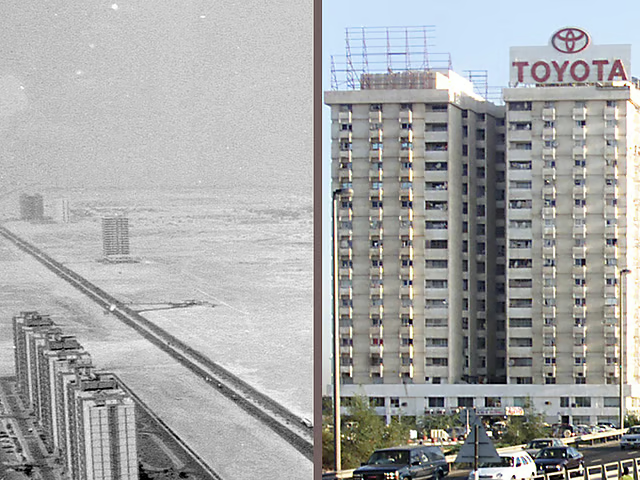 Investment
Sheikh Zayed Road redevelopment: what it means for investors
The Toyota Building's demolition signals a broader redevelopment wave on Sheikh Zayed Road. Here is what plot clearances along prime corridors mean for land values and off-plan launches.
By Roy El Baba Investment
Why Indian investors keep choosing Dubai real estate
Indian nationals are Dubai's largest foreign buyer group. Here's what drives that demand and how NRIs can buy freehold property step by step.
By Roy El Baba Investment
ELLE residences on Dubai Islands: what branded living costs you
ELLE's entry into Dubai real estate signals how fashion brands are reshaping the branded residence market. Here's what the premium actually buys you.
By Roy El Baba