
Dubai property market resilience: what 2025 signals for buyers
Transaction volumes have moderated, but Dubai's residential market fundamentals remain intact. Here's what that means for buyers and investors right now.

What 'quieter' actually means in Dubai real estate
When analysts describe the Dubai property market as 'quieter', they are typically referring to a moderation in transaction velocity, not a reversal of underlying demand. The distinction matters. Dubai residential real estate recorded exceptional volume in 2022 and 2023, driven by post-pandemic relocation demand, the expanded UAE Golden Visa programme, and a wave of off-plan launches that absorbed pent-up liquidity. A normalisation after that run is not a warning signal. It is a market settling into a more sustainable rhythm.
For buyers who sat on the sidelines during the peak, a moderated pace creates breathing room. Developers are more willing to negotiate payment plan terms, competition for specific units is less feverish, and due diligence timelines are easier to manage. If you have been researching how to buy property in Dubai, this is the environment where preparation converts into actual transactions at reasonable terms.
Key demand drivers that have not changed
Several structural factors continue to support Dubai residential real estate regardless of short-term volume shifts. Population growth remains on an upward trajectory, with the Dubai Statistics Centre projecting the emirate's population to approach 5.8 million by 2040. Corporate expansion into the region, particularly across financial services, technology, and logistics, is still generating high-income relocating households who need to buy or rent. That combination of household formation and income profile directly underpins both end-user and investor demand.
Rental yields in established corridors tell the same story. Business Bay and Dubai Marina continue to post gross yields of 6 to 7 percent on mid-tier apartments, figures that most comparable global cities cannot approach. Investors are not ignoring this. A moderated sales pace often reflects careful buyer selection rather than absence of interest.
The UAE's tax environment reinforces the investment case. There is no capital gains tax, no annual property tax, and no income tax on rental revenue. For high-net-worth buyers comparing Dubai against London, Singapore, or Sydney, the net return differential is significant even before factoring in the currency-pegged stability of the dirham.
Off-plan activity: selective, not stalled
Off-plan Dubai registrations softened slightly in early 2025 compared to the record-setting pace of 2023, but the pipeline itself is far from quiet. Emaar Properties continues to launch phased projects across Downtown Dubai and Dubai Creek Harbour, with sell-through rates on initial releases typically exceeding 80 percent within weeks. Sobha Realty and Danube Properties are also maintaining active launch schedules, particularly in the villa and affordable apartment segments respectively.
What has changed is buyer selectivity. End-users and investors in 2025 are scrutinising developer track records, RERA escrow compliance, and post-handover service charge obligations more carefully than during the 2022 to 2023 surge. That scrutiny is healthy. Use the service charge calculator to model the full holding cost of any unit before committing, especially in master communities where fees vary significantly by building. You can browse current Dubai off-plan projects to compare what is actively on the market.
Where value is emerging in 2025
Pockets of the Dubai property market are offering genuine entry-point opportunities right now. Jumeirah Village Circle remains one of the highest-transaction-volume communities in Dubai for apartments under AED 1.2 million, with yields holding above 7 percent in some buildings. Dubai Hills Estate is seeing secondary market pricing on villas stabilise after a sharp run-up, creating a cleaner valuation basis for buyers who want completed stock rather than off-plan exposure.
For investors targeting the long-term appreciation story, Dubai Creek Harbour represents an infrastructure-led bet that is still in relatively early phases of community maturation. Meydan similarly offers a mix of completed and upcoming product in a corridor with growing connectivity. In both cases, the quieter market conditions mean less competition from speculative flippers and a better negotiating position on secondary transactions.
Buyers interested in Dubai properties for sale across these communities should focus on net yield after service charges, realistic capital appreciation assumptions based on comparable sales over 24 months, and the liquidity characteristics of the specific building or project. Not all assets within a popular community perform equally.
How to buy in Dubai during a transitional market
A transitional period in the Dubai property market requires a more rigorous approach than buying during a rising tide. Start with a clear mandate: are you targeting yield, capital gain, personal use, or a combination? The answer shapes which communities, asset types, and price points belong in your shortlist. Mixing objectives without prioritising them typically leads to a compromised asset that does not fully deliver on any of the goals.
Once your mandate is clear, verify the property's ownership history through the Dubai Land Department (DLD), confirm RERA registration for any off-plan unit, and model your total acquisition cost including the 4 percent DLD transfer fee, the 2 percent agency fee, and any applicable NOC or trustee charges. If you are purchasing with a mortgage, factor in the bank valuation gap, as lenders frequently value conservatively in softer markets. The UAE Golden Visa through Dubai property remains available to buyers who meet the AED 2 million minimum threshold, adding a residency benefit that many investors factor into their overall calculus.
Finally, engage a RERA-licensed broker early in the process. In a market where developer negotiations and secondary pricing are both in flux, access to real-time comparable data and direct developer relationships materially affects the deal you close. Generic property portals give you asking prices. A broker working in the market daily gives you clearing prices.
The investor takeaway for the rest of 2025
Dubai residential real estate is not in distress. It is in consolidation, and consolidation phases historically produce the clearest risk-adjusted entry points for investors with a three-to-five-year horizon. The fundamentals that drove the 2021 to 2024 run, population growth, yield differential, tax advantage, infrastructure delivery, remain intact. What has shifted is sentiment at the margin, and sentiment-driven softness is precisely where disciplined buyers have traditionally outperformed.
If you are waiting for prices to drop sharply before entering, the evidence does not support that thesis in Dubai's core communities. Supply in established corridors like Palm Jumeirah and Jumeirah Beach Residence is structurally constrained. New completions are being absorbed. The more productive question is not whether to wait, but which specific asset, at which price, with which payment terms, fits your investment parameters right now.
Frequently asked questions
Is the Dubai property market declining in 2025?
No. Transaction volumes moderated from the exceptional pace of 2022 to 2023, but underlying demand, population growth, and rental yields remain stable. Analysts describe the current phase as consolidation rather than decline.
What is the minimum property price to qualify for the UAE Golden Visa?
Buyers need to purchase a completed property worth at least AED 2 million to qualify for the 10-year UAE Golden Visa. The property must be registered in the Dubai Land Department and can include mortgaged property if the equity portion meets the threshold.
Are off-plan projects in Dubai still a good investment in 2025?
Selectively, yes. The key variables are developer track record, RERA escrow compliance, location fundamentals, and realistic yield or exit assumptions. Off-plan Dubai deals from Tier 1 developers with strong completion histories continue to attract investor interest.
What are the total costs when buying property in Dubai?
Expect to pay a 4 percent DLD transfer fee, a 2 percent agency commission (typically), and trustee and NOC fees that vary by developer. Mortgage buyers also face a bank valuation fee and may encounter a gap between the purchase price and the bank's assessed value.
Which Dubai communities offer the best rental yields right now?
Jumeirah Village Circle, Business Bay, and Dubai Marina consistently rank among the highest-yielding communities for apartments, with gross yields ranging from 6 to 8 percent depending on the building and unit type. Villa communities like Dubai Hills Estate typically yield 4 to 6 percent but offer stronger capital appreciation potential.
More Market Insights posts
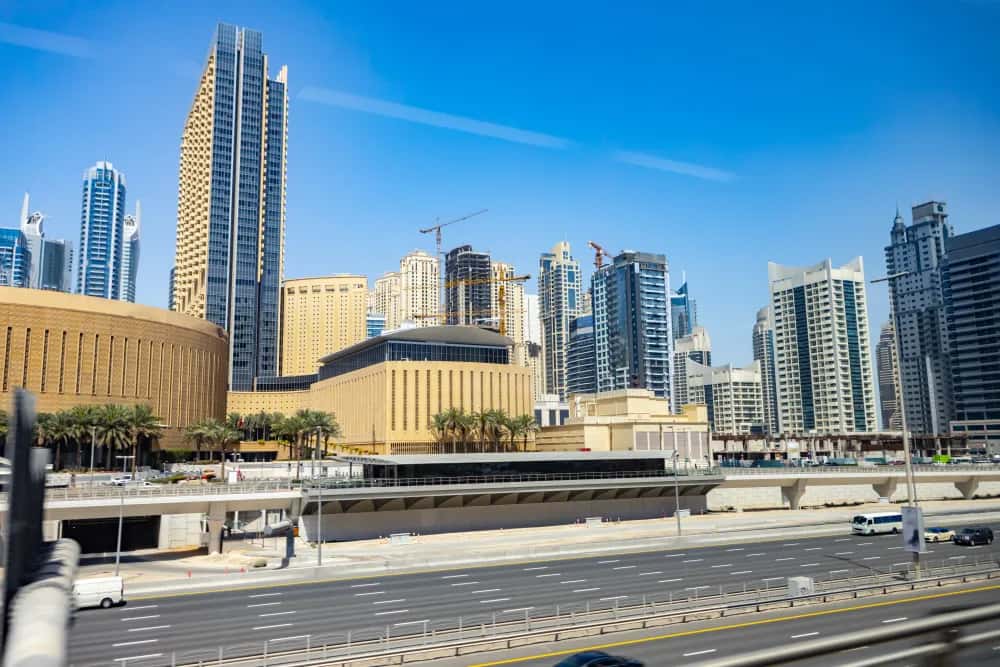 Market Insights
Dubai's commercial real estate market in 2025: what investors need to know
Office vacancy rates are tightening and Grade A rents are rising. Here is what Dubai's commercial market signals for investors in 2025.
By Roy El Baba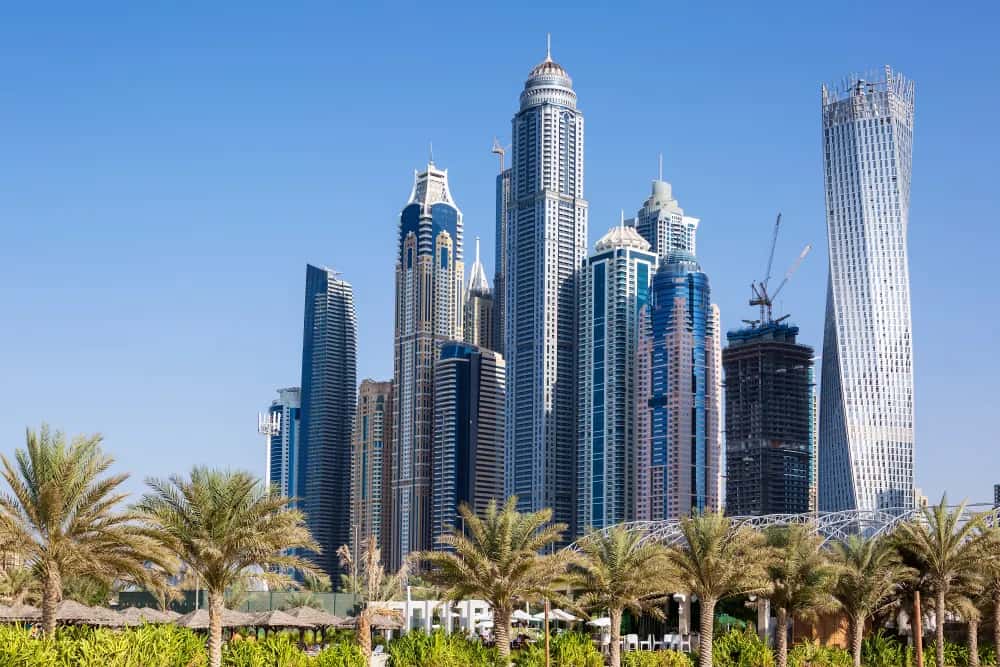 Market Insights
What rising Dubai office rents mean for residential buyers
Dubai office rents climbed 13% while Abu Dhabi occupancy hit 96%. Here is what CBRE's latest data signals for residential buyers in Business Bay and JLT.
By Roy El Baba Market Insights
Dubai office rents rise 13%: what it means for buyers
Dubai office rents climbed 13% year-on-year in Q2 2026. Here is what that means for mixed-use districts and the case for owner-occupier purchases.
By Roy El Baba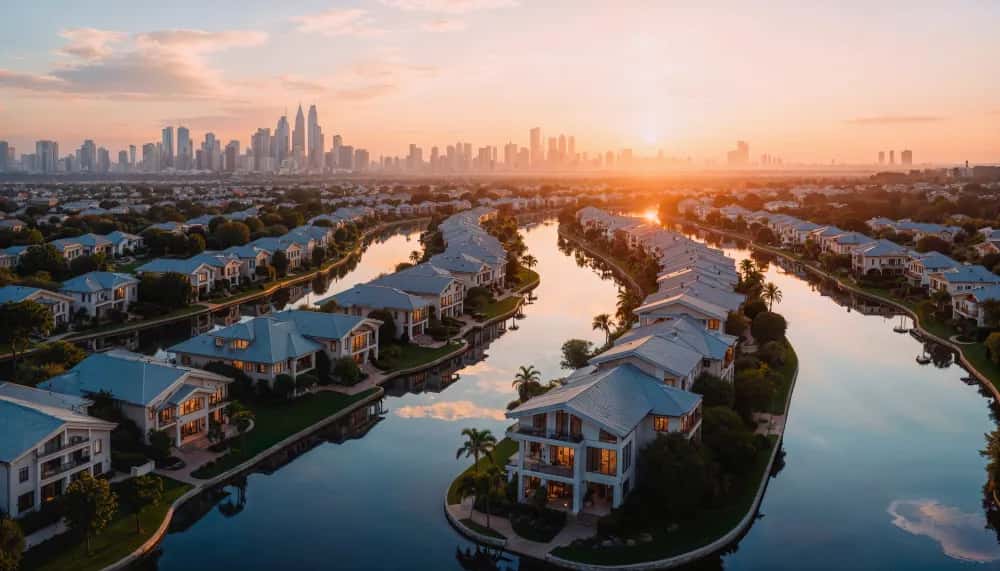 Market Insights
Dubai property market 2025-2026: should you buy now or wait?
Seven structural demand drivers are keeping Dubai real estate strong through 2026. Here is what each one means for your buying timeline right now.
By Roy El Baba