

What AED 419.9 billion in H1 2026 means for Dubai buyers
Dubai recorded AED 419.9 billion in property transactions in H1 2026. Here is what that volume signals for buyers tracking neighbourhood-level opportunity.
Reading the AED 419.9 billion headline correctly
Dubai real estate recorded AED 419.9 billion in total transaction value across the first six months of 2026. That figure is striking, but a single market-wide number can obscure more than it reveals. Transaction volume at this scale reflects activity spread across hundreds of communities, multiple asset classes, and a buyer pool that spans first-time residents, institutional investors, and international capital rotating out of other global cities.
The more useful question for any individual buyer is not whether the market is busy. It clearly is. The useful question is where within that AED 419.9 billion the genuine opportunity sits, and whether the communities driving volume are doing so on the strength of real demand or short-term speculative momentum. Both forces are present in any high-velocity market. Understanding the difference is what separates a well-timed purchase from an expensive mistake.
Ready versus off-plan: where the volume is coming from
H1 2026 transaction data continued a pattern that has been building since 2022: off-plan sales accounting for a disproportionate share of total deal count, while ready transactions have been driving value per ticket. Buyers drawn to Dubai off-plan projects are typically attracted by developer payment plans that spread capital outlay over two to four years, lower entry prices relative to completed stock, and the possibility of capital appreciation between launch and handover.
Ready-market buyers, by contrast, are paying a premium for certainty. They can occupy or lease the unit immediately, assess actual build quality rather than renders, and avoid handover risk entirely. In communities such as Downtown Dubai and Dubai Marina, ready inventory at sub-5% gross yields still commands strong demand because the rental market in those corridors is liquid enough to support those prices. If you are assessing both routes, our guide on how to buy property in Dubai sets out the process and cost structure for each.
The bifurcation matters because it affects negotiating position. In communities where off-plan supply is heavy, ready sellers sometimes price aggressively to compete. In mature communities with limited new supply, ready sellers hold pricing power. Knowing which dynamic applies to your target area is as important as knowing the emirate-wide headline figure.
Communities driving transaction volume in H1 2026
Across both segments, a handful of communities have consistently appeared at the top of transaction league tables. Business Bay and Jumeirah Village Circle remain among the highest-volume communities by deal count, largely because both offer accessible price points and high rental demand from the professional-tenant market. Volume in these areas is a function of liquidity, not scarcity, which matters if your investment horizon requires an exit within three to five years.
Dubai Hills Estate and Dubai Creek Harbour represent a different driver: large-scale master-planned communities with phased off-plan releases from established developers. Emaar Properties has been the dominant force in both, and buyer appetite for Emaar launches has remained consistent enough that secondary-market flipping of payment-plan contracts has become its own sub-market within these communities.
At the upper end of the value spectrum, Palm Jumeirah transactions have contributed materially to total AED value even when deal count is relatively modest. A single signature villa or penthouse can represent more value than a hundred mid-market apartment transactions. This skews emirate-wide averages and is worth remembering when comparing your target community against published market-wide data.
The golden visa effect on sustained buyer demand
One structural factor behind sustained transaction volumes in the Dubai property market is the UAE Golden Visa programme. Buyers who acquire property worth AED 2 million or more qualify for a ten-year residency visa, which removes the exit-pressure that historically caused investors to sell when their employment visa lapsed. The result is a measurably stickier ownership base, particularly in the AED 2 million to AED 5 million price band.
This dynamic has been most visible in communities where the AED 2 million threshold aligns with typical unit sizes. Two-bedroom apartments in Jumeirah Beach Residence (JBR), three-bedroom units in Jumeirah Lake Towers (JLT), and townhouses in Al Furjan all sit in a range where the golden visa incentive is a genuine purchase motivator rather than an afterthought. If residency is part of your calculus, our UAE Golden Visa through Dubai property guide details the current eligibility criteria and application process.
Translating market volume into a buying decision
High transaction volume tells you a market is active. It does not tell you whether a specific property is priced fairly, whether the service charge is sustainable relative to rental income, or whether the developer has a credible delivery track record. These are the variables that determine whether AED 419.9 billion in aggregate activity translates into a good outcome for you specifically.
On service charges, the spread between communities is significant. A unit in a high-amenity tower in Downtown Dubai can carry service charges of AED 25 to AED 35 per square foot annually, while a villa community such as Arabian Ranches may run closer to AED 3 to AED 5 per square foot. Use our service charge calculator to model the carrying cost of any property before you commit. On developer track record, projects from operators such as Sobha Realty and Nakheel carry different risk profiles than smaller regional developers, and that difference should factor into any off-plan pricing analysis.
The most effective approach is to narrow from market-wide data to community-level data to individual project data before drawing conclusions. AED 419.9 billion in H1 2026 activity is a signal that Dubai real estate continues to attract capital at scale. The work of turning that signal into a specific purchase starts with the community and the unit, not the headline number. Browse current Dubai properties for sale to start that analysis with live inventory.
What buyers should monitor through H2 2026
Several data points will be worth tracking as the second half of 2026 develops. First, interest rate direction in the US matters because the UAE dirham is pegged to the US dollar, which means UAE mortgage rates move broadly in line with the Federal Reserve. Any further easing would reduce financing costs and could push ready-market prices higher in interest-sensitive communities. Second, off-plan supply pipelines in emerging communities such as Meydan are substantial, and the pace of absorption relative to new launches will determine whether current pricing holds or softens at handover.
Third, developer incentive structures are worth watching. When market momentum is strong, developers tend to reduce post-handover payment plans and launch at tighter discounts to market value. If you see those incentives returning in a particular community mid-year, it can indicate that absorption has slowed and negotiating room has opened up. Staying close to transaction data rather than launch marketing material is the best way to read those signals accurately.
Frequently asked questions
What does AED 419.9 billion in H1 2026 transactions indicate about the Dubai property market?
It confirms that buyer activity across both ready and off-plan segments remained strong through the first half of 2026. However, the figure is a market-wide aggregate. Individual community performance varies considerably, and buyers should analyze price trends, supply pipelines, and yield data at the community level before drawing investment conclusions.
Which Dubai communities have seen the highest transaction volumes in 2026?
Business Bay, Jumeirah Village Circle, Dubai Hills Estate, and Dubai Creek Harbour have consistently ranked among the highest-volume communities by deal count. Palm Jumeirah contributes disproportionately to total AED value due to high average transaction sizes, even when raw deal numbers are lower.
How does the UAE Golden Visa affect Dubai property demand?
Buyers spending AED 2 million or more on property qualify for a ten-year UAE residency visa. This has created a sustained ownership base in the AED 2 million to AED 5 million price band, reducing turnover pressure and supporting prices in communities where unit sizes align with that threshold.
Is off-plan or ready property a better buy in the current Dubai market?
Neither is universally better. Off-plan offers lower entry prices and payment plan flexibility but carries handover risk. Ready property provides immediate occupancy or rental income and removes developer delivery uncertainty, though entry prices are higher. The right choice depends on your capital timeline, risk tolerance, and target community supply dynamics.
What costs should I factor in beyond the purchase price of a Dubai property?
Key additional costs include the Dubai Land Department transfer fee of 4% of the purchase price, agent commission typically at 2%, mortgage arrangement fees if applicable, and annual service charges that can range from AED 3 to AED 35 per square foot depending on community and amenity level. Modelling these carrying costs before purchase is essential for accurate yield calculations.
More Market Insights posts
 Market Insights
Dubai supply wave 2026: what buyers need to know now
Tens of thousands of new units are due for delivery across Dubai and the UAE by end of 2026. Here is how smart buyers should position themselves before the wave lands.
By Roy El Baba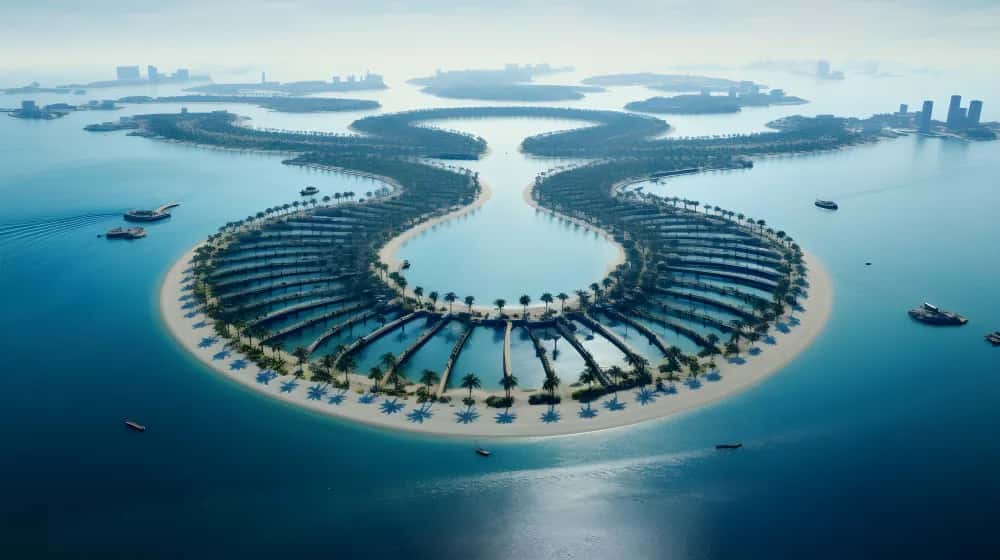 Market Insights
What a Dh260 million Palm Jumeirah sale tells buyers
A single villa transaction on Palm Jumeirah just hit Dh260 million. Here is what that figure reveals about micro-location pricing across the entire island.
By Roy El Baba Market Insights
Dubai hits AED 523bn in 8-month transactions: what it means for Q4
Dubai recorded AED 523.44bn in property transactions across the first eight months of the year. Here is what the deal-type breakdown tells investors about Q4 entry timing.
By Roy El Baba Market Insights
Dubai's $12.6bn August: what the numbers actually tell you
Dubai recorded $12.6bn in total transactions in August, with a single Palm Jumeirah villa selling for $21.5m. Here is what the segment data means for buyers and investors.
By Roy El Baba