

Dubai real estate tokenisation: what it means for investors
Dubai is moving to let investors buy fractional shares of property via blockchain tokens. Here is what that shift means for liquidity, returns, and access.
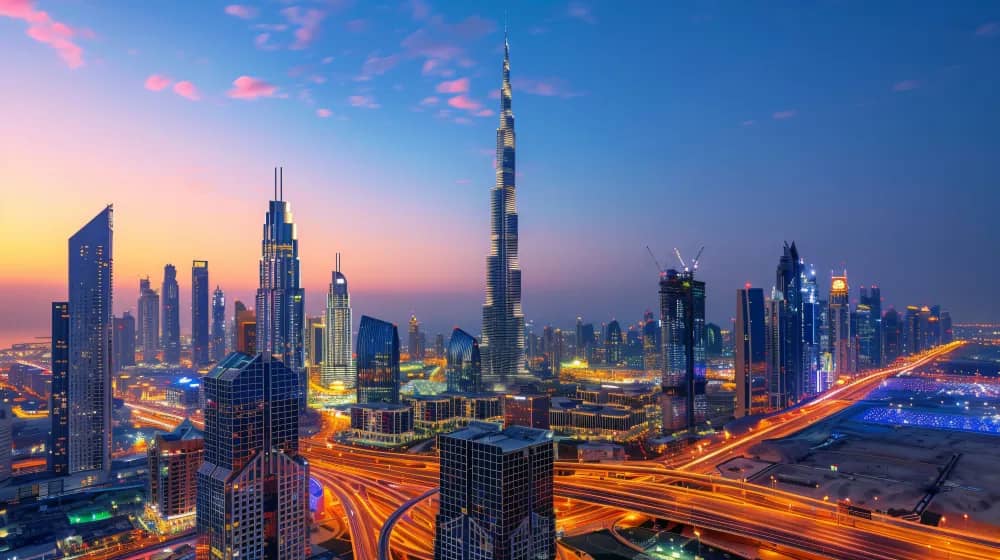
Owning a slice of Downtown Dubai for AED 50,000
Picture this: a penthouse in Downtown Dubai is valued at AED 8 million. Under a tokenised ownership model, that asset is divided into digital tokens representing fractional shares. An investor buys AED 50,000 worth of tokens, equivalent to roughly 0.6% of the unit, and starts receiving a proportional share of the rental income. No mortgage, no service charge liability on the full unit, no six-figure upfront transfer fee. That is the practical promise behind Dubai's push to pioneer real estate tokenisation at a global level.
The Dubai Land Department, working alongside the Virtual Assets Regulatory Authority, has outlined a framework that would allow property assets to be registered, divided, and traded as blockchain-based tokens. Early projections suggest that tokenised real estate could represent approximately 7% of Dubai's total property transactions by 2033, a figure that puts real numbers behind what is often discussed as a distant concept.
Why liquidity is the real story here
The biggest structural problem with direct property ownership has always been illiquidity. When you own a unit in Dubai Marina and need to exit, you list it, negotiate, wait for NOC clearances, pay DLD transfer fees of 4%, and hope the buyer's mortgage closes on time. The process routinely takes 60 to 90 days, often longer in a cooling market.
Tokenised real estate changes that calculus by creating secondary markets where fractional tokens can be traded without triggering a full property transfer. In theory, an investor could exit a position in hours rather than months. That improvement in liquidity also has pricing implications: assets that can be traded easily tend to command tighter risk premiums, which could push capital values upward over time in communities with strong rental yields.
Retail investors who have been priced out of freehold areas, or who want exposure to the Dubai property market without concentrating capital in a single asset, gain a meaningful new tool. For the market as a whole, wider investor participation tends to support transaction volumes and dampen the boom-bust cycles that characterised Dubai in earlier decades.
Regulatory framework: what makes Dubai's approach credible
Dubai's ability to pioneer real estate tokenisation globally is not accidental. The emirate has spent several years building a regulatory stack that can accommodate digital assets without abandoning investor protections. VARA, established in 2022, provides oversight of virtual asset service providers, while the DLD brings title-registry credibility that most tokenisation experiments elsewhere have lacked entirely.
The combination matters. Token holders need to know that their fractional interest is legally recognised, that the underlying title cannot be double-pledged, and that rental income distribution is enforceable. By anchoring tokens to DLD-registered title deeds, Dubai's framework addresses the core concern that has stalled tokenisation pilots in other markets: the gap between blockchain ownership and legal ownership.
Which asset classes and areas are most relevant
Not every asset is equally suited to fractionalisation. High-value, high-yield residential and commercial units in established freehold zones are the natural starting point. Areas like Business Bay, Dubai Creek Harbour, and Jumeirah Beach Residence (JBR) offer the combination of strong rental demand, clear title structures, and developer-grade documentation that tokenisation platforms need to operate confidently.
Off-plan projects present a more complex picture. Token buyers would be acquiring a fractional interest in an asset that does not yet exist, adding construction risk to the usual investment variables. That said, developers including Emaar Properties and DAMAC Properties have the brand recognition and delivery track records that could make tokenised off-plan exposure viable for a certain risk profile. Investors already exploring Dubai off-plan projects should watch this space closely, as tokenised off-plan could emerge as a distinct sub-category within two to three years.
Practical considerations before you commit capital
Tokenisation does not eliminate due diligence; it redistributes it. A traditional buyer reviews the title deed, checks the mortgage status, and inspects the unit. A token buyer needs to scrutinise the legal structure of the special purpose vehicle or smart contract that holds the underlying asset, understand how rental income is collected and distributed, confirm that the token platform itself is VARA-licensed, and assess the liquidity depth of whichever secondary market is being used.
Service charges are another variable. If you hold 2% of a unit in Jumeirah Village Circle, someone still needs to pay 100% of the service charge to the relevant owners association. Understand how the platform handles that obligation before you invest. Our service charge calculator can give you a baseline for what running costs look like across different communities.
Anyone new to Dubai property structures more broadly should read the how to buy property in Dubai guide first. The fundamentals of freehold zones, DLD registration, and transaction costs apply regardless of whether ownership is direct or fractional.
What this means for the Dubai property market long-term
Tokenisation is not a replacement for conventional property investment. The vast majority of Dubai properties for sale will continue to transact through standard DLD transfers for years to come. What tokenisation does is expand the investor base, lower the entry threshold, and introduce a new liquidity layer that benefits the market's overall depth and maturity.
For Dubai, successfully executing this at scale would reinforce the city's position as the leading international real estate hub in the region, a status it already holds by transaction volume and foreign investor participation. The policy direction is credible, the regulatory infrastructure is more advanced than most comparable markets, and the commercial incentives for developers and platforms are real. Investors who understand the mechanics now will be better positioned when tokenised listings become a standard feature of the market rather than a pilot programme.
Frequently asked questions
Is tokenised real estate legally recognised in Dubai?
The framework being developed by the Dubai Land Department and VARA is designed to anchor digital tokens to DLD-registered title deeds, giving fractional token holders a legally recognised interest. Regulations are still maturing, so investors should verify that any platform they use holds the appropriate VARA licence before committing capital.
What is the minimum investment likely to be under a tokenised model?
Minimum entry points vary by platform, but the structural point of tokenisation is to lower the threshold significantly below what direct ownership requires. Early platforms in comparable markets have set minimums in the range of USD 1,000 to USD 10,000 per transaction.
How are rental returns distributed to token holders?
Distribution mechanics depend on the platform and the legal structure of the holding vehicle. In most models, rental income collected from tenants flows into a pooled account and is distributed proportionally to token holders on a monthly or quarterly basis, less platform fees and any reserve contributions.
Can tokenised property count toward the UAE Golden Visa threshold?
The current UAE Golden Visa property route requires a minimum direct investment of AED 2 million in qualifying freehold property. Tokenised fractional interests would need to meet specific DLD recognition criteria to qualify, something that has not yet been confirmed under the emerging framework. Check the latest requirements via the UAE Golden Visa through Dubai property guide.
Which communities are best suited to tokenised investment?
High-yield, high-demand freehold areas with strong rental markets are the most practical starting point. Business Bay, Downtown Dubai, Dubai Marina, and Dubai Creek Harbour combine clear title structures, consistent tenant demand, and the asset values that make fractional division commercially meaningful.
More Investment posts
 Investment
Villa renovation vs buying new in Dubai: which pays off?
Some Dubai villa owners are spending up to $5.4m on renovations. We break down whether upgrading delivers better ROI than buying off-plan or resale.
By Roy El Baba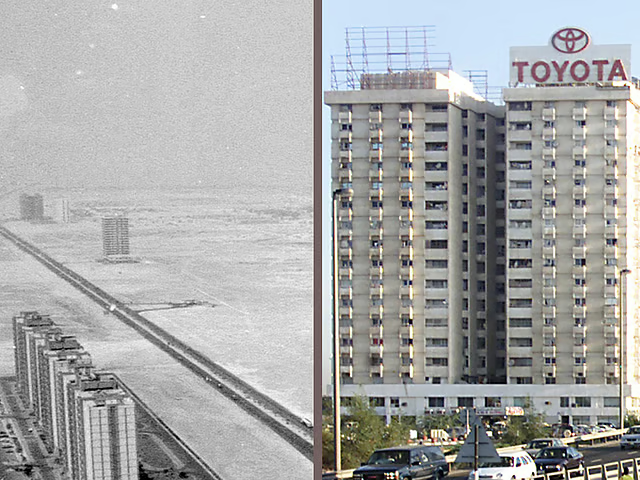 Investment
Sheikh Zayed Road redevelopment: what it means for investors
The Toyota Building's demolition signals a broader redevelopment wave on Sheikh Zayed Road. Here is what plot clearances along prime corridors mean for land values and off-plan launches.
By Roy El Baba Investment
Why Indian investors keep choosing Dubai real estate
Indian nationals are Dubai's largest foreign buyer group. Here's what drives that demand and how NRIs can buy freehold property step by step.
By Roy El Baba Investment
ELLE residences on Dubai Islands: what branded living costs you
ELLE's entry into Dubai real estate signals how fashion brands are reshaping the branded residence market. Here's what the premium actually buys you.
By Roy El Baba