
Dubai ultra-prime home sales: what $6 billion tells us
Dubai's ultra-prime segment hit $6 billion in sales. Here's what that figure means for price thresholds, top locations, and HNW buyer behaviour.
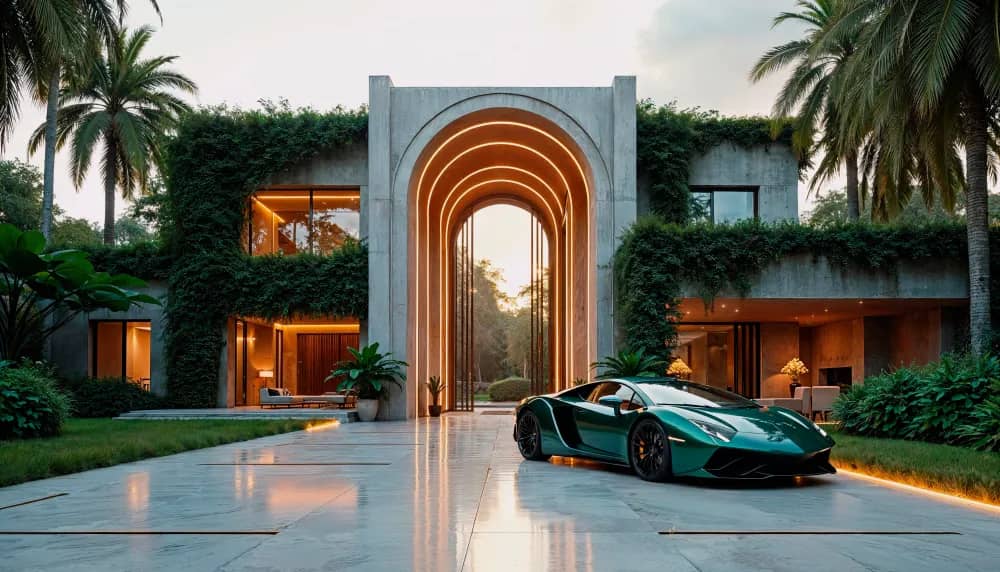
What $6 billion in sales actually means
Dubai's ultra-prime residential segment recorded approximately $6 billion in transactional value in a recent reporting period, a figure that deserves some unpacking before it becomes just another headline number. That total was not driven by volume. It was driven by a relatively small count of high-value transactions, concentrated in a handful of communities and a narrow band of price points. Understanding the composition of that number is more useful to a buyer or investor than the aggregate alone.
The Dubai property market overall processes tens of thousands of transactions per year across all segments, from affordable apartments in Jumeirah Village Circle to branded residences on Palm Jumeirah. Ultra-prime sits at the very top of that stack, and its performance is largely disconnected from the mid-market dynamics most buyers track. When the broader market softens, ultra-prime does not necessarily follow. When the broader market surges, ultra-prime often already moved.
How Dubai defines ultra-prime property
There is no single regulatory definition, but in practice the Dubai real estate market treats properties priced above AED 20 million (roughly $5.4 million) as ultra-prime. A meaningful portion of the $6 billion figure sits above AED 50 million per unit. At that level, buyers are purchasing not just a home but a liquid, portable asset denominated in a currency pegged to the US dollar, held in a jurisdiction with zero capital gains tax and zero inheritance tax.
Product type matters too. Ultra-prime in Dubai is almost always one of three formats: a full-floor or penthouse apartment in a landmark tower, a beachfront or waterfront villa, or a plot-and-build mansion in a gated community. Stacked apartments in mixed-use towers rarely qualify regardless of price, because buyers at this level are paying specifically for exclusivity, low unit counts, and controlled access. Developers like Nakheel and Meraas have shaped much of the inventory that meets those criteria.
Where ultra-prime buyers are actually buying
Palm Jumeirah dominates. The fronds and the Palm's shoreline account for a disproportionate share of ultra-prime villa transactions in any given quarter. Signature Villa plots on the fronds have traded above AED 100 million, and waterfront mansions with private beach access regularly exceed AED 60 to 80 million. The scarcity is real: there are roughly 4,000 villas on the Palm, and very few change hands each year at the top end. If you want to understand the community in detail, the Palm Jumeirah area guide covers the product mix and service charge ranges.
Downtown Dubai draws a different ultra-prime buyer, typically one who prioritises urban connectivity over waterfront access. The Address Residences, Il Primo, and a small number of other branded towers have produced transactions above AED 30 million for full-floor units with Burj Khalifa views. This buyer tends to be a frequent traveller who wants a lock-up-and-leave residence with hotel-grade services, rather than a full-time occupier.
Emirates Hills, Jumeirah Bay Island, and Sobha Hartland Estates round out the short list. Sobha Realty in particular has repositioned itself firmly in the ultra-prime villa space, with Hartland Estates phase prices starting above AED 25 million and escalating significantly for waterfront plots. Dubai Hills Estate sits just below ultra-prime for most of its product, though trophy-end mansions on the golf course have crossed the threshold.
Why regional instability drives, not deters, HNW buying
It seems counterintuitive that geopolitical tension in the broader Middle East region correlates with increased buyer appetite for Dubai residential assets, but the mechanics are straightforward. High-net-worth individuals in the region treat physical instability elsewhere as a reason to accelerate capital reallocation, not pause it. Dubai offers political neutrality, a functioning legal system for property registration through the Dubai Land Department, and a residency pathway through UAE Golden Visa through Dubai property for purchases above AED 2 million.
That last point deserves emphasis. A 10-year renewable Golden Visa, available to property buyers at a relatively accessible threshold, has structurally changed the motivation behind purchasing decisions. For a buyer relocating family assets from a less stable jurisdiction, the visa is not a bonus. It is part of the investment thesis. The combination of asset security, currency stability, and residency rights in a city with world-class infrastructure is difficult to replicate elsewhere in the region.
What buyers should know before entering this segment
Ultra-prime transactions in Dubai involve acquisition costs that differ from the mid-market. The Dubai Land Department transfer fee is 4% of the purchase price, which on a AED 50 million property amounts to AED 2 million before agent fees, NOC fees, and mortgage registration costs if financing is involved. Most ultra-prime buyers transact in cash, which compresses the timeline but does not eliminate the due diligence requirements. Our guide on how to buy property in Dubai walks through the full process, including the steps specific to high-value transfers.
Liquidity is a realistic concern that buyers underestimate. The pool of buyers for a AED 80 million villa is global but thin. Marketing periods of 12 to 24 months are not unusual for true ultra-prime stock, particularly when the seller has an ambitious price expectation. Anyone buying at this level should model a holding period of at least five to seven years to smooth out the entry and exit friction. The $6 billion headline is a market-level figure. Your individual asset's performance will depend heavily on location specificity, build quality, and the timing of your exit.
Reading the signal for Dubai's broader market
Ultra-prime performance is a leading indicator, not a lagging one. When high-net-worth capital flows into a market at the top end, it signals confidence in the long-term trajectory of that market. For Dubai real estate, sustained ultra-prime activity alongside strong off-plan absorption and rental yield compression across mid-market communities suggests a market that is maturing, not overheating in a speculative sense.
Investors operating in lower price bands should take note. The supply pipeline for ultra-prime is genuinely constrained because there is only so much waterfront land in Dubai, and most of it is already developed or committed. That scarcity eventually pulls up values in the tier below it. Communities like Business Bay and Dubai Creek Harbour benefit indirectly when Palm Jumeirah and Downtown trophy assets become unavailable or unaffordable even for motivated buyers. If you are evaluating entry points across the spectrum, our Dubai properties for sale listings cover current availability at every price tier.
Frequently asked questions
What price threshold defines ultra-prime property in Dubai?
The market broadly applies the ultra-prime label to residential transactions above AED 20 million (approximately $5.4 million). A significant share of the most publicised deals in this segment sit above AED 50 million per unit, particularly for Palm Jumeirah villas and full-floor Downtown apartments.
Which communities account for the majority of ultra-prime sales in Dubai?
Palm Jumeirah consistently leads by value, followed by Downtown Dubai and Emirates Hills. Jumeirah Bay Island and Sobha Hartland Estates have grown in share over the last two years as new ultra-prime villa inventory was delivered.
Does buying ultra-prime property in Dubai qualify me for a Golden Visa?
The UAE Golden Visa for property investors applies to purchases of AED 2 million or above, so any ultra-prime transaction qualifies automatically. The visa is valid for 10 years and renewable, and it extends to dependants. Buyers should confirm current eligibility criteria with a RERA-licensed agent, as conditions are updated periodically.
How liquid is ultra-prime property in Dubai if I need to sell?
Liquidity at this price level is lower than in mid-market segments. The buyer pool is global but small, and marketing periods of 12 to 24 months are realistic for properties above AED 60 million. Buyers should plan for a minimum holding period of five to seven years to manage entry and exit costs effectively.
What are the full acquisition costs on an ultra-prime property purchase?
The Dubai Land Department charges a 4% transfer fee on the purchase price. Additional costs include agent fees (typically 2% for the buyer in brokered deals), NOC fees payable to the developer, and mortgage registration costs if applicable. On a AED 50 million purchase, the DLD fee alone is AED 2 million.
More Market Insights posts
 Market Insights
What Dubai's 1.9% rental rise means for your wallet in 2026
Dubai rents rose 1.9% in 2026, but that average hides wide variation by community. Here's what tenants are actually paying extra at renewal.
By Roy El Baba Market Insights
Why a cooling Dubai market is a buyer's window
When Dubai property softens, history shows early movers win. Here is how to read the cycle and act before the next upturn locks you out.
By Roy El Baba Market Insights
Dubai's former zoo site shows a new planning era
A 90-home low-density community is planned for the former Dubai Zoo site. Here is what that signals about where the city's urban planning is heading.
By Roy El Baba Market Insights
What $3.8 billion in weekly Dubai transactions tells investors
Dubai recorded roughly $3.8 billion in property transactions in a single week. Here is what that deal velocity actually means if you are deciding when to buy.
By Roy El Baba