

Waiting for a Dubai price crash is costing buyers money
Two-thirds of UAE property seekers are pressing ahead with purchases despite market uncertainty. Here is what the sentiment shift tells investors about timing in 2025.
The price crash that never arrives
Every cycle in the Dubai real estate market produces the same buyer. He watches prices rise, convinces himself a correction is coming, and waits. Six months later, the entry point he was targeting no longer exists. This pattern is not speculation; it has played out across 2021, 2022, 2023, and into 2024 as Dubai residential values posted sustained gains across virtually every major district.
The latest Market Pulse data from Property Finder puts a number on where sentiment currently stands. Roughly two-thirds of active property seekers in the UAE say they intend to proceed with their purchases despite broader uncertainty. More notably, the proportion expecting an imminent price drop has declined. That is a measurable shift in buyer psychology, and it matters because sentiment changes tend to front-run transaction volume by one to two quarters.
Why Dubai property market momentum has held
The Dubai property market has structural drivers that most correction narratives ignore. Population growth remains strong, with the emirate targeting 5.8 million residents by 2040 under its urban master plan. Net migration of high-net-worth individuals continues to outpace comparable cities. And unlike 2008 or 2014, the current supply pipeline is being absorbed in real time rather than sitting vacant.
Transaction volumes in 2024 set records across both ready and off-plan segments. Dubai off-plan projects in particular maintained momentum, with developers including Emaar Properties and Sobha Realty reporting sellouts on launches within days. When developers can clear inventory that quickly, the downward price pressure that correction-watchers anticipate simply does not materialise.
Geopolitical safe-haven demand adds another layer. Capital has continued moving into Dubai from Europe, South Asia, and the CIS region, partly because of political stability and partly because of the tax environment. That demand base is not correlated with the interest rate cycles that typically drive corrections in London or New York, so models built on those markets translate poorly here.
What easing price drop expectations actually signal
When a large share of buyers abandons the idea of waiting for discounts, they re-enter the market. That re-entry creates the very price support they were trying to avoid. The feedback loop is well documented in supply-constrained markets, and Dubai's freehold zones are, by definition, supply-constrained in the locations where demand concentrates most heavily.
Areas like Downtown Dubai, Dubai Marina, and Palm Jumeirah have limited land available for new towers. When buyers who have been sitting on the sidelines decide the correction is not coming, competition for finite stock intensifies and asking prices firm up. The sentiment data published in early 2025 is an early indicator of that dynamic repeating.
For investors, the practical implication is straightforward. Sentiment shifts tend to compress the decision window. Once the majority consensus moves from 'wait' to 'buy', negotiating power shifts to sellers and developers. Buyers who acted during the uncertainty phase typically secured better payment terms and more competitive per-square-foot pricing.
Where value still exists for buyers in 2025
Not every district is at the same stage. Jumeirah Village Circle and Al Furjan still offer entry-level apartments at price points well below the central Dubai average, with yields that frequently clear 7% gross. Dubai Creek Harbour is mid-cycle in its infrastructure rollout, which historically represents an interesting entry window before full community amenities are delivered.
For those considering Dubai properties for sale with a longer hold horizon, Dubai Hills Estate continues to attract end-user demand from families, which underpins resale liquidity. Strong end-user demand, as opposed to purely investor demand, is a quality signal for medium-term capital preservation.
Buyers who are newer to the market should read how to buy property in Dubai before committing. Understanding DLD transfer fees, agency fees, and the mechanics of a No Objection Certificate can prevent costly surprises. The total acquisition cost in Dubai typically runs 6-7% above purchase price when all transaction costs are accounted for.
Off-plan versus ready: which fits a 2025 strategy
The off-plan segment in Dubai offers staggered payment plans that reduce the immediate capital requirement, but buyers accept construction risk and a delivery timeline that is typically 2 to 4 years out. In a market where sentiment is shifting toward confidence, locking in today's price for a 2027 delivery can represent a meaningful discount to the anticipated future spot price, assuming the macro environment holds.
Ready properties offer immediate rental income and no construction risk. For an investor who wants yield from day one, a ready unit in Jumeirah Lake Towers (JLT) or Jumeirah Beach Residence (JBR) can begin generating returns within weeks of transfer. The trade-off is that ready stock in prime locations has already priced in a significant portion of the post-2020 rally.
A blended approach, holding one or two off-plan positions for capital appreciation while generating yield from a ready asset, is increasingly common among active investors in this market. The UAE Golden Visa through Dubai property threshold of AED 2 million also factors into the calculus for many buyers who want residency alongside a return.
The real cost of waiting in a sentiment-driven market
Timing any market perfectly is not a realistic strategy. What is realistic is understanding which direction the probability distribution skews. When two-thirds of active buyers indicate they are proceeding with purchases, and the share expecting near-term price drops is shrinking, the risk-reward of continued waiting deteriorates.
A buyer who deferred a AED 2 million purchase in early 2023 expecting a 10-15% correction would have needed prices to fall by AED 200,000 to 300,000 just to break even against the rental cost of continuing to lease while waiting. In most established Dubai communities, that fall never came. The opportunity cost of waiting is real, recurring, and rarely factored honestly into the 'hold off' calculus.
The data point that matters most is not whether a correction could happen; any market can correct. The question is what the probability-weighted outcome looks like across a 3 to 5 year hold. On that measure, the Dubai property market has consistently rewarded buyers who made decisions based on fundamentals rather than speculation about a crash.
Frequently asked questions
Is it still a good time to buy property in Dubai in 2025?
Buyer sentiment data from early 2025 shows that price-drop expectations among UAE property seekers are easing, with around two-thirds intending to proceed with purchases. Fundamentals including population growth, sustained transaction volumes, and limited supply in prime freehold zones continue to support prices in established communities.
Which Dubai areas offer the best value for buyers right now?
Jumeirah Village Circle and Al Furjan remain accessible entry points with gross yields regularly above 7%. Dubai Creek Harbour is still in an infrastructure build-out phase, which historically offers a buying window before full community delivery. Dubai Hills Estate attracts strong end-user demand, which supports long-term resale liquidity.
What are the total costs when buying property in Dubai?
Beyond the purchase price, buyers should budget approximately 6-7% for transaction costs. This typically includes a 4% DLD transfer fee, a 2% agency commission, and administrative fees for the title deed and NOC. Understanding these costs upfront prevents surprises at completion.
Is off-plan property in Dubai a good investment in 2025?
Off-plan purchases allow buyers to lock in current pricing for a 2 to 4 year delivery horizon and often come with flexible payment plans. In a market where sentiment is shifting toward confidence, this can represent a discount to the anticipated future spot price. The trade-off is construction risk and a delayed income stream compared to ready properties.
How does the UAE Golden Visa affect the decision to buy property in Dubai?
Purchasing a property valued at AED 2 million or more makes a buyer eligible to apply for a 10-year UAE Golden Visa. For buyers who are also seeking long-term residency, this threshold is an important factor in sizing the investment. The visa provides security of stay independent of an employment relationship.
More Market Insights posts
 Market Insights
Dubai supply wave 2026: what buyers need to know now
Tens of thousands of new units are due for delivery across Dubai and the UAE by end of 2026. Here is how smart buyers should position themselves before the wave lands.
By Roy El Baba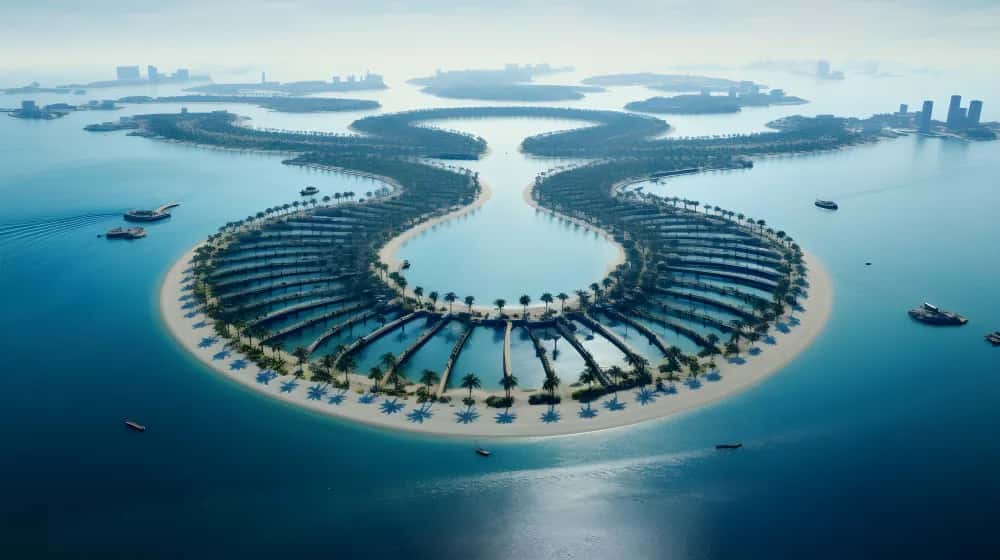 Market Insights
What a Dh260 million Palm Jumeirah sale tells buyers
A single villa transaction on Palm Jumeirah just hit Dh260 million. Here is what that figure reveals about micro-location pricing across the entire island.
By Roy El Baba Market Insights
Dubai hits AED 523bn in 8-month transactions: what it means for Q4
Dubai recorded AED 523.44bn in property transactions across the first eight months of the year. Here is what the deal-type breakdown tells investors about Q4 entry timing.
By Roy El Baba Market Insights
Dubai's $12.6bn August: what the numbers actually tell you
Dubai recorded $12.6bn in total transactions in August, with a single Palm Jumeirah villa selling for $21.5m. Here is what the segment data means for buyers and investors.
By Roy El Baba