

Why HNWIs choose these Dubai neighbourhoods
Ultra-premium buyers don't just pick postcodes. Here's what actually drives HNWI property decisions in Dubai, from privacy infrastructure to proven capital returns.
Privacy and security as primary purchase drivers
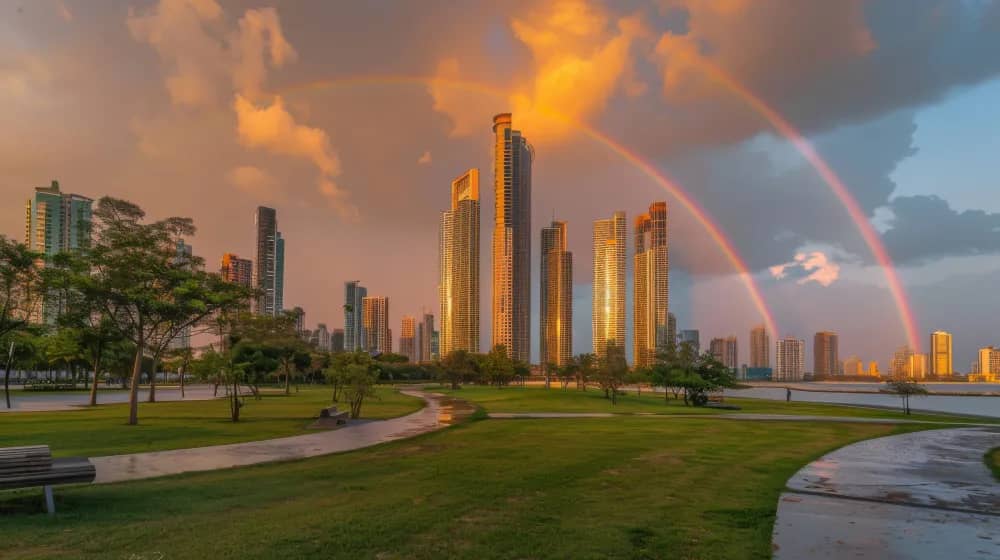
When a buyer is spending AED 30 million or more on a single property, the neighbourhood's physical security architecture is rarely treated as a bonus feature. It is typically a baseline requirement. Gated communities with 24-hour staffed entry points, CCTV coverage at the perimeter rather than just the lobby, and limited through-traffic are non-negotiable for most high-net-worth purchasers. This explains, in part, why addresses like Palm Jumeirah and District One consistently outperform broader market trends during both growth cycles and corrections.
Palm Jumeirah is physically bounded by water on all sides, which provides a natural chokepoint for access. Palm Jumeirah villas on the fronds have recorded resale premiums of 40 to 60 percent above their original launch prices over five-year hold periods, partly because supply is hard-capped and demand from privacy-conscious buyers is structurally persistent. District One, positioned within Mohammed Bin Rashid City, layers that physical scarcity with a master-planned road network that discourages transient traffic. These design decisions are not accidental; they are the product of developers specifically targeting HNWI preferences from the planning stage.
Lifestyle infrastructure that justifies premium pricing
Capital appreciation data alone does not explain why a buyer selects one ultra-premium community over another. The quality and density of on-site lifestyle infrastructure, specifically the services a resident can access without leaving the development, plays a decisive role. For HNWIs relocating from London, Singapore, or Geneva, the reference point is not just price per square foot; it is what that square foot delivers in terms of daily convenience and social capital.
Dubai Hills Estate illustrates this clearly. The community sits around an 18-hole championship golf course, contains a retail mall, has multiple international school options within a ten-minute drive, and connects directly to Al Khail Road for airport access in under 25 minutes. That combination of green space, education proximity, and transport convenience targets families specifically, which is a segment of HNWI buyers that tends to hold assets for longer periods and refinances less aggressively than single investors.
Jumeirah Golf Estates targets a similar profile through two championship courses and a clubhouse ecosystem that functions as a social infrastructure layer. Buyers here are often acquiring a second or third property globally, and the golf-anchored lifestyle offering gives the asset a story beyond square footage, something that matters for resale to an equally specific buyer pool.
Waterfront scarcity and its effect on long-term value
Dubai has a fixed coastline. That geographical constraint is one of the most straightforward investment arguments for waterfront assets in the emirate. Once a stretch of beachfront or canal-facing land is developed, no policy change or market cycle creates more of it. This structural scarcity underpins pricing at communities like Emaar Beachfront, where beach access is managed and private rather than shared with a general public beach.
The distinction between managed private beach access and proximity to a public beach is a point that separates serious HNWI buyers from aspirational ones. A property in Jumeirah Beach Residence sits adjacent to a public promenade, which delivers atmosphere but not exclusivity. A villa on Palm Jumeirah's trunk or fronds delivers a private beach plot. That difference correlates directly to a per-square-foot premium that has historically held even when the broader Dubai market softened.
Jumeira Bay Island, developed by Meraas, is a further refinement of this principle. A single island with a controlled bridge access point, a marina, and a limited plot count creates a scarcity argument that few other addresses in the city can replicate. Plots there have transacted at over AED 3,000 per square foot, a figure that reflects perceived permanence of value more than current yield.
Capital appreciation history that HNWIs actually verify
Sophisticated buyers do not rely on developer marketing materials for return projections. They commission independent DLD transaction data analysis before committing. That data consistently shows that communities with physical supply constraints and strong lifestyle infrastructure have outperformed the Dubai average on a total-return basis over rolling five and ten-year periods.
Sobha Hartland is a useful case study in a different direction. Rather than scarcity of land, Sobha's value proposition rests on build quality, green coverage in a central location, and the developer's vertically integrated construction model, which means fewer defect snags post-handover. For buyers who have experienced poor construction standards in other markets, that reliability commands a measurable price premium. Apartments in Sobha Hartland 1 have appreciated roughly 35 percent between 2021 and 2024, outpacing the broader MBR City average by approximately 8 percentage points.
HNWIs evaluating off-plan opportunities apply a different lens. The capital appreciation argument for off-plan is strongest when the developer has a delivery track record, when the community's infrastructure funding is secured rather than speculative, and when comparable completed stock in the same masterplan already trades at a premium. Buyers who understand how to purchase property in Dubai can use DLD escrow records to verify that developer funds are ring-fenced, which reduces delivery risk considerably.
Emerging HNWI neighbourhoods gaining traction in 2024-25
Established communities carry established pricing. HNWIs looking for stronger entry-point valuations with a long hold thesis are increasingly looking at two categories: island projects with controlled supply and inland estates with large plot sizes. Palm Jebel Ali, which Nakheel is now actively developing, fits the first category. Early villa releases on the Palm Jebel Ali fronds were priced at AED 18 to 30 million and sold out quickly, partly because buyers familiar with Palm Jumeirah's appreciation history saw a structural parallel.
The Oasis by Emaar represents the large-plot inland category. Positioned as a lagoon-integrated villa community with plot sizes averaging 10,000 to 15,000 square feet, it targets buyers who want land, not just built area. That emphasis on plot ownership appeals particularly to buyers from markets like India, the UK, and Lebanon, where freehold land ownership in a tax-efficient jurisdiction carries significant portfolio diversification logic.
Buyers qualifying for a UAE Golden Visa through a property purchase of AED 2 million or above also factor residency security into their neighbourhood choice. The visa itself is location-agnostic, but buyers intending to establish genuine UAE residency tend to prioritise communities with international schools, healthcare facilities, and social networks that support long-term living rather than pure investment.
What separates an HNWI purchase from a standard luxury transaction
The volume of Dubai luxury transactions has increased substantially since 2021, but HNWI acquisitions above AED 20 million operate under different decision logic than the broader AED 3 to 8 million segment. At the top end, buyers are typically advised by private bankers, family offices, or specialist brokers. They request planning documents, review community management accounts, and often negotiate directly on finishing specifications for off-plan units.
Service charges matter at this level in a way they do not for casual investors. A villa on Palm Jumeirah carries service charges that can reach AED 30 to 50 per square foot annually. On a 10,000-square-foot villa, that is AED 300,000 to 500,000 per year in holding costs before any mortgage liability. Buyers who skip this calculation, either because they don't use a service charge calculator or because their advisor doesn't flag it, can find net yields compressed significantly below headline figures.
The most consistent trait among successful HNWI buyers in Dubai is that they treat the emirate as a long-term base, not a short-cycle trade. That orientation shapes neighbourhood selection, holding period expectations, and the weight given to community governance relative to launch pricing. The neighbourhoods that consistently capture this buyer segment are the ones that have invested in their infrastructure as seriously as their marketing.
Frequently asked questions
Which Dubai communities have the strongest HNWI buyer demand in 2025?
Palm Jumeirah, Jumeira Bay Island, Dubai Hills Estate, Sobha Hartland, and the initial releases at Palm Jebel Ali are seeing the most consistent ultra-premium demand. Each combines a specific scarcity argument with lifestyle infrastructure targeted at long-term residents rather than short-term investors.
What minimum investment qualifies for a UAE Golden Visa through property?
A completed property purchase of AED 2 million or more qualifies a buyer for a 10-year UAE Golden Visa. The property must be registered in the buyer's name with the Dubai Land Department, and it can be a single unit or multiple units totalling that threshold.
How do HNWI buyers verify capital appreciation history before purchasing?
Most use DLD transaction records, which are publicly accessible, to review historical sales in a specific community. Independent valuation firms and specialist brokers can provide community-level price-per-square-foot trend data going back five to ten years, which is more reliable than developer-supplied projections.
Are service charges a significant cost factor on ultra-premium Dubai properties?
Yes. On large villas, annual service charges can reach AED 300,000 to 500,000 depending on the community. Buyers should factor this into net yield calculations before committing. RERA publishes approved service charge rates for registered communities, and these can be cross-checked before purchase.
What is the difference between buying on Palm Jumeirah versus Palm Jebel Ali?
Palm Jumeirah is a mature community with an established resale market, strong rental demand, and documented appreciation history since handover in the mid-2000s. Palm Jebel Ali is currently under development and offers lower entry pricing with higher potential upside, but also carries the execution and timeline risks inherent in any large off-plan project.
More Investment posts
 Investment
Best areas to invest in Dubai property in 2026
Where should your capital go in 2026? We cut through the noise with transaction volume data and rental yield benchmarks for Dubai's top investment communities.
By Roy El Baba Investment
Dubai retail property sales jumped 177%: what it means for investors
Dubai retail property sales hit $1.03bn in H1 2026, up 177% year-on-year. Here is what that number actually means if you are weighing commercial against residential off-plan assets.
By Roy El Baba Investment
Dubai property in 2026: what the new investor filter looks like
Dubai's market is still growing, but buyers are cutting through the noise. Here is what separates assets that perform from those that disappoint.
By Roy El Baba Investment
What robot-serviced apartments really cost Dubai buyers
A AED 700m Dubai development is putting eight robotic services on every floor. Here is what that means for service charges, valuations, and your exit.
By Roy El Baba