

What Indian buyers actually look for in Dubai property
India tops global search interest in Dubai real estate. Here is what NRI investors actually buy, which communities they target, and what first-timers need to know.

India now leads global interest in Dubai property
India has overtaken every other nationality in online search and inquiry activity for Dubai real estate. The shift is not a blip. It reflects a structural change in how Indian high-net-worth individuals and the broader NRI community view Dubai: less as a holiday market, more as a core portfolio allocation. Currency stability, tax-free rental income, and a legal framework that genuinely protects foreign ownership are the three reasons most Indian buyers cite when pressed.
The Dubai property market has absorbed this demand without a corresponding spike in transaction complexity. Foreigners, including Indian nationals, can own freehold property outright in designated zones, which now cover most of the communities international buyers actually want. That ownership right is permanent, not a long-term lease dressed up as freehold, and it is backed by the Dubai Land Department's registration system.
Communities that draw the most Indian buyers
Dubai Marina consistently tops the inquiry list. The combination of waterfront living, strong short-term rental demand, and a liquid resale market makes it the default starting point for first-time NRI buyers. Studio and one-bedroom units in the Marina trade between AED 900,000 and AED 1.6 million, a range that many Indian professionals working in the Gulf can reach without external financing.
Downtown Dubai attracts a different segment, typically buyers with AED 2 million or more to deploy, who prioritize capital preservation and trophy-asset status. Business Bay sits adjacent and offers similar connectivity at a 15 to 20 percent discount to Downtown prices, making it a popular alternative for value-conscious investors who still want a central address.
At the premium end, Palm Jumeirah draws Indian buyers who have either exited a business or are diversifying significant wealth. Apartment prices on the Palm start around AED 2.5 million for a one-bedroom and climb steeply for signature villas. At the affordable end, Jumeirah Village Circle and Dubai Silicon Oasis attract buyers whose primary goal is yield, with gross rental returns in JVC regularly above 7 percent.
Off-plan projects and developer preferences
A significant share of Indian buyer activity flows into off-plan Dubai projects, and for good reason. Developers offer payment plans that stretch from construction through post-handover, some running 60 to 80 months from the booking date. That structure lets buyers enter the market with 10 to 20 percent down and build equity while the property is still being built, without taking on a mortgage at entry.
Emaar Properties and Sobha Realty are the two developers that appear most frequently in NRI conversations. Emaar's brand is familiar to Indian buyers because of its retail presence in India, and Sobha's founder is Indian, which carries implicit trust. Danube Properties has also built a following among middle-market Indian buyers because of aggressive payment plans and AED 400,000 to 700,000 entry points. DAMAC Properties remains popular for its branded residences and flexible post-handover payment terms.
Financing options for Indian nationals buying in Dubai
Indian nationals can access mortgage financing from UAE banks, subject to standard eligibility criteria. Most UAE lenders will finance up to 75 percent of the property value for a first residential purchase below AED 5 million, meaning a buyer needs at least 25 percent as a down payment plus approximately 4 to 5 percent to cover Dubai Land Department fees, agent commission, and mortgage registration. The total acquisition cost on a AED 1.5 million apartment therefore sits closer to AED 1.9 million all-in.
Buyers employed outside the UAE, including those based in India, can still qualify for a UAE mortgage, though the process is more document-intensive. Lenders typically require six months of bank statements, proof of income, and a liability letter from the applicant's home country bank. Alternatively, some buyers use remittance funds or proceed without a mortgage entirely, which is common in the sub-AED 2 million bracket. The full buying process is covered in our property purchase guide if you want a step-by-step walkthrough.
The golden visa pathway for property investors
The UAE golden visa through Dubai property is one of the strongest draws for Indian buyers. Any investor who purchases a property worth AED 2 million or more, completed or off-plan with an equal amount already paid, qualifies for a 10-year renewable residency visa. The visa covers the investor, spouse, and children, and it does not require the holder to spend a minimum number of days in the UAE each year, which matters for buyers who split their time between India and the Gulf.
The AED 2 million threshold is calculated on the registered valuation at the Dubai Land Department, not the purchase price, which can occasionally differ. Buyers should confirm the DLD valuation before assuming a property qualifies. Multiple properties can be combined to reach the threshold provided they are all freehold and registered in the buyer's name. A broker or legal adviser familiar with the process can confirm eligibility before you commit.
What first-time Indian buyers get wrong
The most common mistake is treating Dubai like the Indian property market. In India, developer delays are normalized and legal recourse is slow. In Dubai, RERA regulates developers tightly, escrow accounts are mandatory for off-plan sales, and buyers have genuine remedies if a developer misses handover dates. That protection is real, but it only applies if you buy from a RERA-registered developer and through a licensed broker.
A second mistake is underestimating the service charge. Every apartment in Dubai carries an annual service charge, calculated per square foot, that covers building maintenance, security, and shared amenities. On a Marina or Downtown unit, this can run AED 15 to 25 per square foot per year. On a 700 sq ft apartment, that is AED 10,500 to AED 17,500 annually before any other running costs. Use the service charge calculator to estimate the number for a specific building before you buy.
Finally, many first-time buyers focus exclusively on capital gains and ignore yield. Dubai's rental market is active and landlord-friendly relative to most jurisdictions. A well-chosen unit in Dubai Hills Estate or Jumeirah Lake Towers can generate 6 to 8 percent gross yield, which compares favorably to Indian real estate returns and most fixed-income alternatives. Browse available properties for sale to compare current pricing across communities.
Frequently asked questions
Can Indian nationals own freehold property in Dubai?
Yes. Indian nationals can purchase freehold property in any of Dubai's designated freehold zones, which include Dubai Marina, Downtown Dubai, Palm Jumeirah, and most other communities international buyers target. Ownership is registered with the Dubai Land Department and carries full legal title.
How much do I need to buy an apartment in Dubai as an Indian buyer?
Entry-level apartments in communities like Jumeirah Village Circle start around AED 500,000 to 600,000. In Dubai Marina or Business Bay, expect AED 900,000 to AED 1.5 million for a one-bedroom. Add 4 to 5 percent on top for DLD transfer fees and agent commission. If you are taking a mortgage, you need at least 25 percent of the purchase price as a down payment.
Does buying property in Dubai qualify me for a golden visa?
A property purchase of AED 2 million or above qualifies the buyer for a 10-year UAE golden visa. The property can be completed or off-plan, provided the paid-up value meets the threshold at the time of application. The visa covers the investor, spouse, and dependents, and has no minimum stay requirement.
Are off-plan projects safe for Indian investors?
Off-plan purchases from RERA-registered developers carry meaningful legal protections in Dubai. Developers are required to hold buyer funds in an escrow account and cannot access them until construction milestones are certified. That said, due diligence on the developer's track record and financial standing remains essential before signing.
Can I get a mortgage in Dubai as a non-resident Indian?
Yes. Several UAE banks offer mortgages to non-resident foreign nationals, including Indians based in India. Loan-to-value ratios for non-residents are typically capped at 75 percent for properties below AED 5 million. The documentation requirements are more extensive than for UAE residents, and approval timelines can be longer.
More Investment posts
 Investment
Villa renovation vs buying new in Dubai: which pays off?
Some Dubai villa owners are spending up to $5.4m on renovations. We break down whether upgrading delivers better ROI than buying off-plan or resale.
By Roy El Baba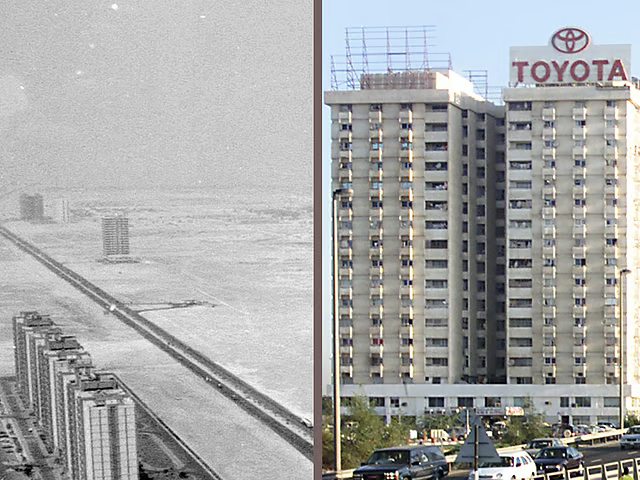 Investment
Sheikh Zayed Road redevelopment: what it means for investors
The Toyota Building's demolition signals a broader redevelopment wave on Sheikh Zayed Road. Here is what plot clearances along prime corridors mean for land values and off-plan launches.
By Roy El Baba Investment
Why Indian investors keep choosing Dubai real estate
Indian nationals are Dubai's largest foreign buyer group. Here's what drives that demand and how NRIs can buy freehold property step by step.
By Roy El Baba Investment
ELLE residences on Dubai Islands: what branded living costs you
ELLE's entry into Dubai real estate signals how fashion brands are reshaping the branded residence market. Here's what the premium actually buys you.
By Roy El Baba